"Light everywhere, and it constantly changes.
And I too love the light, perhaps the light only.”
— Czesław Miłosz, a lifelong touchstone of Sam’s art
And I too love the light, perhaps the light only.”
— Czesław Miłosz, a lifelong touchstone of Sam’s art
Obituary
The Honorable Sam A. Joyner III — retired United States magistrate judge, master photographer, husband, father, brother, and grandfather — passed peacefully on the evening of Father’s Day, June 21, 2026, surrounded by the love of his family.
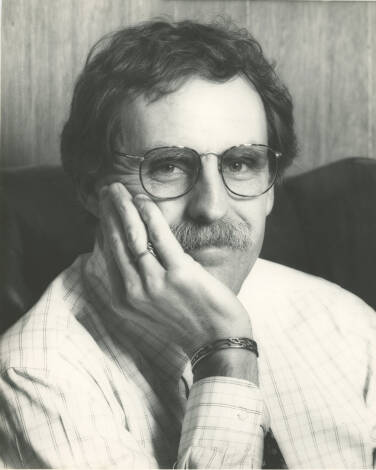
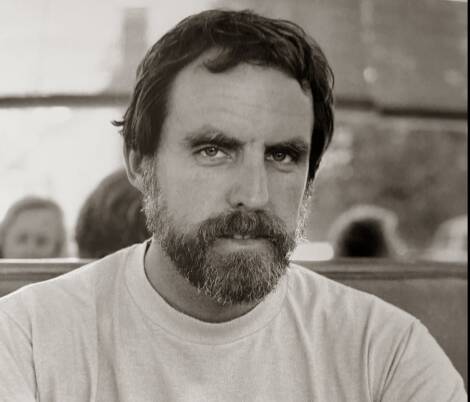
Born in Lawton, Oklahoma, to Sam Joyner Jr. and Ora Simpson Joyner [1], Sam lost his mother when he was very young and was raised by his father and his stepmother, Hazel Joyner. [2] His roots in Oklahoma ran deep: his grandfather, Sam Sr., had made his way from Tennessee through Arkansas and Texas to Lawton in the late 1800s, and the family that shaped Sam III prized integrity, hard work, and civic involvement — “it’s in the blood,” he once wrote his son. His grandmother sent telegrams for Western Union, his grandfather surveyed much of the Fort Sill Army post, and the family table at Thanksgiving and Christmas always made room for soldiers from the post. [46] Sam built two extraordinary lives at once — one in the law, the other in the arts — and brought the same integrity, curiosity, and quiet brilliance to both. The Tulsa World once called him the federal court’s “renaissance man.” [38] A fellow federal judge once introduced him simply as “finally, a federal judge with a sense of humor.” [3]
A Life in the Law
The qualities that would define Sam appeared early. As a high-school student in Lawton he was voted Most Courteous, led both his junior class and the Key Club as president, served on the Student Council, was inducted into the National Honor Society, represented his school at Boys’ State, and earned the Elks’ Leadership Award and a place in his school’s “Who’s Who” — an early portrait of the courteous, civic-minded leader he would remain. [52] Sam earned a Bachelor of Arts from George Washington University in 1963 and a Juris Doctorate with Honors from the University of Oklahoma in 1966, where he was named to the Order of the Coif. [4] He returned to his hometown of Lawton to begin a private law practice that grew into the firm of Godlove, Joyner, Mayhall, Dzialo, Dutcher & Erwin. [5] He served his country in uniform as well, in the Oklahoma National Guard from 1965 to 1970 and the U.S. Navy Reserve from 1970 to 1975, retiring as a lieutenant commander. [6]
For nineteen years Sam served as a part-time United States magistrate at the federal courthouse in Lawton — at one time the most active part-time magistrate position in the nation. [7] In January 1994 he was honored as the only part-time magistrate appointed to an eight-person national advisory group to the Administrative Office of the U.S. Courts. [8] In his Lawton years he held authority over the Wichita Mountains Wildlife Refuge, and delighted for decades in retelling its cases — the hunters who fired at decoys, the poacher who couldn’t tell a longhorn from an elk. [15] Named “Outstanding Young Man of Lawton” in 1970, he served the Lawton Chamber of Commerce, the McMahon Civic Auditorium Authority, the YMCA, and St. Paul’s United Methodist Church. [14] In 1976 he was elected president of the Lawton Philharmonic Society, guiding the orchestra with a steady hand through a lean season toward a program headlined by Doc Severinsen. [55] In 1977 Governor David L. Boren appointed him to the Elmer Thomas Memorial Commission, honoring the Lawton attorney who became one of Oklahoma’s most influential United States senators. [53]
On June 1, 1995, he was appointed full-time Magistrate Judge of the United States District Court for the Northern District of Oklahoma, sitting in Tulsa. [9] Among the high-profile matters to come before him was the bitter Koch v. Koch litigation between the billionaire brothers William and Charles Koch, whose oil-theft trial reached Tulsa’s federal court in 1999; presiding over pretrial proceedings, he ruled on the evidence the parties could put before the jury. [41] In 2000 the Administrative Office of the U.S. Courts sent him to Thailand to take part in a hearing for four Americans held there on drug convictions. [38] In 2003, after a merit-selection panel reviewed his record and unanimously recommended his renewal, Chief U.S. District Judge Terence Kern reappointed him to a second eight-year term, calling him and his fellow magistrate Frank McCarthy “outstanding judges.” [42]
On the bench he became a national authority on electronic discovery, authoring the Guidelines for Electronic Discovery used in the Northern District, and presided over hundreds of mediations before retiring on January 1, 2009. [10] Even in retirement he continued the work of resolution as a private mediator and arbitrator; in 2010 he and retired Oklahoma Supreme Court Justice Daniel Boudreau volunteered, free of charge, to help mediate the long-running disputes between the Tulsa City Council and the mayor. [29] He was a Fellow of the American College of Trial Lawyers, named in 1983 [11]; served as Editor-in-Chief of the Federal Courts Law Review; and taught Professional Responsibility as an adjunct professor at the University of Oklahoma College of Law [12] — fittingly, for a man whose graduate thesis explored the role of the humanities in moral development. [13]
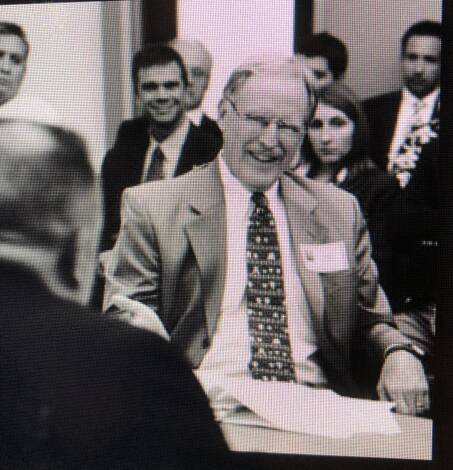
Those who appeared before him remember his warmth and humor as much as his judgment. He used humor to ease the tension of solemn hearings and made a point of never speaking harshly to the lawyers before him — “I don’t think that sort of thing is productive,” he said of barbed remarks, “even though some of them may have deserved it.” [38] Lane Wilson, who took his seat on the federal bench in 2009, said he had “some really big shoes to fill,” recalling that as a young attorney Joyner had “treated me with respect and walked me through the process.” [39] Asked once for advice to younger lawyers, he offered a creed that captured how he lived: never do anything that conflicts with your own ethics, even if it’s legal — “if it doesn’t feel right, don’t do it”; live beneath your means; don’t get hung up on money; and above all, make sure you’re having fun. [16] In 2006 the Tulsa County Bar Association honored him with a Golden Rule Award. [40] He loved the work to the last. “This is the best job in the world,” he said as he prepared to leave the bench. “But I’ve reached that time.” [38]
A Life in the Arts
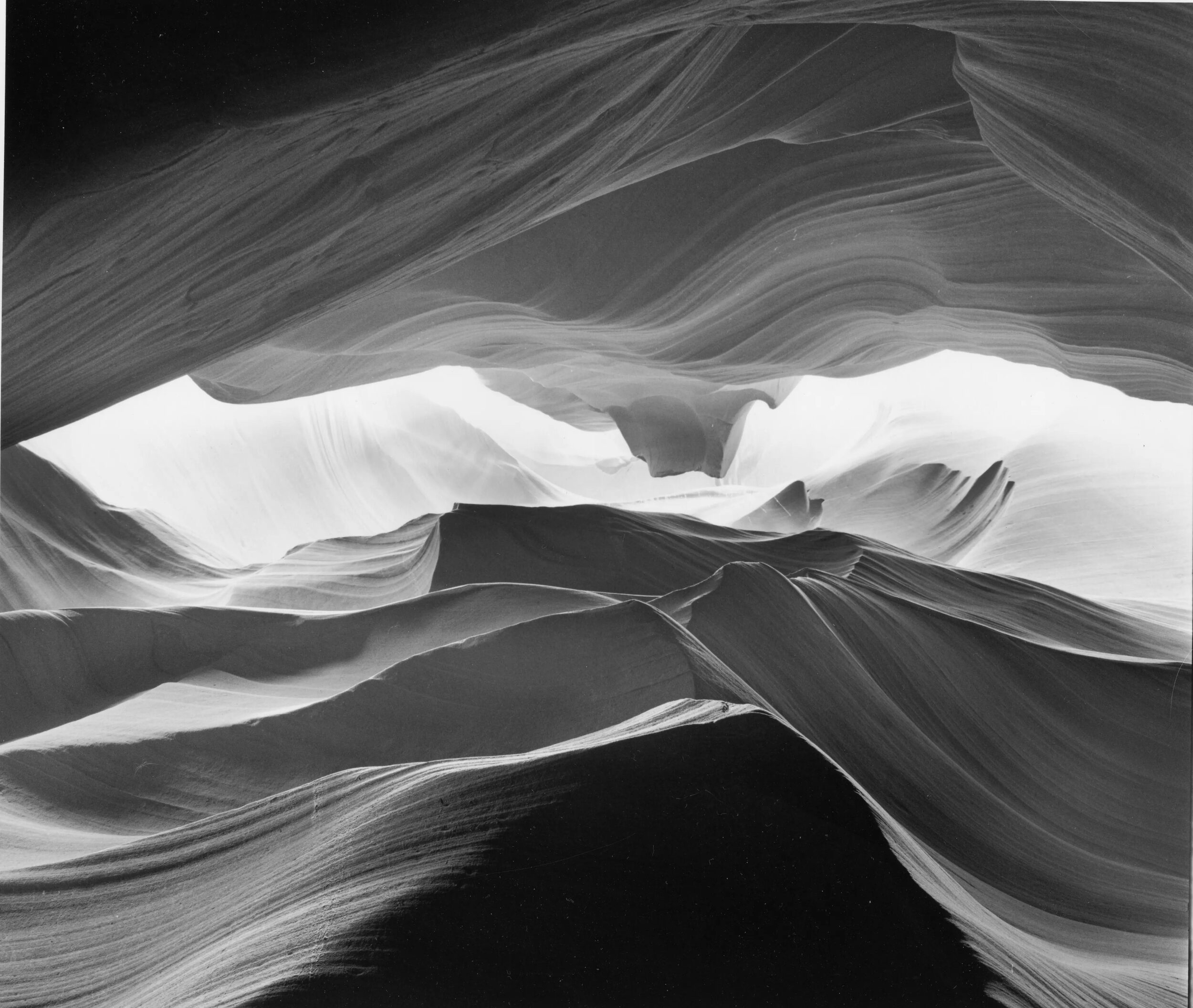
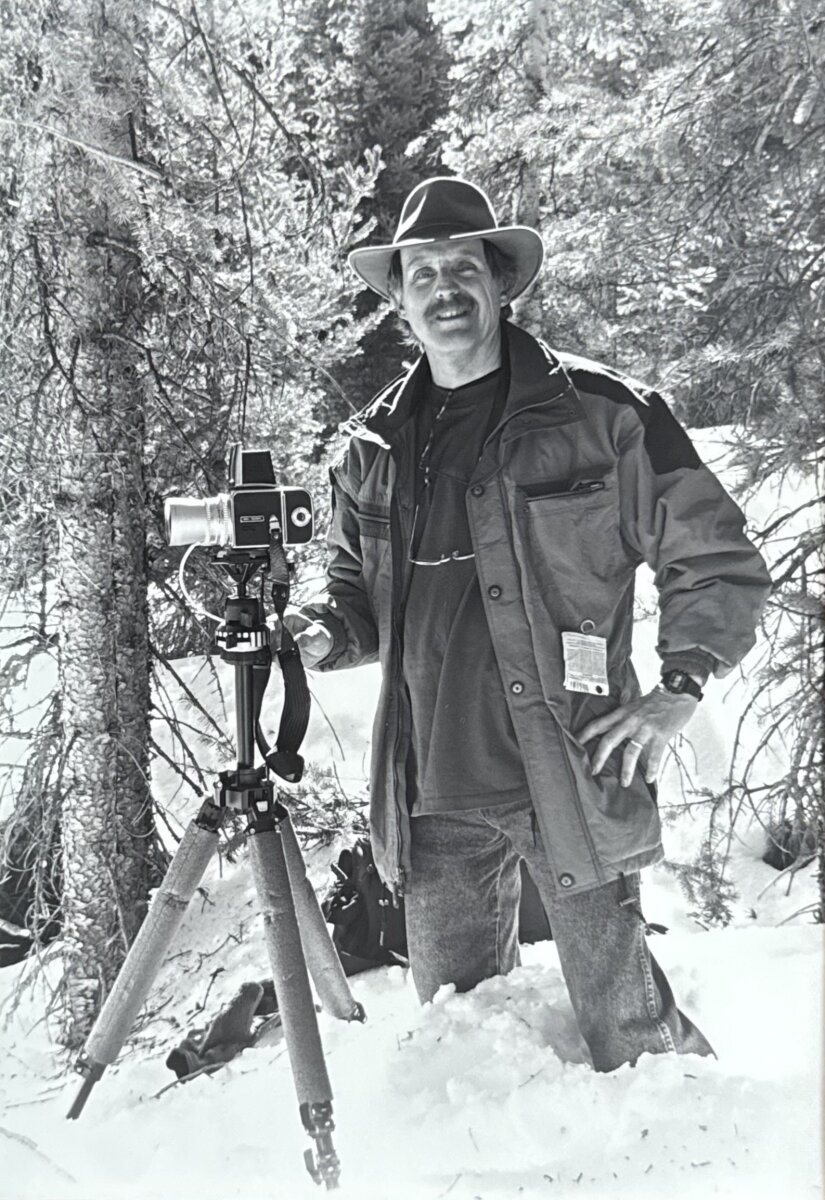
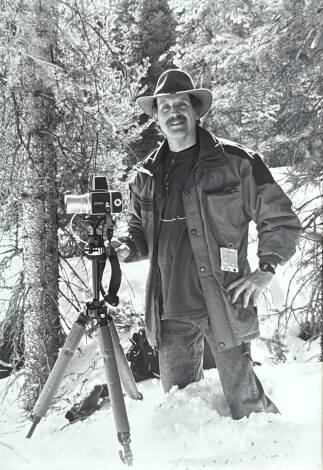
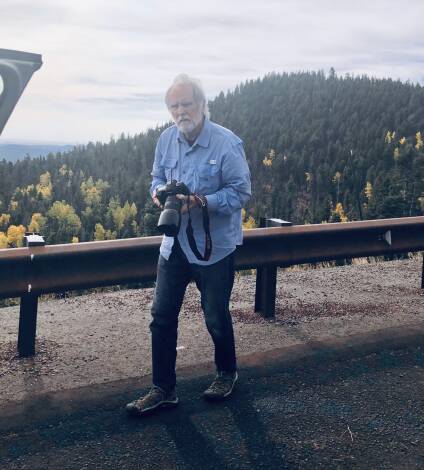
Alongside the law, Sam pursued fine-art black-and-white photography with the devotion of a master. He traced that second life to a question he had once put to himself: “Am I too narrowly focused? Is there more to life than this?” The answer, he said, was simple — “It turns out there is.” [38] His path began around 1985 with a workshop under the French photographer Bernard Plossu, after which he moved from color to black-and-white and never looked back. [17] He preferred the monochrome image because, as he put it, “black and white is more subtle” — it lets the viewer take part in the seeing and respond more deeply. [38] Working in film with a large-format 4x5 view camera and a Hasselblad, he printed each image by hand in the darkroom using the silver gelatin process, selenium-toned for permanence. [18] Over the following decades he studied with legendary photographers including John Sexton, Ruth Bernhard, Sally Mann, Jerry Uelsmann, and Bruce Barnbaum, at workshops from the Ansel Adams Workshop in Yosemite to the Maine Photographic Workshop to the Oklahoma Arts Institute at Quartz Mountain. [19]
In Lawton, Sam co-founded and served as president of the Wichita Wildlight Photographic Society — and it was his legal expertise that secured the group its tax-exempt status, without which, fellow members later said, it might not have survived. [20] He saw photography as a form of service, once explaining that the club had “preserved these images of the Wichita Mountains and made it available to so many.” [21] Arts for All named him its Volunteer of the Year in 1994 [22], and as recently as 2019 he returned to Lawton to speak on “The Value of the Arts.” [23]
That spirit of service followed him to Tulsa, where he served on the board of the Arts & Humanities Council of Tulsa, volunteered as a division chair for the Tulsa Area United Way, and donated his prints to many charitable fundraisers, including the Cystic Fibrosis Foundation’s Art in Architecture auction. [30] His United Way ties reached back to his early years on the Tulsa bench — in 1997 he and his fellow federal jurists cheerfully judged a Halloween costume contest at the Page Belcher Federal Building to cap the courthouse’s annual United Way drive. [51] He gave prints, too, to the grief-support Tristesse Center’s first benefit and to Nimrod’s own “Art for Literature” auctions. [43] His sense of justice reached well beyond Oklahoma; in 2022, moved by the war in Ukraine, he wrote to the Tulsa World urging that war crimes be prosecuted and that the world not look away from the suffering of civilians. [37]
His work was juried into numerous exhibitions and earned Best of Show and many first-place and juror’s awards — among them Best of Show at the 1995 Lawton Arts for All Festival and juror’s awards at the 1998 and 1999 Tulsa Mayfest Invitational — [35] and was shown at the Gilcrease Museum, the Leslie Powell Gallery, the M.A. Doran Gallery — where he exhibited regularly — [36] the Hardesty Arts Center, the Oklahoma State Capitol, and the Gallery at Liggett Studios. [24] The M.A. Doran Gallery of Tulsa represented his work; its co-owner, Mary Ann Doran, called him “a very talented photographer and a terrific person,” praising his natural eye for detail and composition and his love of panoramic vistas and great works of architecture. [38] His exhibited photographs carried titles as telling as the images — among them the landscape “Multnomah Falls,” shown in Tulsa’s Mayfest Invitational, and the quietly hopeful “World Peace Begins in the Imagination” — and in 2002 his work was chosen for the juried biennial “Oklahoma: Centerfold” at the Leslie Powell Gallery in Lawton. [44] His Tulsa exhibition history reached back to 1994, when “The Three Amigos” at the Pictures Gallery in the Tulsa Promenade paired his work with that of fellow Wichita Wildlight members Andrus Clark and David Gill; a critic wrote that his photographs displayed “a kind of heightened reality, an image more real than real.” [48] In 2003 his quietly haunting study of a Buddha’s head merging into a banyan tree in Thailand earned an honorable mention in the Seven-State Biennial at the University of Science and Arts of Oklahoma in Chickasha. [49] And in 2013 the Oklahoma Arts Council sponsored a solo exhibition of his large-format black-and-white photographs at the Oklahoma State Capitol — titled, fittingly, “And I Too Love the Light,” after the Miłosz line he so loved. [50]
His love of the written word ran deep. For years he served as chairman of the advisory board of Nimrod International Journal, the literary magazine of the University of Tulsa, where he came to know the poet Francine Ringold — a friendship that would later bear fruit on the page. [31] His stewardship deepened over the years — he came to preside over that board, guiding its annual awards weekends — and at Nimrod’s 2000 conference he joined a panel on law and literature, the judge and the photographer meeting, fittingly, on a single stage. [45] He published three books pairing his photographs with the written word. Art Deco Tulsa, a history of the city’s Art Deco architecture written by Suzanne Fitzgerald Wallis and published by Arcadia Publishing, was launched with a signing at the Philbrook Museum of Art. [32] The Way We See Now paired twenty-eight of his black-and-white photographs with poems by Oklahoma Poet Laureate Francine Ringold, each composed in response to an image in the ancient tradition of ekphrasis; it became an Oklahoma best-seller. [33] And Echoes of Light: Images Into Writing joined his photographs with the writing of Steve Gerkin and the design of Carl Brune, winning the 2025 Oklahoma Book Award for design. [34] The forewords to Art Deco Tulsa and Echoes of Light were written by the author Michael Wallis, a close friend who officiated Sam and Deb's wedding. [25]
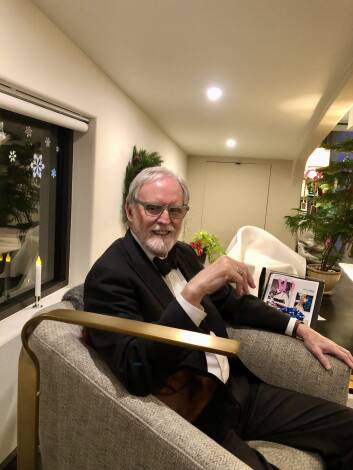
In 2017 he came to live, fittingly, inside a work of art of his own: a contemporary Tulsa home that the architect George E. Day Jr. designed for him, its interior ramp winding from floor to floor past his framed photographs in the manner of the Guggenheim. Day named it “Gallery House.” Of their first meeting, Sam liked to recall, “Instead of interviewing George, he interviewed me” — explaining “that we were about to embark on a creative journey together.” [47] Sam and Deb lived happily together in the Gallery House, and his photographs continued to find audiences late in his life: in January 2025 the Gallery at Liggett Studios in Tulsa devoted an exhibition to his black-and-white interiors, where he described the photographer’s aim as forever “looking for that revelatory light that causes the magic to occur.” [35]
His Philosophy of Light
To Sam, light was never only an artistic tool. He described the photographer’s challenge as finding “the evidence of ‘yes’ — to reveal scenes of awe, wonder and curiosity with honesty.” [26] A lifelong student of Carl Jung, he understood light in Jungian terms — as something deeper still: [27]
“As a philosopher, light represents consciousness, enlightenment, and spiritual awareness … the divine presence and the transcendent aspect of the human psyche. To my way of thinking, light is also a metaphor for the journey towards the fulfillment of one’s own potential.”
— Sam Joyner, preface to Echoes of Light
His Family
Family stood at the center of Sam’s life. He was involved in Boy Scouts with all three of his sons, and joined each of them at the Philmont Scout Ranch in New Mexico. [54] Sam is survived by his beloved wife, Deborah Joyner; his sons, Jeff Joyner and Pryce Joyner (mother, Sandra Joyner) and Taylor Joyner (mother, Elizabeth Joyner); his daughter-in-law, Sharon Joyner (Pryce’s wife); and his grandchildren — Jake, Bella, and Lily, the children of Jeff; and Megan and Caleb, the children of Pryce and Sharon; and Deborah’s children, Melissa Smith, Jessica Dodson, Howard Parton, and George Parton, and her thirteen grandchildren and three great-grandchildren. He is also survived by his sisters, Debbie Sims, Janice Joyner, and Judy Dial, and by many loving nieces, nephews, and cousins. He was preceded in death by his mother, Ora Simpson Joyner; his father, Sam Joyner Jr.; his stepmother, Hazel Joyner; and his sister, Doris “Dee” Hunt. [28]
Sam's Photography - Evidence of "Yes"
Sam spent his life loving the light — studying it, chasing it, finding in it consciousness and wonder. On Father’s Day, with a soft breath, he completed his own journey into the light he so loved. He lives on in Deborah, his sons and grandchildren, his sisters and their families, everyone whose life he touched, and every image that taught us to look more closely and find the evidence of ‘yes.’
References
Sources & References
Gallery
Memory wall
Celebration of Life Events
Donate


 Français
 Deutsch
 Nederlands
 Español
 Português
 Magyar
 Русский
 繁體中文
繁體中文