
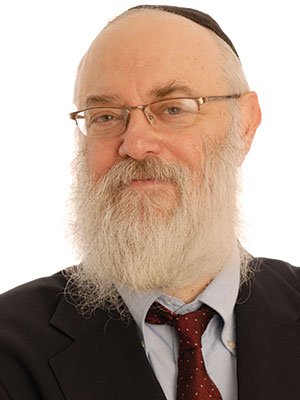
Robert A. Baruch Bush
“Much have I learned from my teachers, more from my colleagues, but from my students most of all.”
In Tribute
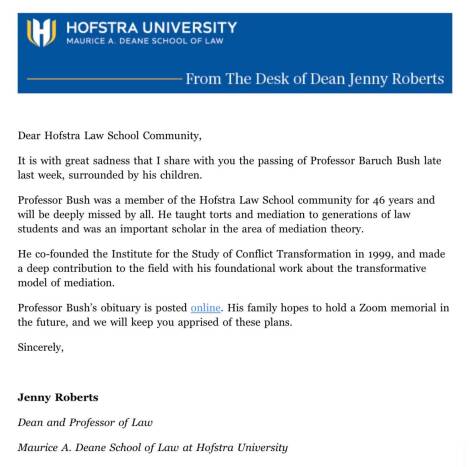
Professor Robert A. Baruch Bush, a pioneering legal scholar and widely respected leader in the field of mediation and alternative dispute resolution, passed away on February 27, 2026, at the age of 78.
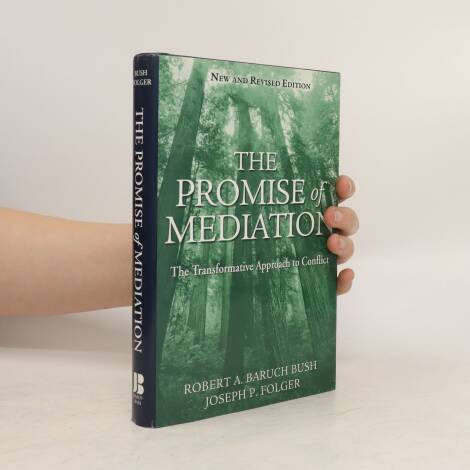
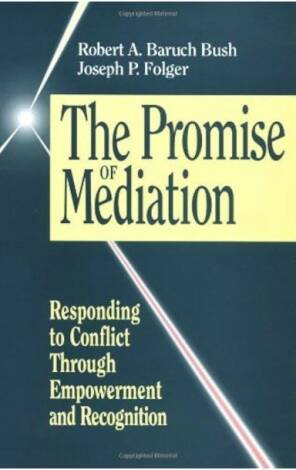
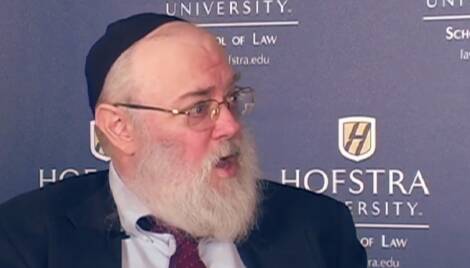
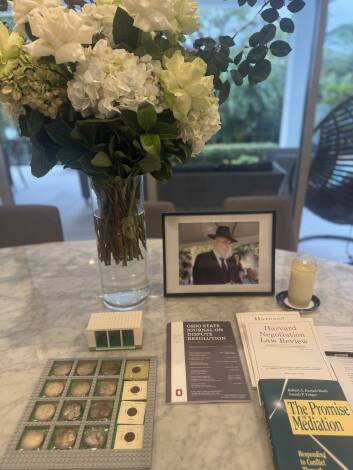
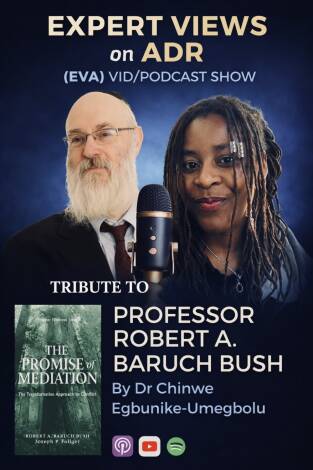
For more than forty years, he served as the Harry H. Rains Distinguished Professor at Hofstra University’s Maurice A. Deane School of Law. His work in the Transformative Model of Mediation fundamentally shaped modern mediation. Together with Professor Joseph P. Folger, he co-authored The Promise of Mediation, a landmark book that introduced the transformative model of mediation — an approach centered on human dignity, empowerment, and recognition. His scholarship influenced practitioners and institutions around the world and helped redefine how conflict is understood and addressed.
The Transformative approach reframed the purpose of mediation around empowerment, recognition, and human dignity - placing human interaction itself at the center of conflict intervention, rather than settlement alone. Transformative mediation has become one of the most studied and applied frameworks in mediation theory worldwide, pursued not only in courts and legal systems, but in community centers, schools, workplaces, and international dispute settings.
Baruch’s influence extended far beyond legal texts and classrooms. He helped cultivate a generation of mediators who approach conflict with humanity first; he enriched legal systems with programs that honor dignity and voice; and he helped build bridges between theory and practice that will continue to guide the field for decades to come.
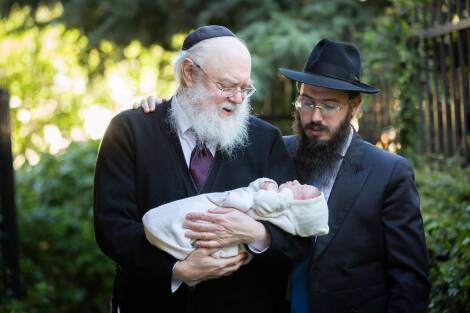
Beyond his academic achievements, Professor Bush was deeply devoted to his family, community, and faith. After discovering a connection to Jewish life in Berkeley in the 1970s, he and his wife, Shulamis, built their home in the Crown Heights community, where they raised their family. He was closely involved in community life, charity and offered guidance and support to indivuals and organisations in times of need.
Professor Bush continued teaching at Hofstra, his academic writing and mentoring students until shortly before his passing. He has touched thousands through his scholarship, kindness, and integrity. He leaves behind a legacy of scholarship, service, and inspiration that will continue to guide his family, his students, and the countless individuals whose lives were touched by his work.
You are invited to leave a message or memory below in tribute to his life and legacy. For longer reflections or contributions you may like to share, please send them to profbush.legacy@gmail.com.
Articles
Below are links to online tributes by dear collegues and students.
Posts and individual reflections.
Gallery
Messages
Over the years, we met again at conferences and board meetings, where he continued to inspire thoughtful discussion and dialogue among colleagues. He had a remarkable ability to make complex ideas accessible, always combining clarity with optimism and humour.
I also remember how creatively he drew on examples from film, television, and everyday life to bring the model to life, making his teaching both engaging and memorable.
He will be remembered with great respect and gratitude, and he will be deeply missed.
Since then, a new path started for me.In 2003, I took a training by Sally Pope on Prince St Edwards Island... Lobster and quite a dessert!
Back in France, I started to talk about Transformative mediation, started trainings. My friend John Peter Weldon supported me to develop transformative mediation in France. I was and assistant in one of the training with Baruch in Montreal.
I can tell that Baruch is still on my side and help us built an active organization in France.
I feel fortunate for all of this. It changed my path...
With gratitude. Marianne
He will be greatly missed by all who had the privilege of learning from him. May his memory be a blessing.
I distinctly remember him questioning me during my job talk. He took the presentation seriously and asked probing and supportive questions. I knew it would be a treat to have a colleague like him. And that turned out to be true.
Baruch was an intellectual powerhouse. Yet, his drive to write and lecture about mediation and especially transformative mediation was about making the world a better place, about more than just ending a dispute but turning the resolution into positive change, about leaving the world a better place.
Baruch left Hofstra, and the world, a better place. And in doing so, he left a memory that will always stay with me.
My family and I are deeply saddened for Baruch's family. Their loss is immense though Baruch will continue to leave with each and every one of them and is does with all of us. May that be a comfort in the weeks and months ahead.
The passing of Robert A. Baruch Bush feels deeply personal both as a scholar and as someone formed, in part, by his ideas.
For many of us in Alternative Dispute Resolution (ADR), the award-winning book, The Promise of Mediation: The Transformative Approach to Conflict, presented a fundamentally different vision from the dominant, settlement-driven paradigms of mediation.
At a time when legal education often prioritises outcomes, efficiency, and closure, this book / his work invited us to slow down to see conflict not simply as a problem to be solved, but as a human interaction to be understood. Its central insight that mediation should be grounded in empowerment and recognition reshaped how many of us viewed justice itself. It challenged the assumption that resolution must be measured by agreement alone, and instead advanced the idea that transformation subtle, relational, deeply human may be the more meaningful outcome.
I was drawn to his work as an LLM student in Dispute Resolution at Kingston University London where I returned to his ideas repeatedly in my family mediation assessments.
There was something profoundly compelling about a model of dispute resolution that does not impose solutions, but intentionally creates a safe space: a space for voice, a space for dignity,a space for change.
At the time, many of us particularly those trained within adversarial legal frameworks were captivated by the possibility that disputes could be addressed without confrontation, without the rigid architecture of the courtroom.
We did not simply study the book; we were shaped by it. It gave us hope that peacemaking is not separate from justice, but a core part of it.
Yet these encounters were never merely academic. His work demanded reflection. It invited questioning. It unsettled assumptions. It became something I carried with me into my PhD at the University of Brighton, and into my subsequent scholarship and teaching.
I remain especially grateful to Pamela, my family mediation lecturer at Kingston University London, who introduced me to both family mediation and this remarkable sacred textbook. God bless her. That introduction was not simply academic; it was formative. What distinguishes Professor Bush’s contribution is not only its theoretical precision, but its humanity.
He reminded us quietly but powerfully that mediation is, at its core, is about people. About how individuals understand themselves, about how they perceive one another, and about the possibility that, even in conflict, there can be recognition, growth, and transformation. This perspective has remained with me not only as a researcher, but as an educator. Each time I introduce his ideas to students, it feels less like teaching doctrine and more like opening a door into a different way of seeing conflict: one that privileges dignity over dominance, understanding over expediency, and transformation over mere settlement.
Today, the transformative model Prof Bush championed has extended far beyond its original conceptual boundaries.
It is now applied across diverse contexts family disputes, workplace conflicts, community tensions, organisational challenges, and even public policy dialogues. Yet its essence remains unchanged: a steadfast commitment to the moral and relational dimensions of human interaction. And so, his legacy continues/endures not only in books or citations, but in practice.
In the mediator who chooses to listen more deeply, in the parties who begin, even tentatively, to see each other differently, in the quiet, often unseen moments where conflict shifts from destructive to constructive.
There is something profoundly enduring about such a legacy. Professor Bush may no longer be with us, but his voice continues to resonate in classrooms, in scholarship, and in the lived experiences of those who practise and believe in transformative mediation. For that, I remain deeply grateful. I only wish I had the opportunity to meet him to host him on my podcast, Expert Views on ADR (EVA) Vid/Podcast Show, and to engage him in conversation about the very ideas that shaped my academic journey.
Yet, in many ways, that conversation continues through his books, his articles, and his recorded insights (that can be found on YouTube and mediate.com (http://mediate.com)), which remain evergreen in both memory and influence.
Professor Bush was more than a scholar; he was a pioneer, a thought leader, and a humanist. To write ‘The Promise of Mediation’ with such clarity, accessibility, and depth was itself an act of service to humanity.
He did not merely contribute to the field of ADR, he transformed it entirely! A true game changer. A guiding light. A champion of dignity in conflict. Professor Bush, you came, you saw, and you transformed. Rest in perfect peace.
Sending love, light, peace, hope and faith,
C x
When the first year of law school was over and we were finally able to choose which courses we wanted to take, it was a no-brainer to make sure I was signed up to take Mediation with the leading mind in the field. Professor Bush did not disappoint. The day after hearing of his passing, I randomly stumbled on a pile of old law school papers. It turned out to be all of my notes from his courses. It was such a bittersweet discovery. Here are some of the gems from his lessons I wrote down and still cherish to this day:
“If you are going to tell your brother “‘I’m sorry,’ that never means you're really sorry. The recognition [of your remorse] has to be genuine.”
“Just because two kids are fighting over an orange does not mean they are at odds. The best resolution might not be that one should get the whole orange and “win” while the other gets nothing and “loses.” It might not even be that the orange should be cut in half so that the outcome is “fair.” What if we did something radical and actually ask the kids why they want it? You may find that one only wants the peel and the other wants the meat. We discover that there is a way they both can actually get what they want. That’s a win-win. Let’s aim to be lawyers that have more win-wins.”
“Change the game to problem-solving. Do not play the adversarial game but instead team up and become problem-solvers together.”
(AND MY FAVORITE)
“When in doubt, remember KISS: Keep it simple, stupid.”
I can still hear Professor Bush’s voice. I still remember all of the times he cheered me on post-graduation on LinkedIn and, if I visited the school, he would see me in the halls and remember exactly who I was and what was going on in my professional life. He’d cheerfully ask how doors opened for me or how successes in my life came about and I’d say to him, “God did it!” He was Jewish and I was Christian, so he’d laugh and say, “I’ll take it!”
Most days we laughed like that and I cherish those moments fondly, but even on the one day he saw me crying, it meant so much to me. He emailed to ask if I was alright. He worried that maybe he said something in his class to cause my upset and welcomed me to tell him without worrying of his being offended, as he wanted to ensure no students in future were triggered or harmed by something he taught. The tears of sorrow had nothing to do with him whatsoever, but his care and kindness generated tears of joy. It was truly a joy and privilege to have a teacher like him. It has been a blessing to have someone like him in my corner, and I am pleased and unsurprised to find so many feel the same way.
I will share one final moment from my class notes to end this reflection:
One day, Professor Bush taught us about Restorative Justice, which is a collaborative approach to conflict and crime that prioritizes repairing harm over punitive punishment or, as Professor Bush paraphrased it, an approach that emphasizes the Judeo-Chrisitan notion to “hate the sin, not the sinner.” As was his custom, Professor Bush would give us examples to discuss together as a class and then he wanted us to consider and grapple with scenarios on our own. In my notes, I wrote down a variation of what he’d say out loud before he asked us to tackle work independently: “Bush will let us fly on our own here ☹️”
I ended that sentence with a sad smiley face in my notes, but, as I write this and realize that sentiment rings truer now more than ever, I know I say it with a brave and happy smile. Professor Bush set the tone for what life is going to look like now that he has taught us the lessons, checked for our understanding, encouraged our growth and instilled and honed in us all the tools we need to be steadfast practitioners of the law, thoughtful citizens and wonderful human beings. He's stepping back now and letting us fly on our own.
I have fond memories of an international seminar in Rome when we explored the potential of transformative mediation in the international context. On the last day I was able to arrange a dinner in a kosher restaurant and we had a wonderful evening with a Roman Jewish meal !
WE will be missing his profound scholarship, wisdom and warm humanity.
My heartfelt condolences to family and friends.
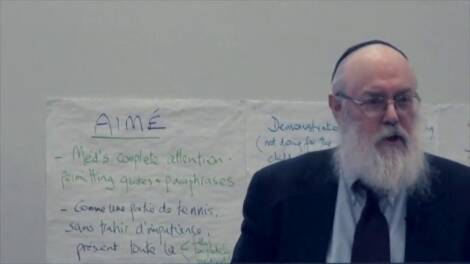
He once gave a presentation for me for our faculty use of technology series, where he presented on using document cameras. He also told faculty in attendance that technology will sometimes fail on you but don't be afraid to use it because it benefits your teaching.
When I applied for a similar position at the now University of South Carolina Joseph F. Rice School of Law, I asked Baruch if I could take a snippet of the recording of his presentation, where he noted the above and use that for a presentation I was giving to the faculty at USC Rice School of Law. Baruch was kind enough to say yes to that and I think his video resonated with our faculty and I will say that to this very day. Can never thank him enough for that.
My wife, Michelle also knew Baruch when she was a student aide in the Hofstra Law School Registrar's Office. She remembers him fondly as well and she too is saddened by his passing.
On behalf of my wife and me, our sincerest condolences to the Bush family on his passing. Our thoughts are with you all today. He was a fantastic man and will be sorely missed.
Donate
Option A: Chabad of Petaluma
Chabad of Petaluma held personal significance for him; he was both a partner and supporter, as it was founded by his son, Rabbi Dovid Bush, in the Bay Area where his own spiritual journey began.
www.JewishPetaluma.com/Donate
Option B: Institute for the Study of Conflict Transformation
The Institute for the Study of Conflict Transformation held special significance for him as a founding member, reflecting his lifelong commitment to advancing Transformative approaches to conflict to practitioners and communities around the world.
www.transformativemediation.org/Giving


 Français
 Deutsch
 Nederlands
 Español
 Português
 Magyar
 Русский
 繁體中文
繁體中文