
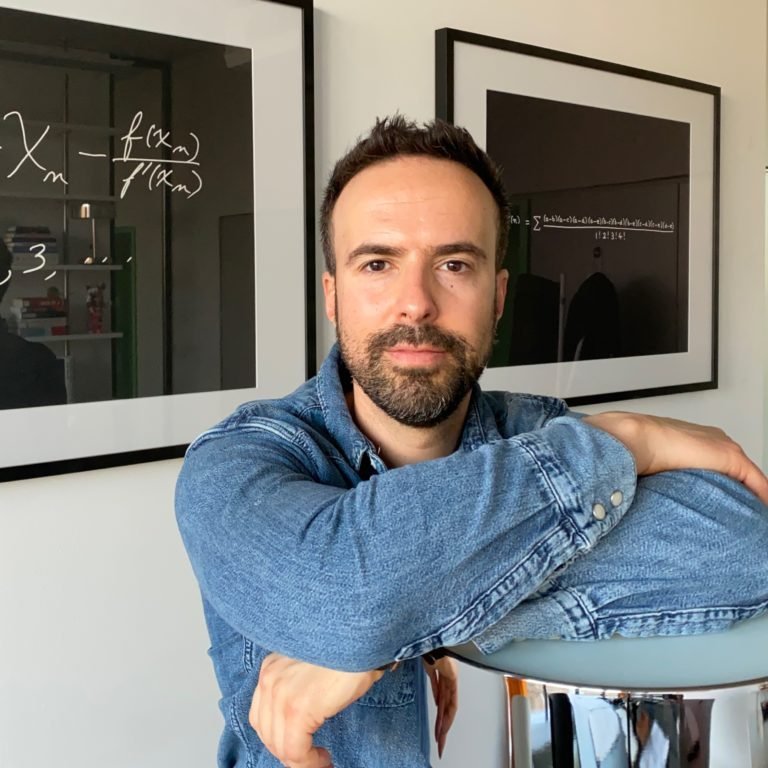
Manuel Cebrian
My main defense against zero entropy has been flipping into what my wise friend José calls teenage mode. Teenage mode is walking too much, for too long, and into places you don’t belong. M. Cebrian
In Loving Memory
Manuel Cebrian was a brilliant and deeply curious scientist, an extraordinary collaborator, and a dear friend. He will be missed so much by so many of us.
Manuel’s work appeared in the world’s leading scientific journals, but those who knew him will remember just as much his warmth, humor, and the ease with which he connected with others. He had a rare ability to bring people together across countries, disciplines, and perspectives.
He will be deeply missed, and his ideas and spirit will continue to resonate through the many people and communities he touched.
Please fill free to write stories and comments below to celebrate Manuel's life.
Scientific Legacy
Dr. Manuel Cebrian was a Senior Scientist at the Spanish National Research Council. He held research appointments with the Max Planck Society, MIT, NICTA/CSIRO, UC San Diego, and Brown University, and was a Japan Society for the Promotion of Science fellow at Waseda University.
Specializing in Computational Social Science and Artificial Intelligence, Dr. Cebrian was part of teams that won the DARPA Network Challenge, demonstrated the effectiveness of digital contact tracing for the first time, and helped establish a framework for studying Machine Behaviour. His research has been published in Science, Nature, the Proceedings of the National Academy of Sciences of the USA, and featured in The New York Times, The Economist, and The Guardian.
Click below to access some of Manuel's papers.
Memory wall
I had the privilege of meeting Manuel at Universidad Autónoma de Madrid while we were both doing our PhDs, and I also had the opportunity to collaborate with him on research work.
I will always remember his intelligence, generosity, and passion for science. My deepest condolences to his family, friends, and colleagues.
Rest in peace, Manuel
We met in 2016 as down the road neighbours in St Kilda, Melbourne, Australia.
A warmth like no other, Manuel’s kindness, passion and curious mind will never be forgotten. A beautiful person, incredibly stylish, a night owl that shared a love of horror movies. RIP dear friend, the world has lost a beautiful, talented soul.
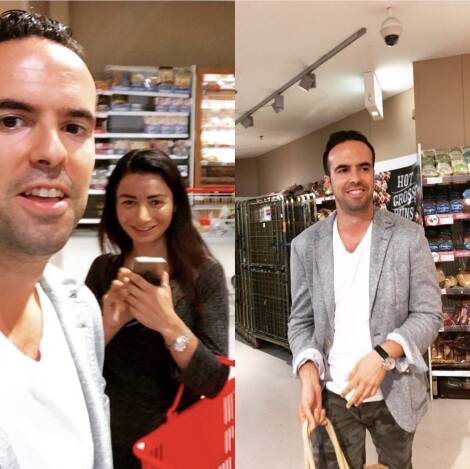
Heartfelt condolences and may he RIP. Earnest prayers for the bereaved.
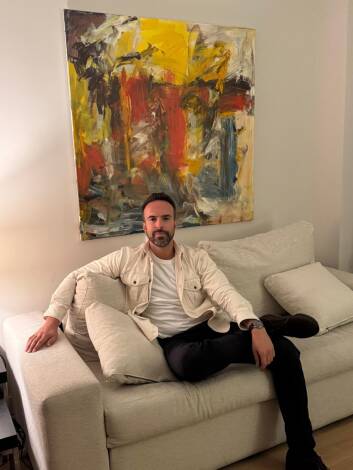
To give an example of the person I got to remotely get acquainted with initially and who trusted me to join his team, I remember talking to him online from Boston, before we personally met, and a modernist, abstract and chaotic painting hanging behind him in his office. I asked about it and he told me of his creation in his studio of his flat in Berlin, where he bashed some piece of canvas with paint on a cloth or so to get the result I could see behind him. He was convinced I thought he was an erratic, eccentric scientist but I actually found this quirk intriguing and a sign of a potentially good match between me and him.
In Manuel, in spite of the difficulty of human contact at the time, I eventually found a companion in genuine intellectual inquiry restlessness, artistic endeavours and a night-owl who was spending the later parts of the day in the office. It is poignantly telling, recalling that in an online group meeting once he encouraged me to recite some verses I had written in the gathering... Furthermore, identifying my vacillating personality, its merits and dangers in a scientific professional setting, he gave me a clear scientific compass and guidance in the time I spent in his team, which I found rather restraining at the time and stirring me in a different direction than I wanted. Ironically, I have found his words of wisdom and enabling advise in setting up the foundations for my own scientific narrative prophetic several years after that piece of work has been completed. I still am struggling recalling that I had contacted him last spring for scientific support and collaboration, while he was in Madrid and he responded eagerly and kindly as always, while who knows what he was facing...
One thing is for sure: even in retrospect and with the passage of time, I can confidently remember Manuel as a true mentor, stabilising agent and a rare encounter of a balanced artistic flare with profound and sincere scientific explorations. The world is certainly left poorer without Manuel but his memory and legacy lives on through those of us he left his indelible mark on. I wish I had the chance to call him my friend in life...
This simple gesture already shows the kind of person he was.
He has been the best mentor I could have asked for. During the time I knew him, I never stopped learning, not even for a moment. He welcomed me as his mentee and made sure every day that I improved and, above all, that I enjoyed what I do.
Manu used to say that he was already satisfied with what he had achieved professionally, and that his goal was to help the new generations achieve our own goals. Today, I can only thank him for making that investment and for trusting me. I will always carry you with me; my achievements will not be mine alone—they will be ours.
I know I’m not speaking only for myself: Manu touched the lives of everyone he interacted with. We will never forget the incredible person Manuel Cebrián was.
Thank you for everything, Manu. You were a mentor, one of the greatest geniuses I have ever known, but above all, a friend.
In memoriam
He belonged to a generation two steps below mine. But we hit it off right from the start when we met a few years ago and he began contributing to the Observatorio de las Ideas, which I directed in its first decade, and to some presentations at the Elcano Institute. One of the most brilliant minds I have ever known – and I have known quite a few – he was generous with his ideas, his efforts and his connections, bringing friends together and putting very diverse people in touch with one another. He always believed in teams, in collective intelligence, which he theorized, practiced and cultivated, and which, nevertheless, on a personal level, let him down in an excessively individualistic society and scientific environment. He died last March 31st at the age of 45. As a friend of his said, he was probably the only one driving a ‘scientific generation’ in Spain – his own.
Manuel Cebrián Ramos, a Spaniard, always an excellent student, good son and good friend, was an engineer and held a PhD in Computer Science, although he considered himself a “sociological physicist”. He went to the United States to Brown University and to MediaLab at MIT (Massachusetts Institute of Technology), where, happily, he felt as a creative part of a group. After a year and a half at the University of San Diego, in California, in the Department of Computational Science and Energy, he spent five years in Melbourne as a principal research scientist at CSIRO Data61, the data and digital technology arm of the Commonwealth Scientific and Industrial Research Organisation (CSIRO). There, he helped pioneer the field of human facial images in neural networks. It was there, no doubt, as he delved into the underworlds of social media and the internet, that he began to glimpse some of the murkier aspects of our societies, as well as the most positive ones, both enhanced by technology.
At the MediaLab, he took a particular interest in understanding the extent to which social media can facilitate the search for people in extreme situations and the resolution of real-world problems. Manuel was a pioneer not only in analysis but also in the use and mobilization of social media for positive purposes. For example, the rapid assessment of damage caused by disasters. Or, through these tools, the rapid mobilization of people in time-critical situations.
His work at MIT is reflected in the leadership he demonstrated in the Pentagon’s advanced research agency competition, the 2009 DARPA Network Challenge, the 2011 DARPA Shredder Challenge and the 2012 State Department Tag Challenge. He and his team won the first of these. The challenge involved locating before anyone else some red balloons that the agency had released in various locations. He achieved this by mobilizing volunteers via the nascent social media platforms and collective intelligence (as well as artificial intelligence, of course). His method, and he himself as the main character, served as inspiration for my novel Sé Agua, the manuscript of which he was the first to read and comment on.
When COVID struck, he threw himself into it, though the loneliness brought on by the pandemic took its toll on him. It caught him in Berlin, where at the Max Planck Institute for Human Development he helped set up the Centre for Humans and Machines, under the direction of Iyad Rahwan. Within this center, Manuel was the leader of the Digital Mobilization Research Group. He believed that the study of machine behavior is essential to maximizing the potential benefits of AI for society as a whole. For, it must be emphasized, he always had in mind the idea of improving society as a whole through science, technology, or the good cinema of which he was a great fan.
A night owl, he worked a great deal at night. Breakfast was an important time when he would read things he thought might interest him. He always printed them out so he could read them on paper. Manuel was always trying to balance his scientific work with a contemplative life. His professional direction, increasingly so in his later years, was influenced by his desire to have time to write down his ‘ideas’ and essays, to read, to think, to feel, and to go on extremely long walks through cities, simply walking, observing, and visiting every museum and gallery he could find. He was so much more than a scientist. And this desire to balance his creative, contemplative side—which he truly associated with freedom—led him to turn down some very prestigious job offers. But alas, he did not want to be a solitary thinker, artist, or scientist. He wanted community. And yet he complained to some of his closest friends about how many people around him seemed to prefer digital, remote relationships over natural ones. When someone is as open and curious as Manuel was, the way the world is now becomes unbearably lonely and disappointing.
Artistic expression was important to him. Not just as a painter. In 2018, he had founded Spam.Church to highlight the many ways in which spam influences our social environment through design, installations and field experiments. It was intended to be an artistic collective and a content aggregator for artists from across the cyberverse seeking to reclaim the internet from its colonizers and corporate overlords, an ‘antidote for the modern soul’. Its first axiom states: « If you don’t see spam around you, that means everything around you is spam. »
Throughout his professional career, he always championed the public sector, or more precisely collective thinking and action, even though, as explained, he could have earned much higher incomes in the private sector. Only at the very beginning did he spend a year at Telefónica as a postdoctoral researcher. Back in Madrid, he joined as a Maria Zambrano Distinguished Researcher affiliated with the Department of Statistics at Carlos III University of Madrid, before winning a post as a principal scientist at the CSIC (Spanish Higher Council for Scientific Research). An advisor to various institutions such as UNICEF and the Spanish Government on AI matters, his latest research focused on LLMs (large language models) and AI, applied to various fields, such as urban sciences.
Whenever we met up, just the two of us, or with José Balsa or Jonathan Simons (whom I would like to thank for their insights for this piece), we would talk about everything and anything. We rarely discussed politics. Although I was neither a scientist nor a technologist, we shared that passionate concern for the impact of these advances on our societies. He was by no means a technophobe, but rather someone who wanted to bring out the best in technology for society and prevent the worst. He was always several steps ahead in his original insights and contributions.
He has left a gaping hole in the lives of those of us who knew him. And a void—though they may not realize it—among those who never got to know him, one that will be very difficult to fill. Our collective intelligence has been deprived of an essential element. Although, as a philosopher friend of mine says, the dead cease to exist physically, but they remain persons.
This note has been published in:
https://andresortegaklein.substack.com/p/manuel-cebrian-and-his-collective
He made me work on problems I never thought possible and he was always thinking out of the box.
People loved his ambition too. Going for the double diamonds using speculative methods if needed, because often we
did not know how to get there. It was just a total blast working with him, and it deeply saddens me to see his passing. It
should have been the other way around many years from now.
This is my last picture with him across the Charles River from MIT. He was always caring, a great host packed with fun stories
to talk about. Rest in peace Manuel. You'll be missed.
Ramon
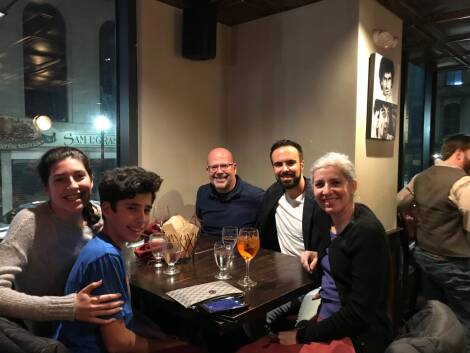
Words cant describe how heartbroken I am. Manuel was one of very few people in my life i felt true unconditional love and support from. No matter how bad i felt, how silly my ideas may have seemed, or how down and frustrated i was- Manuel gave nothing else but unwavering support, encouragement, and belief in me. I could always count on Manuel to tell me honest observations on life, and alternative perspectives on how to navigate it. I have lost a true friend who only wished and wanted the very best for me, as I for him, and i only hope that he felt that from me.
Manuel- when we meet again, i will be sure to come with more Digestives for you! Until that time, i will keep your words of love and support in my heart, and our conversations alive in my mind. You are loved and missed by us all.
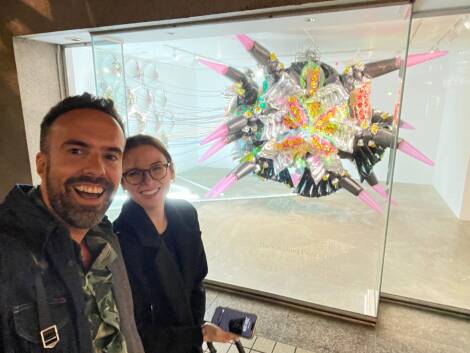
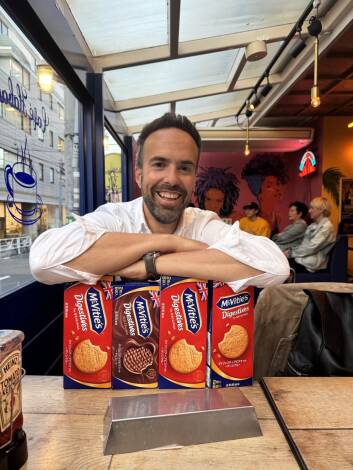
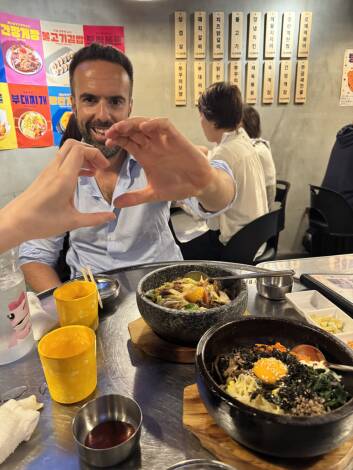
I had known Manuel for 15 years. In many ways, the first time we spoke, in his office at MIT, was as if we had already known each other for years. He was smart, inquisitive, kind and bubbling with energy and ideas. That conversation kicked off a collaboration and friendship that I will always treasure.
Our careers snaked around the world, sometimes overlapping momentarily and sometimes for longer (MIT, Max Planck Institute). We collaborated on some scientific papers which are those I am most proud of in my career. We would sometimes exchange short stories and imagine ridiculous fictional characters together.
Those who knew Manuel knew that he struggled to find balance and internal peace and was perhaps too intelligent to ever really do so. Like many of us, he made many sacrifices for his career that weighed on him. Despite his own preoccupations, he helped me during several difficult periods in my life with practical help and wise advice.
The recollections I heard at Manuel's funeral and on this page remind me how much we all owe him. Not only in our careers, where he genuinely did not see success as a zero-sum commodity, but also an open and sensitive friend.
Selfishly, I am sad that I will no longer be able to turn to him to hear his insight on technology, politics, movies and so on. We never got to dissect the second installment of 28 Years Later! I have elegant additions to my wardrobe that I know he would appreciate, the ever suave Madrileño.
The world is a less creative, kind and snappily dressed place without you Manuel. I truly hope that you now have the peace within you that you deserve. I will miss you my friend but I will always be asking myself 'What would Manuel say of this?'. So you will never be forgotten.
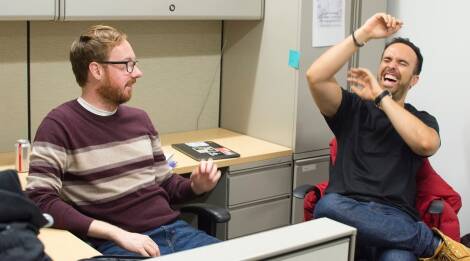
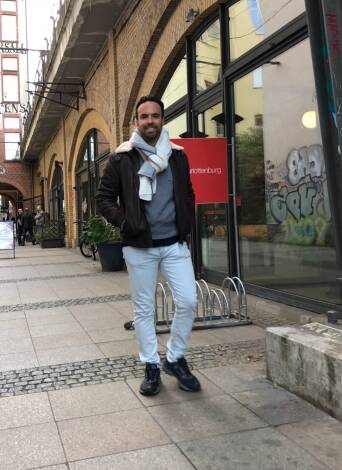
Our paths crossed unexpectedly when he reached out to ask if I would host his research stay in Tokyo. Despite our different fields, we spent months working on a research proposal together. I remember his immense patience as he explained his visionary ideas; he welcomed even my most "amateur" questions with genuine curiosity and kindness. To my joy, our proposal was successful, which brought him to Tokyo for two months last spring.
Once he arrived during the cherry blossom season, we spent many evenings in cafes and restaurants, our conversations flowing effortlessly until the staff eventually told us they were closing.
I will always remember his endearing nature through the small moments we shared: how he became obsessed with ramen and aimed to conquer all the local shops near the university; how he was so moved by the quality of Japanese stationery that he spent a full hour choosing a single notebook; and his total lack of a sense of direction, which required me to "rescue" him many times when he couldn't find his way to campus or our meeting spots.
It was fascinating to see the contrast in him: while his intellect was adventurous and his ideas were boundless, in the physical world, he was remarkably cautious. Despite the vastness of Tokyo at his doorstep, he rarely ventured beyond the quiet corners of his neighborhood. This balance—a mind that explored infinite frontiers while staying physically content in the same small street corner—is what made him so unique to me.
Two years ago in March, we began writing our research proposal.
One year ago in March, we welcomed the Sakura together.
And this March, he left us.
Manuel, may the many ideas you planted continue to bloom in all of us, just like the cherry blossoms in Tokyo. Thank you for your kindness and for the time we shared.
In 2022 I flew to Madrid and we met up for dinner. We always had good conversations about everything.
I am so sad he is no longer among us. I will never forget him.
------------------------------------
I had the good fortune of Manuel crossing my path in 2023, when, through Emilia Gómez (both were on the Spanish Artificial Intelligence Advisory Council), he visited us at the Joint Research Centre in Seville. He immediately fascinated us with the content of his presentation and the way he delivered it. His pauses while speaking made everything more interesting, and his questions about open issues sparked an urge to start investigating them immediately. He quickly proposed a project linking AI risk assessment with collective intelligence, and we began working on it.
In December 2024, he visited us again. I still have the image of him working in my office, often deep in thought. Those days were filled with conversations of all kinds. Manuel had a cosmopolitan and realistic view of the world, and he was unashamed to share the hardships of his experiences with absolute honesty, which contrasted with more romantic narratives from less confident people. He joined us at a colleague's home for a beer tasting, although Manuel, of course, only drank water.
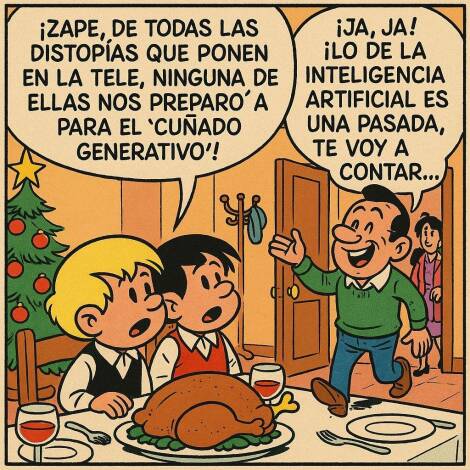
The last time I saw him in person was in December 2025. He came to the JRC in Seville as part of a delegation of researchers from the CSIC. We had dinner together, and I think I will remember that dinner for the rest of my life. Every interaction with Manuel was contagious and filled you with enthusiasm. In my last messages with him on WhatsApp, he sent me a meme about the concept of "generative brother-in-law" that, of course, had emerged during the conversation over dinner, among many other ideas.
In recent months, I was unaware of his illness. I struggle to understand what has happened, and I will always wonder what Manual had in his brilliant and complex mind. His passing leaves a void of all the experiences we would have surely continued to share together. However, I agree with Jose H. Orallo that we should celebrate the opportunity to have crossed paths with him.
A Manuel no se le podía mirar sin parpadear, y si te acercabas, te encendías.
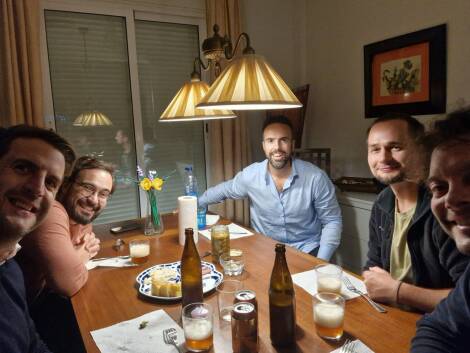
As the omicron started to tick up in the statistics, Marcin and I thought the project was sailing smoothly, but not Talal. He recognized the "boom factor" just wasn't there. "But, I know this guy who reads all glossy science journals and surely could find a twist to get us in there." That was Manuel. And even if that project didn't fly higher than iScience, it was very much true that Manuel had big and unusual perspectives. Something I had the privilege of experiencing time and time again as I got to know him better over the next five years, five projects, and five hundred random ideas.
I probably never had a colleague who so unfailingly could turn my perspective on discussion points, small and large. Plain rational arguments and mundane observations, seen from the Manuel dimension, could take on whole new meanings and importance. Many of these insights drive my research today and will continue to do so for many years to come. Some mysteries about Manuel will probably always remain (like how empowered he felt by AI chatbots), but so will the sense that every place our mind takes us is right next to a million others. That science is about following formalized paths from observations to conclusions is a lie that Manuel irrefutably dispelled. And for that, I'm forever grateful.
R.I.P.
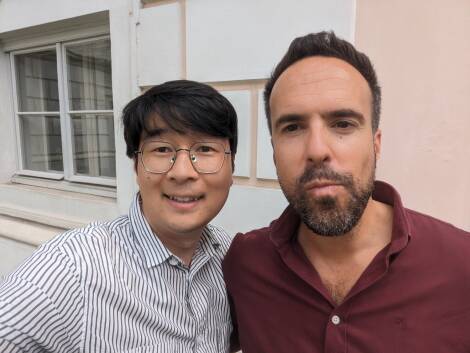
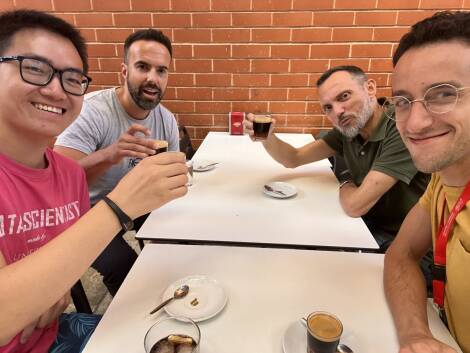
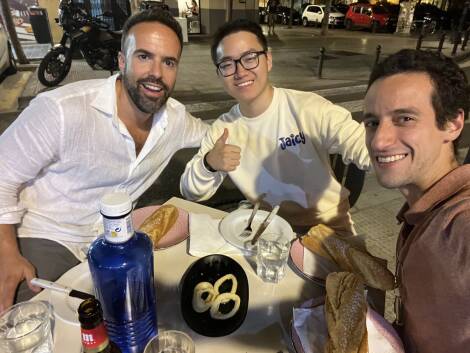
Manuel was also a frequent presence in our vibrant community at Google Campus Madrid, where he generously offered his insights and guidance to burgeoning entrepreneurs. He was truly humble, creative, and extraordinary.
While Manuel has transitioned beyond this realm, his legacy remains. I am certain his soul will continue to inspire further contributions to humanity.
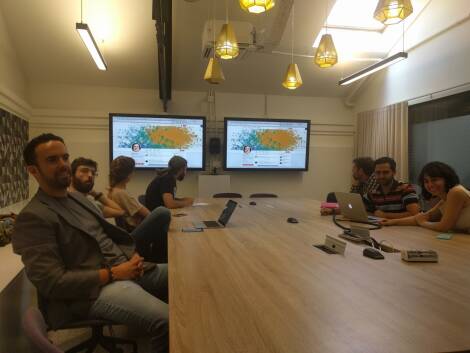
Beyond his intellect, it is his warmth and sheer enthusiasm that I will miss the most. I will always cherish our late-night talks in the office, exploring research directions I had never thought of. Manuel had an incredible gift for making you feel valued; when an idea impressed him, you knew it instantly. His face would completely light up in amazement, followed by his trademark “Bom!”.
He was a remarkably special friend who will always have a dedicated space in my thoughts. May he rest in peace.
He remains one of the most inspiring of colleagues in my career. I always looked forward to spending time with Manuel and hearing about his latest research and theories during during his time at NICTA/Data61 in Australia, and visiting him during his time at MIT Media Lab.
It was indeed a privilege to know Manuel and the world is a little less positive with his passing.
My sincere condolences to his loved ones.
I knew Manuel from his time in Australia. He was gifted with a curious, creative and enthusiastic mind. Every time I spoke to him, I learnt something new.
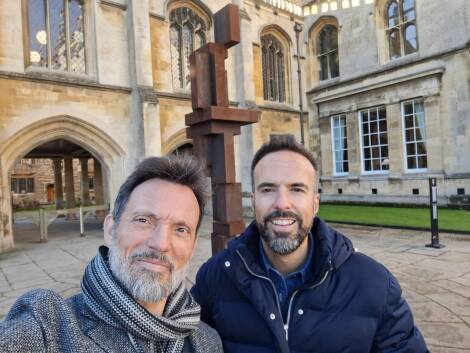
Photo 2: Manuel and I, with the Alan Turing sculpture at King’s College, Cambridge, 21 November 2025. The sculptor, Antony Gormley, said the sculpture was not about the "memorialisation of a death, but about a celebration of the opportunities that a life allowed". Yet again another genius gone too soon.
*******
I met Manuel relatively recently. In 2023, we were both invited to give a talk at La Cristalera, Madrid. A few weeks before the event he contacted me, enthusiastically. Pure Manuel from the start. He said we should have met many years ago, and that became our main motivation for the event. The first evening we talked for hours, from the embers of our PhD theses using Kolmogorov complexity to our incendiary tactics to resist Spanish mediocracy. It felt like I had known him for years.
We soon started to concoct tiny scientific revolutions together; every new idea was like a plot to steal the crown of science. But beyond science there was this amazing friend you could open up to about everything - it looked like we had a purpose, the true meaning of the universe.
From that innate curiosity he had built a career as an exceptional scientist. He used to tell us of his adventures at Brown University, UC San Diego, CSIRO, MIT, Max Planck... and of course our favourite one: the DARPA Network Challenge. We never thought science could be so fun: searching for ten red weather balloons for days, to win at the last minute! In these more than two years, I’ve been learning from him all the time. He understood computational social science in a way that was new to me: it is not that computation is useful to model society, it is that society is computation. That’s the right way to see the world.
Before returning to Spain he had been appointed for the Spanish Artificial Intelligence Advisory Council in 2020. He wasn’t comfortable with these things, or any well-deserved recognition. He was always looking for something fresh and new. So humble, so open, so generous, he asked to join our team. Not as the distinguished researcher he was, but as one of us. He came to Valencia a few times to cheerlead the DMIP team. On one occasion, he rediscovered the “cremaet” - a traditional Valencian spirited coffee - for all of us. We think we adopted him, but he adopted us; he made us believe for a while that, like him, we were also doing something really exceptional. We ended up calling a GPU server cremaet, a name that will only make us feel more orphaned without his inexhaustible enthusiasm.
He was back in Madrid mostly to be close to his parents in case they needed help. He soon moved from Carlos III University to CSIC, though he was too creative for these roles. He spoke of brilliant researchers stifled by “the machinery”. I shared some paragraphs of Zafra’s “El informe” with him, a book written from the bowels of CSIC against “bureaucratic violence”. But this wasn’t his battle. Above all, his greatest accolade was to be free.
It was only a few months ago he visited me in Cambridge. We were supposed to think of why a great idea, conversational complexity, led to disappointing experimental results. Instead we talked about Newton, Darwin, Maxwell, Rutherford, Turing, … and our next big thing together.
We were planning his next visit to Cambridge before everything went wrong. Early this year he got this disturbing health issue. In one of our calls, he explained to me how terrifying it was for him. We talked for more than an hour - only fear, almost no science. He was no longer Manuel. That thing hadn't taken his body, it was taking over his mind.
The day we published our first Nature paper together, I sent him an email. I simply wrote that I felt he wasn't any better… He wasn't really there anymore.
There are so many things I didn't know about his world, yet I still feel so lucky I shared all these unique moments with him. We all learnt so much from Manuel. Let’s celebrate the opportunities his life allowed.
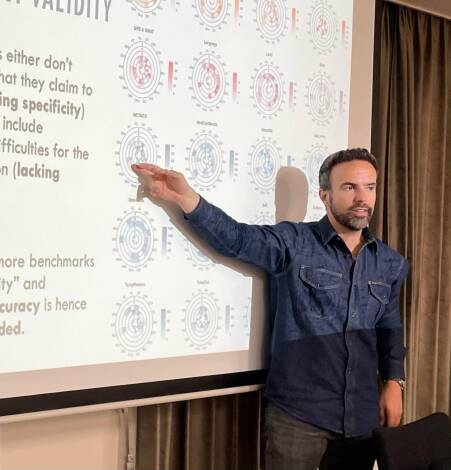
I most recently engaged with Manuel a few years ago as several of us were planning Pascal's 60th birthday party / conference ("Pascal United"). Then, as ever, Manuel was brimming with ideas for how to honor the impact Pascal has had on so many of our lives. His enthusiasm, as usual, was contagious, and played a significant role in making the event and experience what it was.
This is how I will remember Manuel: as a warm, kind, generous human being ... an amazing scientist, sure ... but most importantly, someone who invites you in (no matter your stature) and helps you realize that you have a lot to offer the world.
Thank you, Manuel, and may you rest in peace.
Manuel was a dear colleague, mentor, co-author, and someone who steered and influenced my own career in many ways. As countless friends and colleagues would attest, what was incredible about Manuel is his infectious curiosity, versatility, and unique blend of scientific depth & artistic lightness.
Manuel, you will be missed!
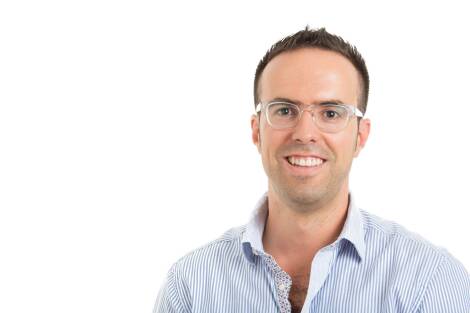
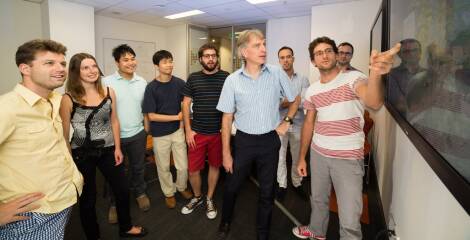
I owe much of my research path to him. Manuel sparked in me a deep curiosity for understanding social dynamics, and through his example, he showed me what science could and should be: playful, creative, and joyful.
I will deeply miss our conversations, and the friendship we built over the years, across the many cities we lived in and shared along the way.
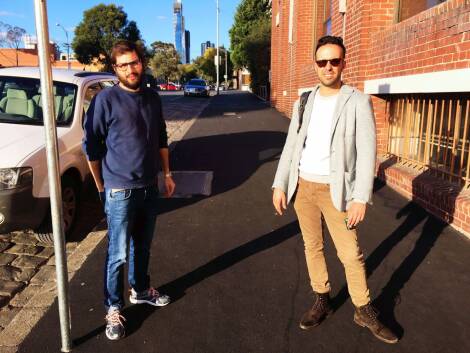
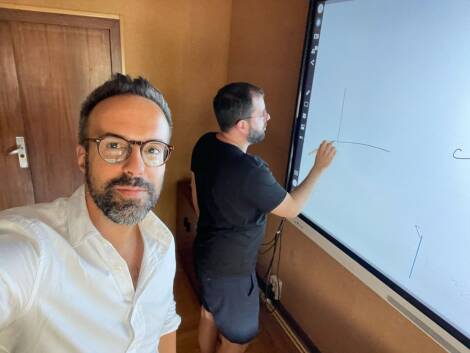
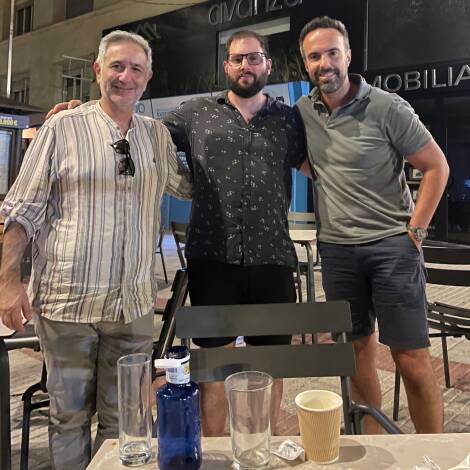
You will be missed, Manuel, but those who have interacted with you will never forget you. You were and will remain a big part of our lives.


 Français
 Deutsch
 Nederlands
 Español
 Português
 Magyar
 Русский
 繁體中文
繁體中文