
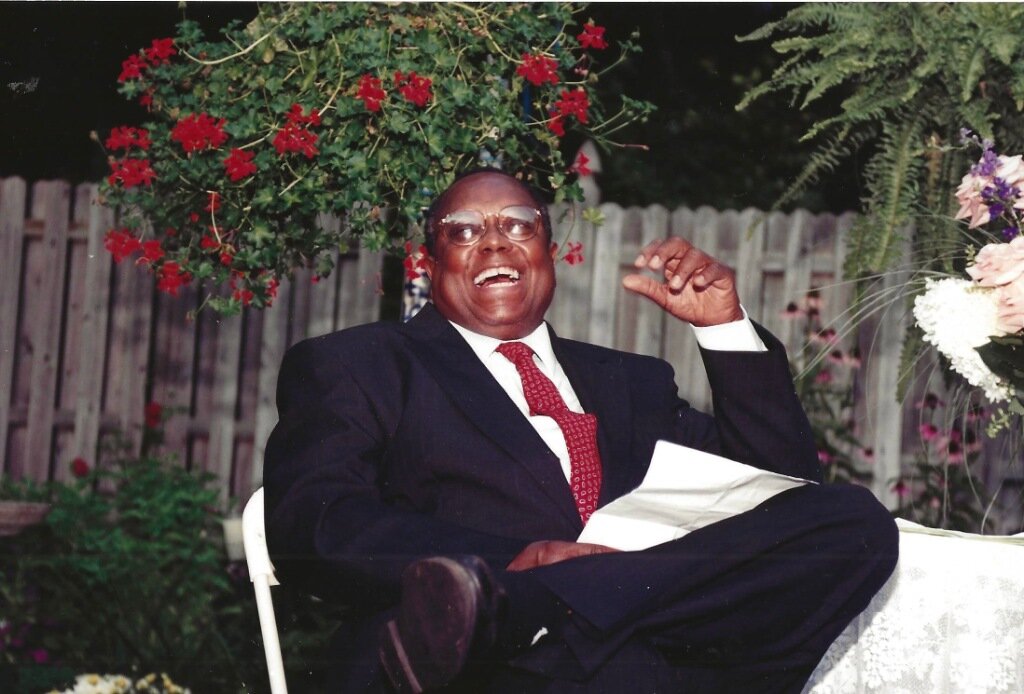
I have fought a good fight,
I have finished my course,
I have kept the faith.
2 Timothy 4-7
Obituary
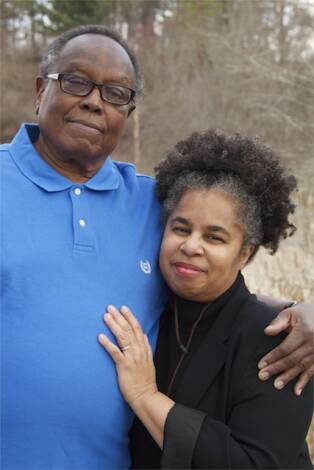
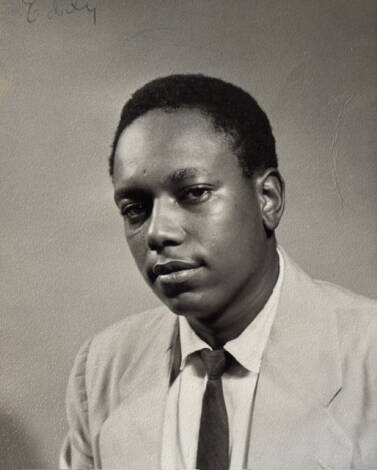
Locksley Edmondson, an influential Jamaican scholar of International Relations whose career spanned over five decades across several countries, died on August 18 in Ithaca NY. He was 92.
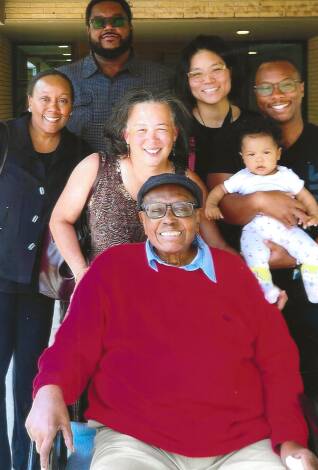
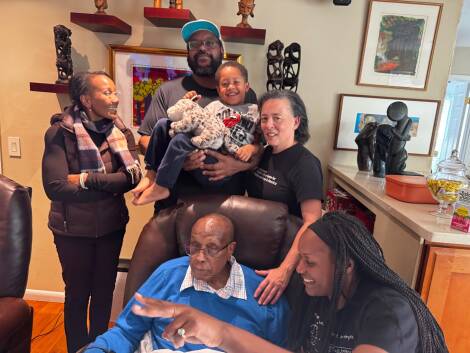
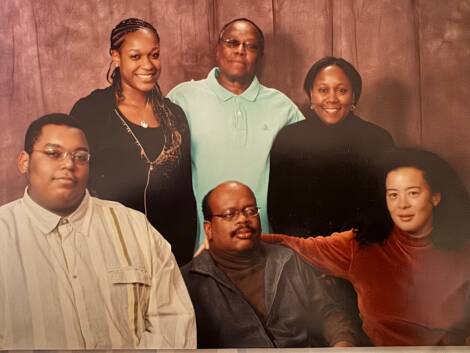
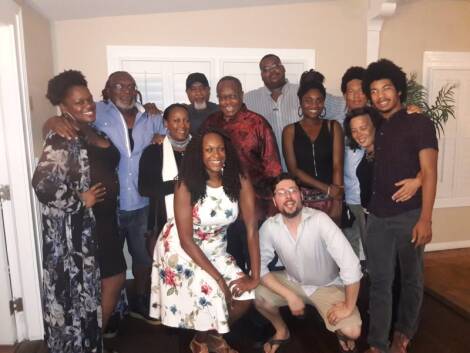
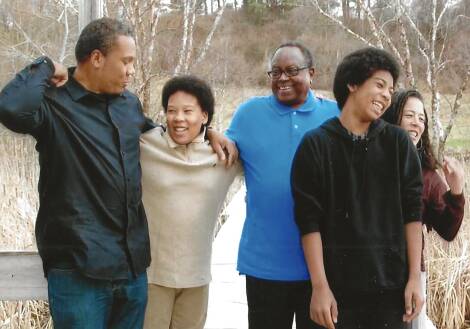
He leaves behind wife, Elizabeth, children Georgette (“Nona”) (Nate), Belinda, Magnus, Alisha; grandchildren Ali (Emma), Amanda, Ravi and Dorian; great granddaughter Eloise; sisters, Hermione, Patricia, Charmaine and Lisa; and brothers Winston (Louise), Michael, Andrew (Lavonne). His son Christopher and sister Norma predeceased him in 2016.
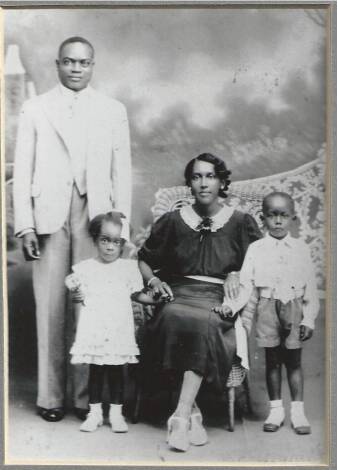
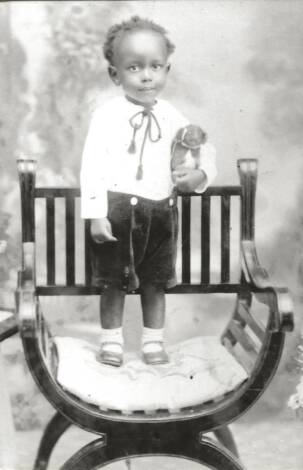
Born in the rural parish of Clarendon to school teachers Stanford and Olga, his parents impressed upon young Locksley that education should be his primary focus. Stanford insisted that Locksley and his sister Norma begin their daily Latin lessons at 5 am each morning by the bust of Lord Byron in the living room. Stanford himself was a powerful example of what education could do: he raised himself from poverty in St. Thomas—which, as Locksley would note in later years—was Jamaica’s poorest, Blackest, and most rebellious parish, to become Jamaica’s Superintendent of Schools; and, later, an Anglican minister who composed hymns.
Locksley attended the prestigious Jamaica College in Kingston, which schooled a generation of Jamaican leaders and scholars, including prime ministers Norman and Michael Manley, authors Neville and Kwame Dawes, and cultural theorist Stuart Hall. Even among such company Stanford’s 5 a.m. lessons paid off handsomely: Locksley carved out a name for himself as an excellent student of Latin, earning the sobriquet Flaccus, after the Roman poet.
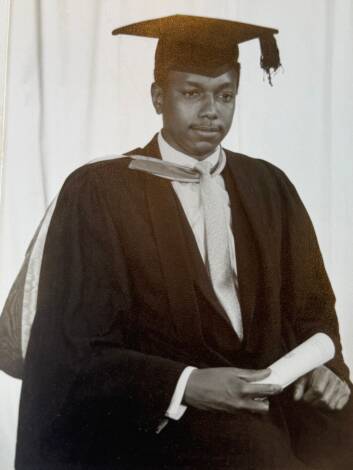
After a stint working in Kingston, Locksley moved to England in the late 1950s to complete his undergraduate degree at the University of Birmingham, specializing in Political Science, Economics and Sociology, graduating with honors. It was at Birmingham that Locksley met other Commonwealth students from Africa and Asia. He was introduced to the anticolonial political discourses such as Marxism and Pan Africanism that were shaping the independence movements of Jamaica and the rest of the colonial world, discourses that would inform his later scholarship as a professor. He was also introduced to British-style racism. After suffering numerous rejections, Locksley found one promising advertisement for lodging that specifically requested a Black male tenant: to deter the neighborhood thieves. During this time Locksley found common cause with his Irish co-workers in the glass 2 factory where he worked part-time to pay for his education. Their experience of British imperialism mirrored his own. On Locksley’s 70th birthday he finally got to fulfill his boyhood desire to see Ireland, and ever after was fond of listening to the Three Irish Tenors and eating Irish porridge.
Locksley moved to Canada to pursue his doctorate in Political Science at Queen’s University, conducting research at the Schomburg Library in New York city as he completed his thesis on the U.S. civil rights movement. Locksley accepted an offer from the University of Waterloo to become the first Black professor of the fledgling Department of Political Science there. In 1967 he was awarded a Rockefeller Fellowship to become a visiting professorship at Makerere University in Uganda, an experience which would transform his life. At Makerere Locksley became close friends with the luminaries of the Pan Africanist independence movements of Africa and the Caribbean, including C.L.R. James, Ali Mazrui and Ngugi wa Thiong’o.
In 1970 Locksley joined the Department of Government at Cornell University, where he became fast friends with James Turner, the founder and director of the newly-formed Africana Studies & Research Center, the first center of its kind in the United States to center the African diaspora. His friendship with James would also transform his personal and professional life; in Africana Studies he recognized his life’s work, and in his second tenure at Cornell in 1983 he joined the department, where he would remain until he retired in 2016, himself becoming its director from 1991 to 1996.
Despite his ascent in the American academy, Locksley still longed to be a part of the nation-building movements of the post-independence societies of the Caribbean. So in 1973 he returned to Jamaica to join the faculty of the Department of Government at the University of the West Indies at Mona, where he stayed until 1981, lecturing and building innovative programs during his tenure as Dean of Social Sciences. He was a member of a cohort of UWI intellectuals who advised Prime Minister Michael Manley during the turbulent yet heady nationalism of the 1970s.
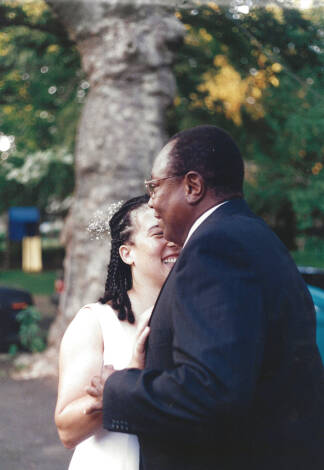
A Pan Africanist firmly committed to the freedom of Black societies worldwide, Locksley was expansive by nature. He read voraciously and loved to quote from a wide range of intellectuals, from iconic African American scholars like W.E.B. DuBois to the groundbreaking Jewish scholar of totalitarianism, Hannah Arendt. But he was not an intellectual snob: he also liked to read The National Enquirer. Read everything, he would counsel his children, before you make a judgement. 3 A Jamaican to his bones, he loved big Jamaican breakfasts, cricket, Usain Bolt, Shakespeare soliloquies, and belting out Anglican hymns. He was a great orator, a sought-after speaker for professional events and for every single family wedding. He loved jazz, particularly Billy Eckstine and “sassy” Sarah Vaughn. Locksley was a profoundly tolerant man who disliked intolerant people. He was a legendary teacher who trained generations of scholars after him. He was a ferocious debater, a loving father, a doting grandfather, and a great friend. He will be missed by everyone who knew him.
Text box
Gallery

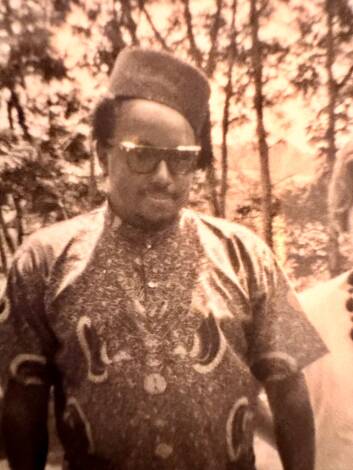
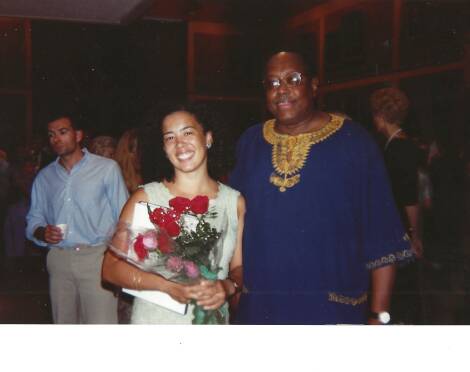
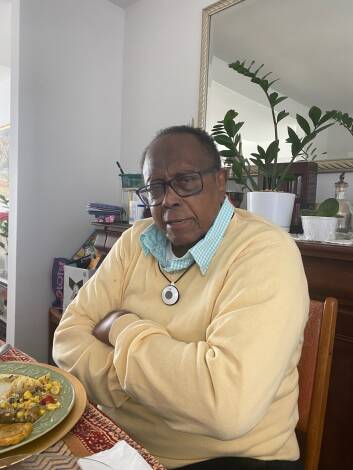
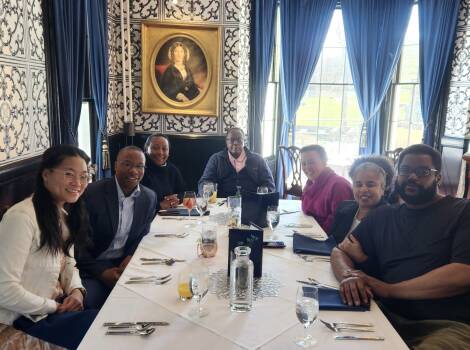


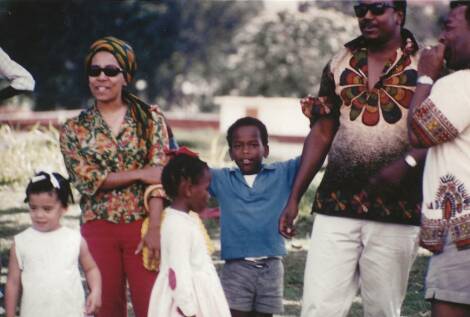
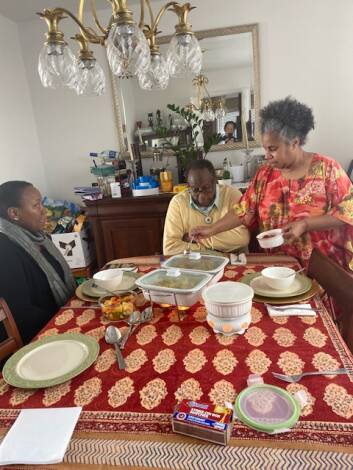
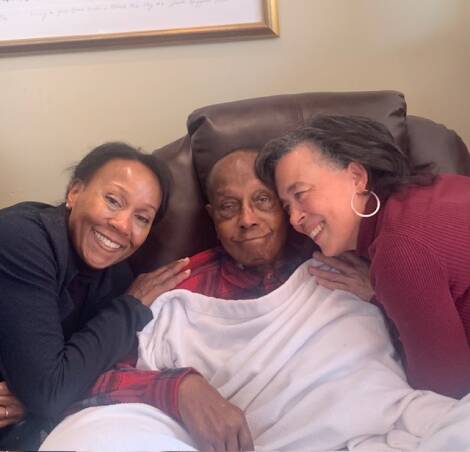


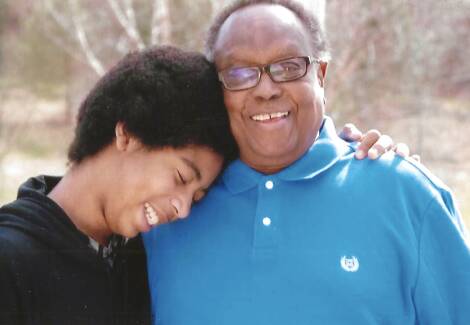

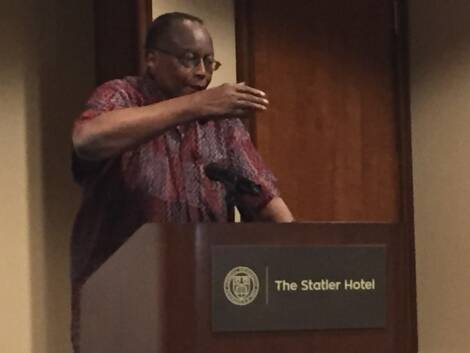
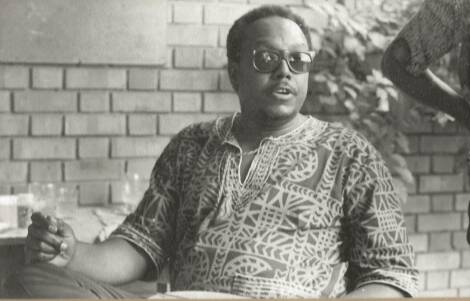
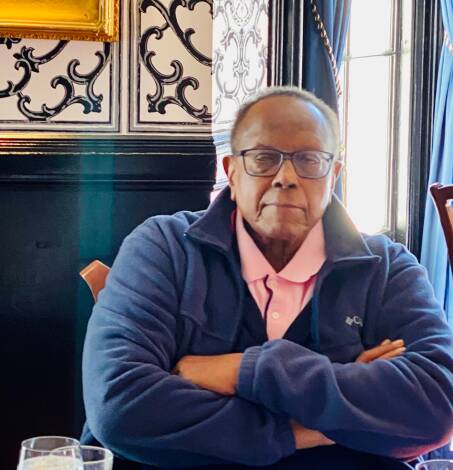
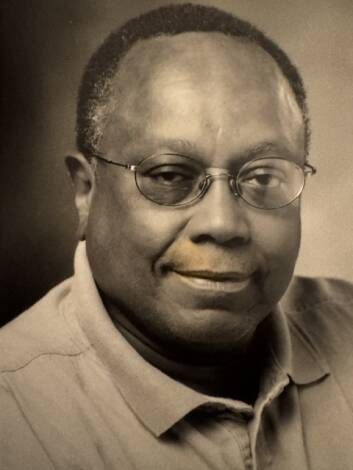
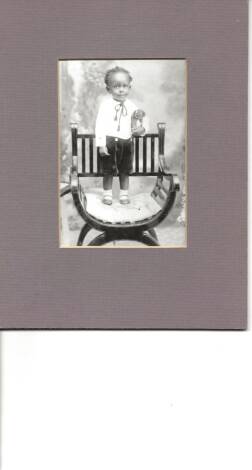

Tributes & Memories
University of the West Indies Regional Headquarters
In Memory of Professor Locksley Edmondson
The UWI Regional Headquarters, Jamaica W.I. Friday, August 21, 2026—The University of the West Indies (UWI) mourns the passing of Professor Locksley Edmondson, a son of the Caribbean and a luminous scholar whose wisdom and warmth have inspired generations of students, colleagues, and communities across the globe. From 1983 onward, Professor Edmondson illuminated the Africana Studies and Research Center at Cornell University, distinguishing himself as a political scientist deeply engaged with international relations, especially the vital connections between Africa and the Caribbean, and the intricate patterns of race relations throughout the Black World.
Born in Jamaica, Professor Edmondson’s academic journey reflected his boundless curiosity and steadfast dedication to uplifting others. His distinguished path included seven transformative years at the Mona Campus in Jamaica and a significant tenure at the Institute of International Relations at the St. Augustine Campus in Trinidad & Tobago. At The UWI, his leadership and mentorship became a guiding light for faculty and students, weaving new threads into the Caribbean’s academic and intellectual tapestry. His administrative brilliance radiated during his time as Dean of the Faculty of Social Sciences at Mona (1976–1978) and as University Dean of Social Sciences (1978–1980), where he steered academic programmes across Jamaica, Barbados, Trinidad & Tobago, and the Bahamas. As Dean, he co-chaired the International Symposium at the Cave Hill Campus in Barbados in 1983 with the late Dr. Perry Mars, Dean of the Faculty of Social Sciences at the University of Guyana, which sparked the creation of the Consortium Graduate School for the Social Sciences in the Caribbean in 1985. Led by renowned scholars, Professors Raymond Smith, Donald Harris and Norman Girvan, the school later evolved into the Sir Arthur Lewis Institute of Social and Economic Studies in the late 1990s. Through his visionary leadership, Professor Edmondson not only elevated academic standards but also fostered a spirit of regional unity and intellectual exchange that continues to enrich the University today.
Throughout his illustrious career, Professor Edmondson championed Caribbean scholarship with unwavering passion. As a founding member and leader in the Caribbean Studies Association and as President of the African Studies Association of the West Indies, he amplified the region’s voices and perspectives on the global stage. His legacy continues to spark inspiration in Caribbean scholars and advocates everywhere.
Professor Edward Greene, Emeritus Professor, former UN Secretary-General’s Special Envoy for HIV in the Caribbean, and colleague, noted: “Professor Locksley Edmondson has left a legacy of path‑breaking scholarship on Pan‑African connections—the exact title of a 2017 symposium at Cornell University held in his honour, which attracted a vast array of his former students alongside African, Caribbean and transatlantic scholars. Besides highlighting his profound advocacy for intellectual curiosity and the creative leadership that defines the Caribbean intellectual tradition, the event beautifully portrayed how these attributes converged with his international endeavours in Haiti, Burkina Faso, Nigeria and South Africa.”
Professor Edmondson’s achievements garnered international acclaim, including numerous honours such as the “Distinguished Africanist Award” from the New York African Studies Association. Yet, it is his mentorship, humility, and unwavering belief in the potential of Caribbean and African peoples that The University of the West Indies community will cherish most deeply.
Professor Densil A. Williams, Pro Vice-Chancellor and Principal of the Mona Campus, shared: “The UWI and our region have lost an intellectual giant. His legacy of scholarship will remain as his major contribution to advancing our development as a people. Our Mona Campus is proud to have been associated with this brilliant mind.”
Expressing condolences on behalf of the university community, The UWI Vice-Chancellor, Professor Sir Hilary Beckles, said, “The great Professor Locksley Edmondson was a powerful pedagogical force in the intellectual decolonisation of the region and The UWI. He was a leader in the curriculum transformation of the Faculty of Social Sciences at Mona and beyond. An outstanding scholar in the Pan-African pantheon, he was one of UWI’s greatest orators in both classrooms and communities. He was an inspiring intellectual who guided the younger generation, including me as a Mona member. We celebrate his life and legacy as we send blessings to his wife, Elizabeth and all his family.”
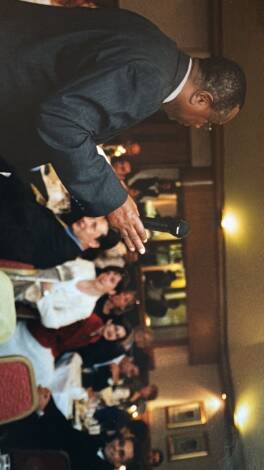
It is with profound sadness that the Executive Committee of the Caribbean Studies Association shares news of the passing of Professor Emeritus Locksley Edmondson, an influential Jamaican scholar of International Relations whose career spanned over five decades across several countries. He died on August 18 in Ithaca NY at the age of 92.
A founding member of the CSA in 1974 and its President from 1996 to 1997, Professor Edmondson was one of the intellectual architects of Caribbean Studies as a field committed not only to the regions internal complexity, but to its place within a wider, connected world.
Born in the rural parish of Clarendon to schoolteachers Stanford and Olga on April 24, 1936, Professor Edmondson trained across three continents — undergraduate work at the University of Birmingham, graduate studies in political science at Queens University in Canada — Professor Edmondson built a career that was, from its very beginning, unwilling to sit still within a single discipline, a single institution, or a single geography. He was a political scientist by training, but his real subject was the relationship between places: between the Caribbean and Africa, between race and international order, between the university and the wider work of liberation. That restlessness carried him through appointments at the University of Waterloo, Makerere University in Uganda, the University of Denver, Southern Illinois University, and, most enduringly, both the University of the West Indies and Cornell University, where he served for decades in the Africana Studies and Research Center and, earlier, in Government.
At UWI, his imprint was structural as much as scholarly: as Campus Dean of Social Sciences at Mona and then as University Dean of Social Sciences with responsibility for deepening institutional relationships across the university campuses in Jamaica, Barbados, Trinidad Tobago, and the Bahamas, he helped shape the very shared, multi-territorial architecture that the University — and by extension Caribbean intellectual life — still depends on. At Cornell, colleagues who came to the Africana Studies and Research Center as visiting scholars have long spoken of a scholar whose erudition was only surpassed by his generosity, and whose mentorship shaped generations of students working at the intersection of Africana and international studies.
What distinguished Professor Edmondson, and what CSA members will recognize as quintessentially his, was a refusal to treat the Caribbean as a self-contained unit of analysis. Across five decades of publication — from his early work on the internationalization of Black power to his later reflections on Afro-optimism and Afro- pessimism — he insisted on tracing the Caribbeans political, intellectual, and diasporic lines back to Africa and out into the non-aligned and Third World. He did this not as an intentional intellectual practice: through his work with UNESCO, the United Nations University, the Institute of the Black Peoples in Burkina Faso, TransAfrica Forum, and the Thabo Mbeki African Leadership Institute, he spent a lifetime building the very institutional bridges between the Caribbean and Africa that scholars now name as urgent and, encouragingly, that regional leaders are beginning to walk across. The efforts of figures like Prime Minister Mia Mottley of Barbados to deepen Caribbean–Africa diplomatic, economic, and reparatory ties are, in a real sense, catching up to a vision Professor Edmondson was already articulating from a UN podium in Kingston in 1979. It is a rare scholar whose work anticipates the statecraft of half a century later.
The CSA holds a particular debt to him: as a founding member, he helped set the terms by which our Association would understand itself — as interdisciplinary, as regionally rooted, and as internationally engaged, unwilling to separate the study of the Caribbean from the study of the Black world it has always been part of.
To his family, his students, his Cornell and UWI colleagues, and the many institutions across Africa, the Caribbean, and the diaspora that he helped build, the Executive Committee of the Caribbean Studies Association extends its deepest condolences. His scholarship, his mentorship, and his tireless work as a bridge-builder remain very much alive in the field he helped found and we are all deeply grateful for his tireless efforts.
— The Executive Committee, Caribbean Studies Association
Until we meet again, blessings and all my love Locksley, my big brother.
From your little sister, Hermione (Min)
In the two Cornell courses I took with Locksley, I learned there was an international context, as well as a body of international literature, to be considered in matters of race and racism. Locksley was a first-rate academic with a keen and open mind, a concerned mentor, and, most of all, a friend to his students. No wonder he was the first professor I invited to speak to my local alumni association. Locksley’s discussion of Nelson Mandela—who had not yet been elected President of South Africa—made our group understand what a remarkable person Mandela was.
Locksley’s interests were not limited to his academic pursuits. Among other things, he loved discussing old TV shows. Bonanza, he once told me, was a favorite. But whether we discussed politics, popular culture, or his fascinating childhood in Jamaica, Locksley always injected humor into the conversation. He was a spirited and fundamentally happy person. And when Elizabeth came into his life, his happiness was complete.
My wife, Andrea Glanz, and I have tried to help make a difference at Cornell. So, in 2009 as a tribute to Locksley, we created the Cornell Caribbean Studies Collection in the Africana Library.
Finally, the best cup of coffee I ever had was the one Locksley made me at his home in Jamaica in 1973.
Jim Irish, Esq. Cornell Class of 1974
Jim Mittelman
Distinguished Research Professor and University Professor Emeritus
American University
After I graduated, we continued to communicate through visits to each other’s homes, lengthy phone calls, and rejoicing in the liturgy and music of the worldwide Anglican communion. I am blessed to be among those who benefited from his stature as an internationally distinguished scholar and his generosity throughout several decades of friendship following my graduation from Cornell.
I met Locksley in 1973 at the University of the West Indies, Mona, as I set out to do a Master’s degree in International Relations. He was a veritable “force of nature” tall, physically imposing, expressive presence with a booming voice: an unmistakable and unapologetic expression of the “life force” of the universe.
He didn’t so much “advise” but adopt. Before I knew it I was attending conferences in Port-of-Spain, San Juan, authoring papers on my own, others jointly with him. Truthfully, Locksley without lecturing or hectoring convinced me of my intellectual capabilities and of the place of African and Caribbean Peoples in the world.
Thus a friendship was formed that never died; he sat as my external examiner on my PhD Committee at Binghamton and we remained in contact through these fifty years. He was a friend and guide for the ages.
Condolences to Elizabeth and the family and his numerous friends.
Walk Good Locksley.
Dr the Honourable Peter D. Phillips, OJ
Former leader, People’s National Party, Kingston, Jamaica
I had the honor of learning from him as an undergraduate. What he offered was not simply information about the diaspora, but a way of seeing it whole, and of understanding that we belong to it. Cornellians across decades and continents can say the same.
On behalf of the Cornell Black Alumni Association, our deepest condolences go to his family, his loved ones and his colleagues at the Africana Studies and Research Center. His loss is felt by generations of Cornell alumni, by the academy, and by the entire African diaspora he spent a lifetime illuminating. He is with the ancestors now.
Shannon K. Cohall, ‘14, LLM ‘25 President and CEO, Cornell Black Alumni Association
Celia Naylor
Professor of Africana Studies
Barnard College, Columbia University
Cornell University Class of 1988
In Memoriam: Locksley Edmondson (April 12, 1934 – August 18, 2026)
A Tribute from the Executive Committee of the Caribbean Studies Association
It is with profound sadness that the Executive Committee of the Caribbean Studies Association shares news of the passing of Professor Emeritus Locksley Edmondson, an influential Jamaican scholar of International Relations whose career spanned over five decades across several countries. He died on August 18 in Ithaca NY at the age of 92.
A founding member of the CSA in 1974 and its President from 1996 to 1997, Professor Edmondson was one of the intellectual architects of Caribbean Studies as a field committed not only to the regions internal complexity, but to its place within a wider, connected world.
Born in the rural parish of Clarendon to schoolteachers Stanford and Olga on April 24, 1936, Professor Edmondson trained across three continents — undergraduate work at the University of Birmingham, graduate studies in political science at Queens University in Canada — Professor Edmondson built a career that was, from its very beginning, unwilling to sit still within a single discipline, a single institution, or a single geography. He was a political scientist by training, but his real subject was the relationship between places: between the Caribbean and Africa, between race and international order, between the university and the wider work of liberation. That restlessness carried him through appointments at the University of Waterloo, Makerere University in Uganda, the University of Denver, Southern Illinois University, and, most enduringly, both the University of the West Indies and Cornell University, where he served for decades in the Africana Studies and Research Center and, earlier, in Government.
At UWI, his imprint was structural as much as scholarly: as Campus Dean of Social Sciences at Mona and then as University Dean of Social Sciences with responsibility for deepening institutional relationships across the university campuses in Jamaica, Barbados, Trinidad Tobago, and the Bahamas, he helped shape the very shared, multi-territorial architecture that the University — and by extension Caribbean intellectual life — still depends on. At Cornell, colleagues who came to the Africana Studies and Research Center as visiting scholars have long spoken of a scholar whose erudition was only surpassed by his generosity, and whose mentorship shaped generations of students working at the intersection of Africana and international studies.
What distinguished Professor Edmondson, and what CSA members will recognize as quintessentially his, was a refusal to treat the Caribbean as a self-contained unit of analysis. Across five decades of publication — from his early work on the internationalization of Black power to his later reflections on Afro-optimism and Afro- pessimism — he insisted on tracing the Caribbeans political, intellectual, and diasporic lines back to Africa and out into the non-aligned and Third World. He did this not as an intentional intellectual practice: through his work with UNESCO, the United Nations University, the Institute of the Black Peoples in Burkina Faso, TransAfrica Forum, and the Thabo Mbeki African Leadership Institute, he spent a lifetime building the very institutional bridges between the Caribbean and Africa that scholars now name as urgent and, encouragingly, that regional leaders are beginning to walk across. The efforts of figures like Prime Minister Mia Mottley of Barbados to deepen Caribbean–Africa diplomatic, economic, and reparatory ties are, in a real sense, catching up to a vision Professor Edmondson was already articulating from a UN podium in Kingston in 1979. It is a rare scholar whose work anticipates the statecraft of half a century later.
The CSA holds a particular debt to him: as a founding member, he helped set the terms by which our Association would understand itself — as interdisciplinary, as regionally rooted, and as internationally engaged, unwilling to separate the study of the Caribbean from the study of the Black world it has always been part of.
To his family, his students, his Cornell and UWI colleagues, and the many institutions across Africa, the Caribbean, and the diaspora that he helped build, the Executive Committee of the Caribbean Studies Association extends its deepest condolences. His scholarship, his mentorship, and his tireless work as a bridge-builder remain very much alive in the field he helped found and we are all deeply grateful for his tireless efforts.
— The Executive Committee, Caribbean Studies Association
The University of the West Indies (The UWI) has hailed Professor Locksley Edmondson for championing “Caribbean scholarship with unwavering passion”, and described him as “a luminous scholar whose wisdom and warmth have inspired generations of students, colleagues, and communities across the globe”.
Edmondson, regarded as an influential Jamaican scholar of international relations whose career spanned more than five decades across several countries, died on August 18 in Ithaca, New York. He was 92.
The UWI, in its tribute, said Edmondson was a founding member and leader in the Caribbean Studies Association who, as president of the African Studies Association of the West Indies, amplified the region’s voices and perspectives on the global stage.
“His legacy continues to spark inspiration in Caribbean scholars and advocates everywhere,” The UWI said, adding that his achievements garnered international acclaim, including numerous honours such as the Distinguished Africanist Award from the New York African Studies Association. “Yet, it is his mentorship, humility, and unwavering belief in the potential of Caribbean and African peoples that The University of the West Indies community will cherish most deeply,” the university said.
“Professor Locksley Edmondson has left a legacy of path-breaking scholarship on Pan African connections — the exact title of a 2017 symposium at Cornell University held in his honour which attracted a vast array of his former students alongside African, Caribbean, and transatlantic scholars,” said his colleague, Professor Edward Greene, a former United Nations secretary general special envoy for HIV in the Caribbean. “Besides highlighting his profound advocacy for intellectual curiosity and the creative leadership that defines the Caribbean intellectual tradition, the event beautifully portrayed how these attributes converged with his international endeavours in Haiti, Burkina Faso, Nigeria, and South Africa,” Greene added.
Professor Densil Williams, pro-vice-chancellor and principal of the Mona campus, said: “The UWI and our region have lost an intellectual giant. His legacy of scholarship will remain as his major contribution to advancing our development as a people. Our Mona campus is proud to have been associated with this brilliant mind.”
At the same time, The UWI’s Vice Chancellor Professor Sir Hilary Beckles described Edmondson as “a powerful pedagogical force in the intellectual decolonisation of the region and The UWI”. Beckles added that Edmondson was a leader in the curriculum transformation of the Faculty of Social Sciences at Mona and beyond, adding that, “as an outstanding scholar in the Pan-African pantheon he was one of UWI’s greatest orators in both classrooms and communities. He was an inspiring intellectual who guided the younger generation, including me as a Mona member. We celebrate his life and legacy as we send blessings to his wife, Elizabeth and all his family”.
Edmondson, who was born in Clarendon, attended Jamaica College in St Andrew. In the late 1950s he went to England to complete his undergraduate degree at University of Birmingham, specialising in political science, economics, and sociology, and graduating with honours.
It was at Birmingham where he met other Commonwealth students from Africa and Asia, and was introduced to anti-colonial political discourses such as Marxism and Pan Africanism that were shaping the independence movements of Jamaica and the rest of the colonial world. Those discourses informed his later scholarship as a professor.
He later moved to Canada to pursue his doctorate in political science at Queen’s University, conducting research at Schomburg Library in New York City as he completed his thesis on the US civil rights movement.
Eventually, he accepted an offer from University of Waterloo to become the first black professor of the fledgling Department of Political Science there.
In 1967 he was awarded a Rockefeller Fellowship to become a visiting professorship at Makerere University in Uganda where he became close friends with the luminaries of the Pan Africanist independence movements of Africa and the Caribbean, including CLR James, Ali Mazrui, and Ngugi wa Thiong’o.
In 1970 Edmondson joined the Department of Government at Cornell University and quickly developed a friendship with James Turner, the founder and director of the newly formed Africana Studies & Research Center — the first centre of its kind in the United States to centre the African Diaspora.
Despite his ascent in the American academy, Edmondson longed to be a part of the nation-building movements of the post-independence societies of the Caribbean. So in 1973 he returned to Jamaica to join the Department of Government at The UWI, where he stayed until 1981, lecturing and building innovative programmes during his tenure as dean of social sciences.
He was also a member of a cohort of intellectuals from The UWI who advised Prime Minister Michael Manley during the turbulent yet heady nationalism years of the 1970s.
He is survived by his wife, Elizabeth; children Georgette, Belinda, Magnus, and Alisha. His elder son Christopher predeceased him in 2016.
Remembering Waterloo's First Black Professor, Dr. Locksley Edmondson
Dr. Locksley Edmondson, the first Black professor at Waterloo, died on August 18, 2026 in Ithaca, New York, at age 92.
Locksley Edmondson
An influential Jamaican scholar whose career spanned over five decades across several countries, Edmondson was a founding faculty member in Waterloo’s Political Science department, joining in 1963. He held masters and doctoral degrees in Political Science from Queen's University (Ontario). His research and teaching specializations included international relations (especially concerning Africa and the Caribbean) and race relations (especially concerning the Black World).
In 1967, Edmondson took a leave of absence from Waterloo to teach in Makerere University in Uganda. He returned to North America in the early 1970s and eventually took up a position at Cornell University, where he became the director of African Studies. Edmondson’s obituary shares that he was “a Pan Africanist firmly committed to the freedom of Black societies worldwide.”
Dr. Christopher Taylor, Associate Vice-President, Equity, Diversity, Inclusion and Anti-Racism, writes in his 2026 book Unmasking DEI: “The Black faculty members at UW in the 1960s had a large impact not only on the local community, but also on the international community as well.
“Locksley Edmondson was the first Black professor at UW (Glaser, 2017). Although he stayed with the university for a few short years in the Political Science department, he was later the chair of multiple United Nations Educational, Scientific and Cultural Organization (UNESCO) meetings on Caribbean culture and migration. […] Whether (Waterloo’s early Black) professors stayed with UW or left to pursue other interests, they had an immense heart for bettering communities in Canada and their countries of origin.” (Taylor)
Edmondson was featured in the 2021 Waterloo News story, A brief history of Black experience at Waterloo, 1960s -1990s, by Jonathan Zi En Chan, PhD candidate in History.
Locksley Edmondson, professor of Africana Studies, emeritus in the College of Arts and Sciences (A&S), died Aug. 18 in Ithaca. He was 92.
A political scientist with specialties in international relations and race relations, Edmondson joined the Africana Studies and Research Center faculty as an assistant professor in 1983 and retired in 2017. An influential scholar of the African diaspora, he served as director of the Africana Studies and Research Center (ASRC) from 1991-96, developing the department and creating a model for Africana studies programs while contributing as a teacher and beloved community member.
“He was one of the longstanding faculty members who welcomed me to Cornell when I arrived in 2008, a scholar whose contributions in Caribbean studies and Pan-Africanism established foundations in Africana studies,” said Riché Richardson, professor and chair in the ASRC (A&S). “As a director of the ASRC during the 1990s, Professor Edmondson made outstanding contributions as a leader on campus and helped pave the way for chairs who have since served in the role in the new millennium.”
He was a kind person and generous teacher, Richardson said, who delivered “brilliant lessons” in his lectures and told engaging stories, including ones about his beloved home country, Jamaica.
Born in 1934 in Jamaica, Edmondson earned a bachelor’s degree from the University of Birmingham in England and a masters’ degree and doctorate in political science from Queen’s University, Canada.
His teaching career included posts at the University of Waterloo, Canada; Makerere University, Uganda; the University of Denver; Southern Illinois University at Carbondale; and the University of the West Indies, where he was dean of social sciences.
He first taught at Cornell as an assistant professor in the government department in the early 1970s before joining the Africana studies faculty in 1983 as a full professor.
“Dr. Locksley Edmondson brought stature and stability to the Africana Studies and Research Center,” said Robert L. Harris Jr., professor of Africana studies, emeritus (A&S) “In part because of his education in England, Locksley was an exacting scholar who required excellence from his students, especially precision in their research and writing. Given that he had taught on three continents – Africa, Europe and North America – he brought cogent analyses to his courses on comparative politics.”
Jonathan D. Jansen, M.S. ’87, who arrived at Cornell from South Africa during the late Apartheid years there, said Edmondson had an enormous influence on his thinking and future.
“I attended his class on South Africa and discovered my country for the first time from a man who, as a matter of principle, had never set foot there,” said Jansen, Distinguished Professor of Education Studies at Stellenbosch University in South Africa. “I did not realize how the banning of books and my own fundamentalist faith had cut me off from knowledge of the atrocity of Apartheid until Locksley opened my mind to what was happening in and around me. He threw me into the deep end, getting me to debate a white South African student who was still steeped in Apartheid thinking. Both of us changed radically because of Locksley’s teachings and became good friends.”
N’Dri Thérèse Assié-Lumumba, professor of Africana studies, said Edmondson was lively and cheerful even when expressing strongly held convictions and engaging in vigorous debates, and his kindness and generosity were rooted in his commitment to freedom and justice.
“He was a global thinker and actor whose influence extended well beyond the university,” Assié-Lumumba said. “His work reflected a commitment to placing Africa and its diaspora at the center of global intellectual and historical conversations.”
“He treated Pan-Africanism as a serious field, demanding serious study, and he brought the same rigor to the classroom that he brought to his scholarship,” said Shannon K. Cohall ’14, L.L.M. ’25, president and CEO of the Cornell Black Alumni Association. “His work insisted on a truth that generations of us have carried into our own – that the Caribbean, the African continent and Black America are not separate stories, but one story told in different accents.”
Edmondson was active in several United Nations forums and agencies including the UN Economic Commission for Africa and the United Nations Educational, Scientific and Cultural Organization (UNESCO). He contributed to the UNESCO’s General History of Africa initiative.
He published widely and served in leadership roles with the New York African Studies Association, the African Studies Association of the West Indies, the Bureau of the International Congress of African Studies and the Caribbean Studies Association, of which he was a founding member. He was active with academic and charitable endeavors including in Haiti, Burkina Faso, Nigeria and South Africa.
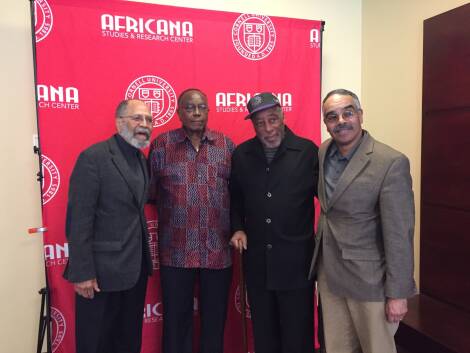
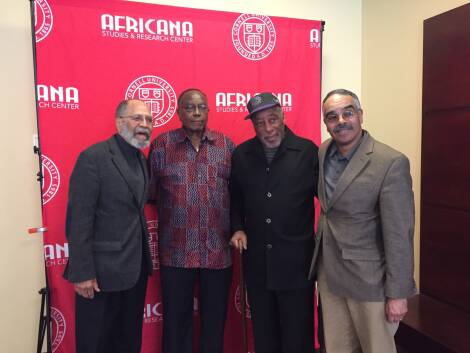
Edmondson received the Distinguished Africanist Award from the New York African Studies Association in 2013. He was honored in 2017 with a symposium at Cornell, “Pan-African Connections.”
He is survived by his wife, Elizabeth; his children Georgette, Belinda, Magnus and Alisha; five grandchildren and one great-grandchild; and four sisters and three brothers.
Service


 Français
 Deutsch
 Nederlands
 Español
 Português
 Magyar
 Русский
 繁體中文
繁體中文