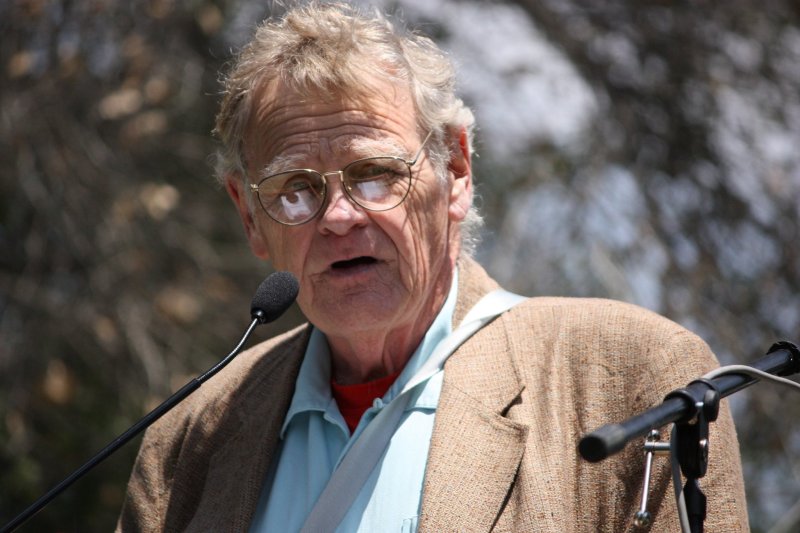
Kevin David O'Neill
"We create constantly evolving new metaphors for how we understand dying. Conflicting elements are integrated into one story."
Obituary
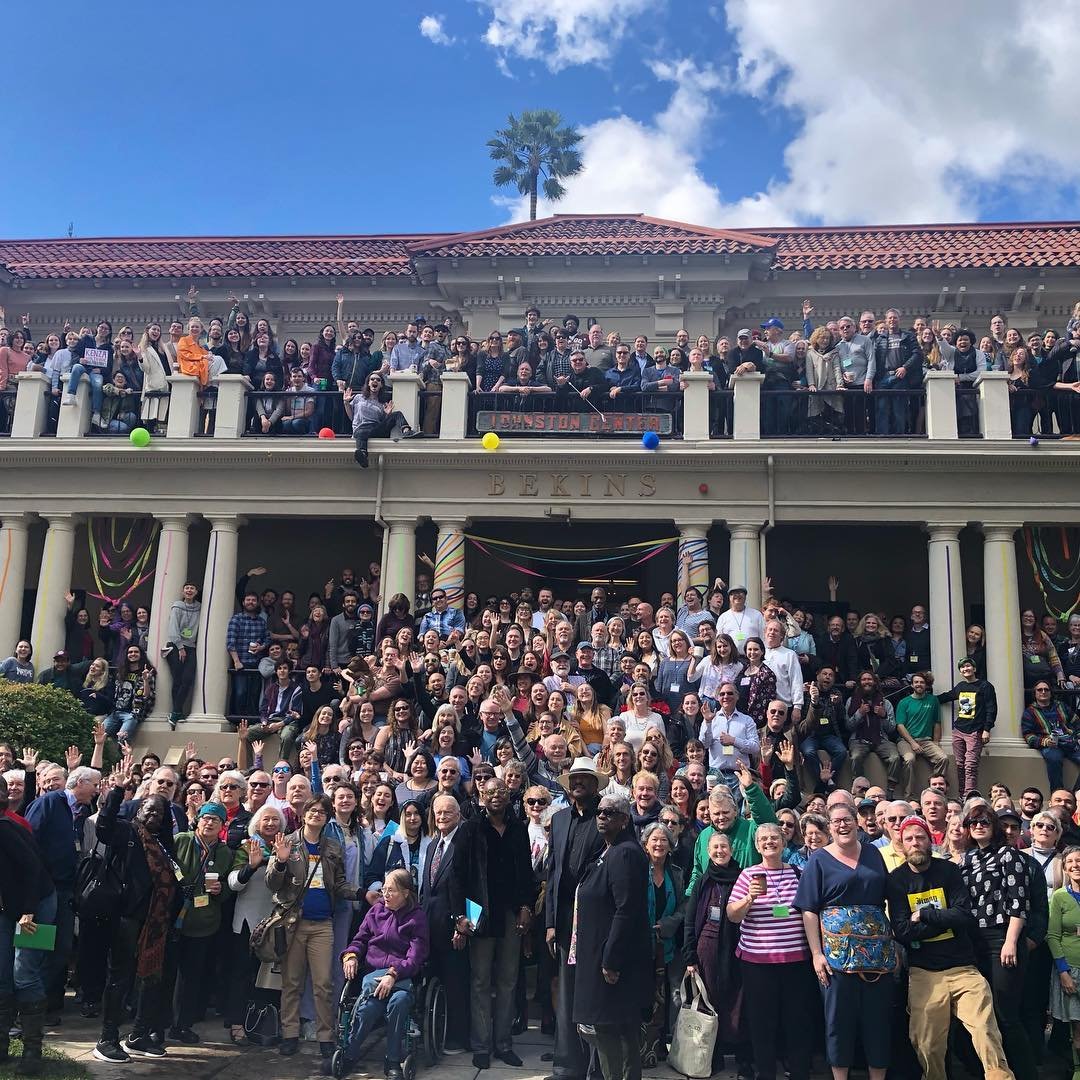
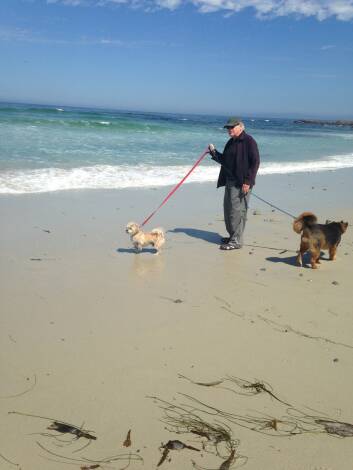
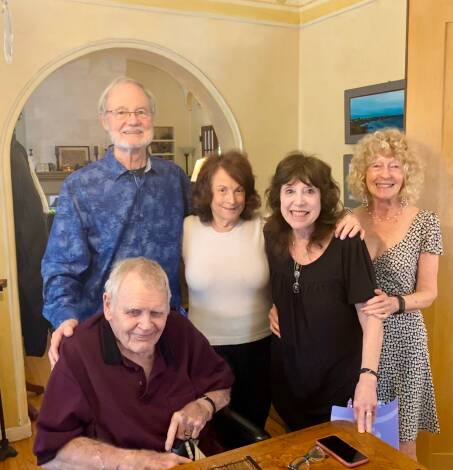
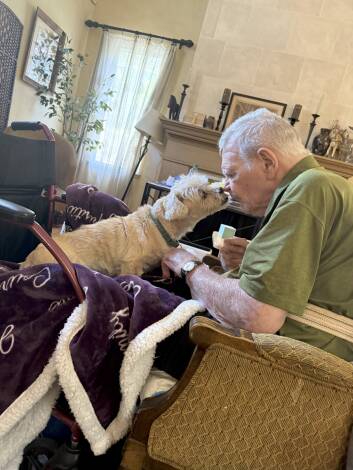
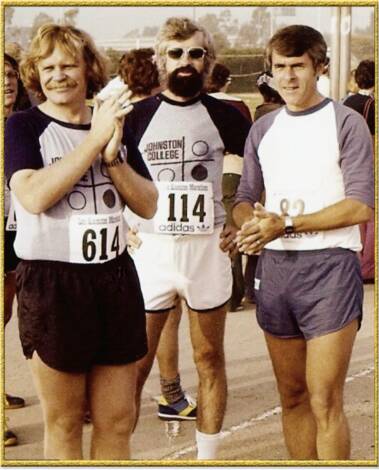
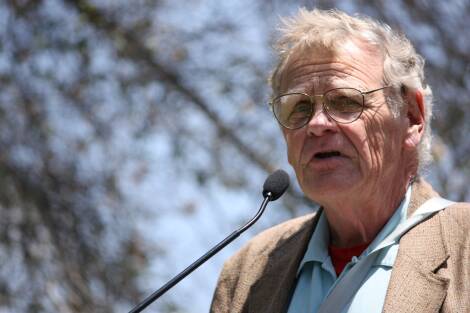
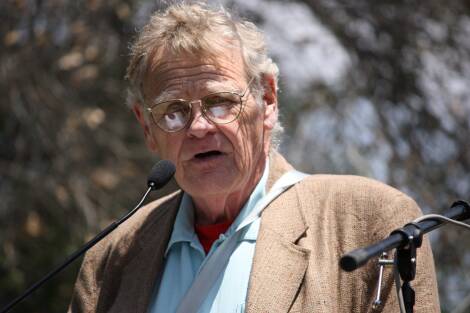
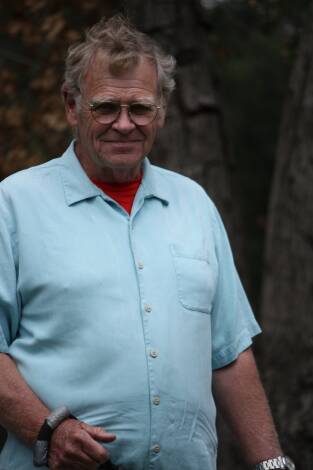
Kevin David Oneill, 84, of Los Angeles, California passed away peacefully on December 14,2025 surrounded by his loving family including his beloved pup Coconut. Kevin was an emeritus professor of philosophy at University of Redlands and in 1969 helped to found one of the first experimental colleges, Johnston College (now Johnston Center for Integrative Studies). Despite the difficulties created by his diagnosis of a-tpical Parkinsons, Kevin continued to teach Greek Philosophy (via Zoom) until a year before he passed. He was loved and admired by his students—a community that continued to embrace him from 1969 when Johnston was created until his last teaching experience, and beyond.
Kevin was born on September 22, 1941 in New York City. he grew up in Valley Stream, Long Island in an Irish Catholic family the son of Laurence Oneill, and Mary Jane Lawless Oneill. His father had been in the military in WWII, and had graduated medical school before the war; he had a much beloved private practice office in the family home. His mother and grandmother enveloped Kevin in the arts—reading him poetry and having him memorize poems at a young age. Kevin had 4 siblings : Brian, Lawrence, Arthur, and Suzanne. All preceded Kevin in death but for his dear sister, Suzzie.
Kevin’s remarkable intelligence was recognized early—he was admitted into Regis High School—a rigorous and remarkable Catholic school that admitted only the top 3 students from Catholic elementary schools. Because of the demands of the school very few students actually graduated. Kevin not only graduated with Honors---able to read ancient Greek and Latin—but also was an amazing actor and was given the best actor award by playwright Edward Albee who had come to judge their production. From Regis, Kevin received his B.A. in Philosophy from Georgetown, and then went to Yale for his PhD in philosophy. Upon receiving his doctorate, he was immediately hired to teach at University of Texas El Paso in the 1960s where he participated in civil rights marches. And then the phone call came from Press McCoy—who was determined to begin an experimental college and who brought its founders together. He called Yale to learn of its top graduates and was given Kevin’s name. He called Kevin—and Kevin left teaching position in Texas for the woods of Redlands—where Johnston College was created. He taught at Redlands until the disease made it impossible.
He had several relationships, but his most enduring was with Dorothy Clark. They were married in 1998 in Las Vegas with Dorothy’s two children as witnesses. Kevin moved to Los Angeles in 1996. They lived in their historic 1926 house together until Kevin’s passing—loving the children and many furry loves—both feline and canine, with Coconut being his beloved last.
Kevin’s step-children, Julia Bernsein and Benjamn Clark love him dearly-as do his two wonderful grandchildren—Collin and AJ.
Kevin participated in several academic conferences and produced scholarly essays; he published several notable books: As Long as You’re Having a Good Time: A History of Johnston College, 1969-1979 co-authored with his long-time colleague and friend Bill McDonald; the other two books brought Kevin the philosophy scholar into the new world of digital consciousness; these books deal with how the digital world has/is affecting our understanding of life and reality in 2016, Internet Afterlife: Virtual Salvation in the 21st Century ; and in 2022 The Afterlife in Popular Culture: Heaven, Hell, and the Underworld in the American Imagination.
Kevin will also be remembered for his wonderful, hilarious sense of humor—and his incessant questioning. He developed a remarkably unique teaching manner—questioning students about their personal lives that brilliantly integrated students’ own experiences into complex philosophical ideas, making philosophy more accessible and meaningful and leading at least one student to obtain a doctorate in philosophy.
Both his students and neighbors have vivid memories of Kevin walking and reading and walking the pups and reading.
He was much loved and will be dearly missed.
Timeline
Stream, Long Island.
Manhattan, and he describes himself as a “wise guy” there! Learned
to read Ancient Greek as well as Latin—and performed in a variety of
Shakespeare plays; awarded by Edward Albee at a contest for being best
actor!
taking a philosophy class, became enamored with the philosophy of
religion. He worked with renown philosopher Professor Louis Dupre
whose scholarship on the philosophy of religion inspired Kevin. Dupre
encouraged Kevin to go to Yale and Professor Dupre also wound up
teaching at Yale.
participated in civil rights marches
after a phone call from Pres McCoy who wanted him to help found
an experimental college-- Johnston College (now Johnston Center for
Integrative Studies). He was a beloved teacher—not only did he teach
amazing and creative classes, but he also created zany adventures for his
students—for example, taking them on trips to Greece and Ireland.
culture—leading to his interest in post-mortem photography, cemetery and
gravestone design and theory, spiritualism, consolation literature—all of
which later informed his works on Internet afterlife.
becomes the step-father to Julia and Ben and later the grandfather to
Collin and AJ. He continues to teach at Johnston and conduct Alumni
seminars.
Gallery


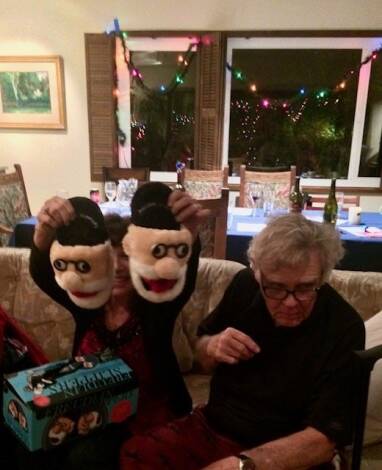
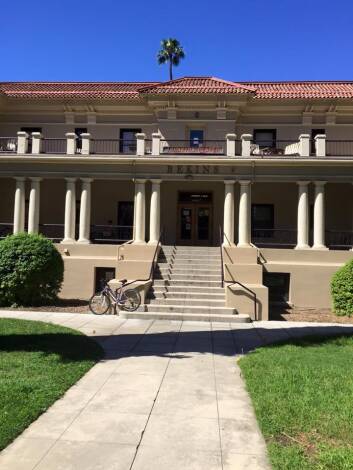
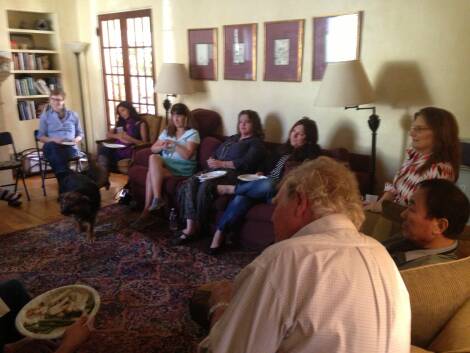
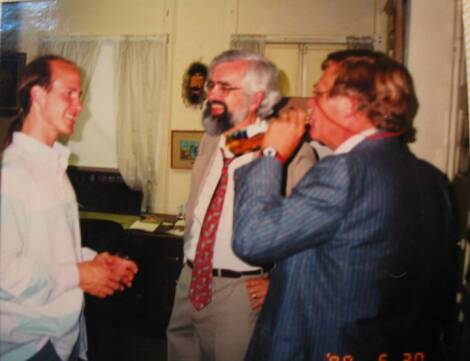
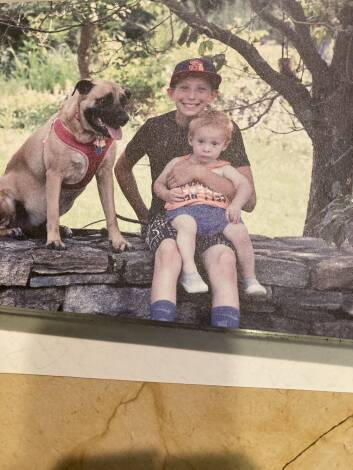
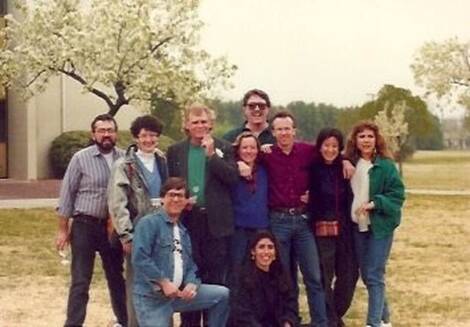
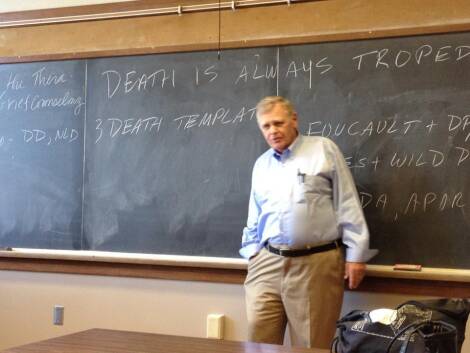

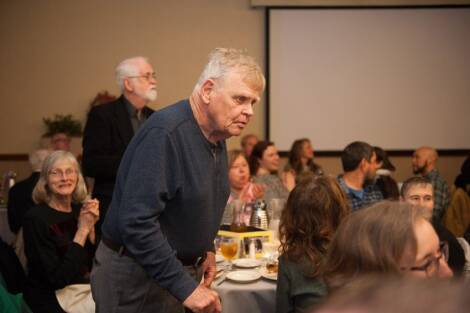
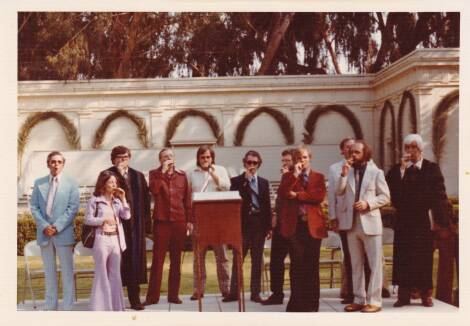
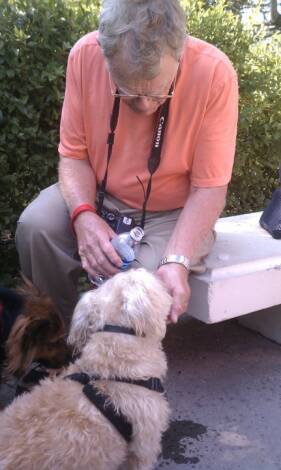
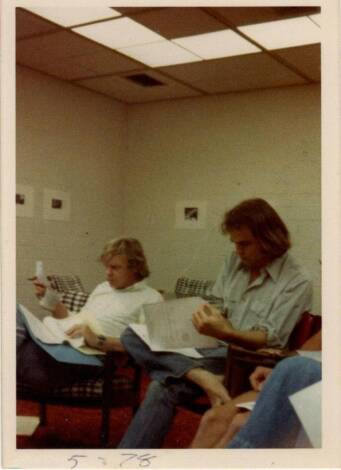


Videos
Memory wall
I was a good little boy, used to point-count grades and strict schedules and haircuts and proper behaviors and doing whatever I could to get around them (Missouri Synod Lutheran, for those who know), and Kevin showed me that there was a different way to teach; a different way to learn.
When he took me in as his advisee, I knocked on the door, he made a motion and noise to sit down.
Ten minutes later he looked up at me and asked “Who are you?” Well, this freshman was a bit intimidated, so I spouted out my name.”
“Yes, yes, yes, that’s beside the point. Who ARE you?”
And my journey down whatever the hell path I have taken, for better or worse, has not stopped since.
The man changed lives.
Like so many of us, my encounter with Kevin changed the trajectory of my life. For the first time I saw before my eyes what it meant to think on the edge of thought itself. Kevin thought publicly, dangerously, playfully, optimistically, he was a living refutation of the old adage that with wisdom comes melancholy.
His teaching style was Inimitable, unique to the subtleties of his own mannerisms and quirks – from the immeasurable depths of his own soul he taught his students to love a wild wisdom, to maintain the courage to pursue the harsh or difficult truths, his enthusiasm for the complex and abstract was infectious.
He was the greatest pedagogue I had ever met up until that point in my life. He seemed completely immune to the most natural diseases of professors, such as vanity and apathy. Now that my tenure on earth has doubled in length since I first met him, and has been mostly spent in Universities, I can say that he is still the greatest pedagogue I ever met - and the awe which I felt towards his mastery of his craft has only increased. I still regularly think of moments I experienced in his classroom.
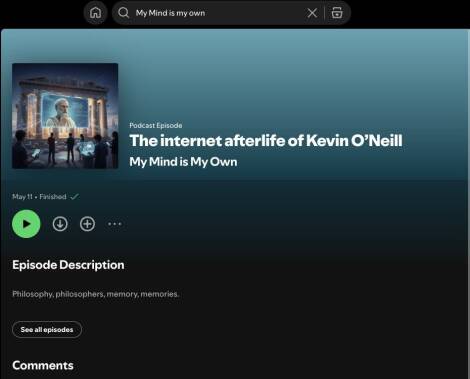
"The Digital Afterlife of Kevin O'Neill"
My Mind is my Own Podcast Episode Tribute
https://open.spotify.com/episode/4lV2yuxuJv6EOc00t2e1Uh
Preview:
"This is My Mind is my own. I'm Alvis Faboda. There's a book somewhere in my pile called Internet Afterlife by Kevin O'Neill. It's a slim volume more anthropological survey than argument, a look at how Americans use the internet to memorialize the dead, to reach out to them, to maintain something like an ongoing relationship with people who are no longer there or
And to try to attain immortality themselves. O'Neill was writing before LLMs transformed the way we interacted with AI, in a moment when Facebook memorial pages and condolence comment threads were the primary forms this remembering and memorializing took. The book is measured and curious rather than polemical. He's not really for or against any of it. He's watching.
Kevin O'Neill died in december twenty twenty five. I took classes from him at Johnston College in nineteen seventy five, seventy six, seventy seven. That's not quite the same as saying he was my teacher, though he was that too. He was more present as a voice, addressing the student body, alluding without quite arriving at the point, gesturing towards some other world we ought to be forming or at least be conscious of wanting...."
https://docs.google.com/document/d/12hbnR1duZlaC7z2wFile0zLx3jqlx1etGVytuLP280k/edit?usp=sharing
Preview:
Matt Greene: I think, like, yeah, Bell Hooks talks about holistic teaching as, like. seeing and teaching the whole student as a whole person, like, you know, and I think no teacher or professor probably saw me better than Kevin, despite the limited time I had with him, and I think that was… You know, because of his personal style, and because of the way he engaged. And, like, you know, probably part of the profound effect that he had on so many of us is that, like, it almost maybe is beside the point what we learned, because in his classroom, we maybe felt more like ourselves, you know? And part of that was his focus on the body, too, and, like, the animal reality, and it was funny, and it was, like, this… Sort of base feeling of what it was to be alive, and he was capturing that. in a way that was, like, fun and exciting, but also still very warm, right? Because I think, like, if I'm imagining, like, the Hollywood script about this professor, it would go very dark, right? And they're asking all these dark, horrible questions, and getting engagement, and starting a war on campus, but Kevin was none of that, right? And it was silly, and it was happy. And I think that… for me, touches what feels like a very core part of myself, and I think probably most people are that way, right? It's childlike, and it's… it's great.
Eli Kramer: That was really beautifully put. There’s something in just talking here that feels like carrying on Kevin's legacy. I think especially now, when it's increasingly easy for that distance to appear between us and student’s, and even if you can't do it the same way, I do feel more of a duty to carry on Kevin’s pedagogical commitments now. I see how stressed and hopeless many students are these days, and how they long even more to be seen (being over conscious of public presentation because of social media really is an issue here). It is important for me to develop such relationships with my students and I see what a difference it makes to step back and provide spaces for them to be seen that way. There were even a few times this semester where that become poignant for me.
Gaelan Walker: I also think, like… going to how more and more students are using AI. Like, Kevin's final project… or final task was always to do a stream of consciousness Just unconscious spilling of ideas about whatever the final topic was, and that it seemed like he… attended to those from me more than the actual final project that I gave, which I appreciated, because you know, I went through the work, I was trying to construct something to learn to write, to write a good paper, but you look back at those original papers, they weren't particularly good. The… Was it the… what do you call it? It was a manifesto..."
Again, looking at the memorials, it really strikes me how many Johnstonians shared my experience. There's so many people who have said, “I took one course with him, and I was trying to figure out what to do with my life. And he offered crucial mentorship work or advice.” I don't know how he found people at these moments, but at these sort of pivotal inflection points, shook them loose from their “dogmatic slumbers”, but also helped them orient and find meaningful direction for the next phase of life. I knew this was true for Rabbi Patricia, They were having some meeting her senior year, she knew she wanted to do work building community, and being supportive of people. He knew of her Jewish heritage, and although she was not very religious, told her “why don't you become a rabbi (at a time where there were no women Rabbis)?” And it was really that simple statement that actually had her consider something she had never considered, that was totally off her radar as a vocational pat
Kevin's Presence in My Life
Since learning of Kevin’s death, I have been struggling to understand why his presence in my life feels so central. After Johnston, I readily chose a career in psychology, but Kevin my philosophy advisor is somehow at the heart of that path.
In the many courses I took with Kevin at Johnston in the late ‘70s, it feels as if I somehow caught fire with the intellectual challenges he laid out for all of us who were his students. He had an immense gift for inspiring our young minds to reach — to do the work of reading and writing. In all his course evaluations he was honest about weaknesses I brought to the work at hand, but he also was keen on the progress I made (slowly) in rigor and thoroughness, and he praised it. What a great motivator that was. We got hungrier for more challenging courses from him, and he never disappointed.
I think Kevin was excited about the hot philosophical texts of the day in the ‘70s; it was an exciting time of tumult in philosophy. Post-structuralism was huge then, and Kevin laid it all on us, with big reading lists. He also leavened all that with historical perspective, as in his course on the early Structuralists, which helped us appreciate the evolution of those schools of thought.
Kevin was also a lot of fun. His sense of humor and easy repartee made learning fun. We trusted his good will completely and utterly. I will never forget all the times I saw him walking across campus with his nose in a book. How did he make his way while so immersed in his book!
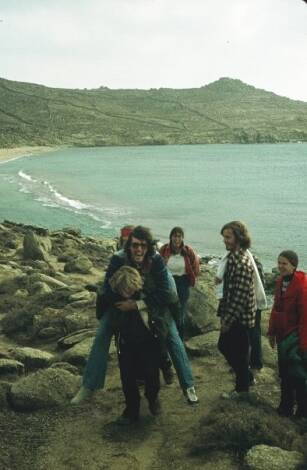
Kevin was a stand-up guy as well. On our 3 month immersive class tour of Greece in Fall ’77, he gave us young ones pretty free rein (ha!) but he must have been doing something right because nobody came to harm. And when Kimball Jones sprained his ankle on the far side of Mykonos, it was Kevin who hoisted Kimball on his back and carried him back across the island to the main town.
The 1977 immersive semester in Greece was a learning tour de force for all of us, and Kevin orchestrated it to excellent effect. Starting with the (Greek) Elgin Marbles in London (stolen!), we then went on to tour the Greek mainland, many of the Aegean Isles, the Turkish coast including Troy, and ended with Sicily and the eastern reaches of the classical Greek empire. Primary texts were our readings: Plato, Aristotle, Thucydides, Herodotus, and more. Classes held on Aegean island beaches. Wow.
In 2013, Kevin organized a week-long alumni seminar memorably titled The Death Seminar. What a great ride that was. This was part of Kevin’s long-term interest in death and how it is perceived and portrayed in our culture. We read and discussed heavy philosophy texts on death, and popular trade books as well. There was also a personal thread that Kevin wove into our discussions, and much deep and personal sharing ensued. A handful of us Death Seminar alumni will be housing together during the weekend of Kevin’s memorial service, and I have no doubt he is smiling about that.
There is so much one could say about Kevin's contribution to the faculty and the Johnston community. When I first came to the UR and Johnston, his distinctive combination of provocative inquiry and support stood out to me. (Actually, he irritated me a lot, but that's also where the learning came from.) Kevin took an interest in so many new faculty, including those who weren't necessarily Johnston affiliated. My favorite Kevin moments are those when he asked odd questions, for example, in a discussion of how the deaths of ones' parents makes us all orphans, (a concept I had not previously considered), he wanted to know if I'd buried my father with his glasses on or off?
Another early memory: for some reason, Kevin was the acting Johnston Director when students held a nude dance party in Java. A Johnston student reported the impromptu event into public safety as a joke, which then landed several of us in President Appleton's office to face reprimands for our failed adult leadership. Kevin managed the discussion in such a way that we ended up defending student rights to free speech and expression instead. We focused on students' needs--and foibles--but Kevin made it clear we trusted students as adults who would learn from the bruhaha.
I was fairly new to Johnston then and still learning myself how much Johnston valued and honored student agency in education, and how much Johnston could serve as a renewing Trojan Horse within the institution. Along with Bill, Yash, and several others, Kevin modeled how to negotiate education rather than mandate a top-down system. Kevin used this analogy in a commencement address jointly delivered with Bill in 2003. It's the fitting conclusion to Hard Travelin.' (Kevin's essay on advising in this collection is a classic also.) Here it is:
"And to the grads, as you enter other worlds than this, we also know that you are carrying that spirit of renewal within you, that peculiarly Johnston sense that everything is negotiable, that every world, no matter how dark or hopeless or banal, can be renewed. Every place in the world is Troy to you, and you carry your horse, and your intrepidity, everywhere as well."
There's more of course, always more. But I'll end here, and share my condolences with Dorothy and the Johnston community. I'll deeply miss remembering Kevin in person with all of you.
Hi Dorothy,
I’m so sorry to hear of Kevin’s passing. I was a Johnston College student back in the late 70’s and I’d like to share with you why he was one of my favorite professors.
I was an international business major at Johnston, and my advisor (Yash Owada) talked me into taking a philosophy course with Kevin. I tried to talk him out of it, but he insisted that my reading comprehension was not up to par and I would benefit greatly by taking the course. So, I begrudgingly took the course and found myself struggling to read paragraphs of Hagel, Marx, & Rousaeau while the Philosophy majors in class were making their arguments for or against these philosophies.
I have been a musician and songwriter all my life and while at Johnston I minored in recording and song writing under Barney Childs. I performed in 3 different bands on campus and played my original songs any chance I got.
One day in Kevin’s class, while studying Karl Marx, Kevin turned to me and said “Howard, you’re a musician and songwriter, correct? I told him yes I am. He then gave me the following assignment.
You will read the chapter on Karl Marx’s theory on private property and communism and write a song that argues against it. On Thursday you will come back and perform the song in class.”
Ever since then it has been one of my favorite songs to sing in a bar.
See the song below:
www.youtube.com/watch?v=K8WDAoOUsRo
Robert
Your exam is due when the moon sets, Kevin said. Those of use who stopped to research the precise time the moon was predicted to set gained an additional 15 hours or so, offset by the time we spent learning how to learn when the moon would set, which, it turns out, was not until the following day. Now this was not quick and easy Google search since ready access to the internet was still years away. The library was off limits, so it was time for a side quest to find a friend who knew not so much about astronomy as about almanacs -- possibly a farm kid hiding in plain sight among us, pretending to be hip, but trying not to try too hard to be So. Cal. Leave it to Kevin to turn an exam deadline into a mystery requiring us to remember what we hadn’t noticed about the people we see every day, to put ourselves at the mercy of another human whom we had foolishly accepted at face value.
Don’t worry about the impossibly short deadline, he said. It’s just an essay. Essay means ‘to try’ in French: you don’t go off and do a lot of research and analysis, you do your best with what you already know right now. Come down off your high horse and get messy with the rest of us. (Kevin conveniently had a ready-made illustration of me and my two buddies on a high horse.) Real philosophy is for professionals; don’t try this at home, he would say gleefully with a chuckle and an extra twinkle in his eye.
Kevin’s insatiable curiosity was matched by his generosity and kindness. But he did love his mischief and happily put it in service of all manner of educational opportunities. If he could find a way to move us 100 miles outside our comfort zone, all the better.
Do you remember suckling your mother’s breast?, he asked.
Go to lunch with someone in the class you don’t like and report back on Friday. No, not her, pick someone you really can’t stand, he demanded.
Go to France and take classes at the Sorbonne, he said. It will be fun, he said. It hardly matters that you cannot speak the language. Just go early and you will get the hang of it before classes start. But, don’t get lost there – come back next year.
He advised that learning how your professors think is more important than learning the material – you can do that anytime.
And, he found fun ways to encourage us to better humans. He announced that he would be giving the 19th Century Philosophy Wing Tip Award to the third best student in the class. Why not the first best? The first best is always an insufferable know-it-all. Why not the second best? The second best is just as bad as the first best, but not even smart enough to be the first best. Why the third best then? That one is smart enough to be first best, but devotes time to helping other students learn instead of being hyper competitive and, well, insufferable. That’s the one who deserves our admiration.
It's hard to capture all the things Kevin so generously shared or to explain how lucky I feel to have known him and to have received so much of the attention that he could have spent publishing things or hobnobbing with all those insufferably smart scholars that he could have easily outperformed.
Thank you for collecting remembrances of Kevin O'Neill. I graduated from Johnston in 2004, with a emphasis in Philosophy and Literature. I am blessed to say that Kevin and Bill were my main mentors. Please find my remarks below:
It is perhaps cliche to say that the greatest teachers are the ones who teach you how to think, and not just what to think about. And while those are true of Kevin O'Neill, what made him remarkable as a pedagogue and mentor, to me, was the degree to which he embodied living a life based on reflection and inquiry and showed how much value, depth, and fun was to be had by being that way. I was blessed to have had him as my instructor in many courses, but the one that stands out the most, now, was "The Metaphysics of Death". The ideas he presented, and the manner in which he got us to engage with them have shaped my life, and my own teaching style, in innumerable ways. Kevin had a knack for making complex texts, from Plato to Heidegger, fascinating. But the magic of his style often lay in relating those things to everyday life, often opening class with a comedic observation, which would transition into a set of questions and launch us all into a dialogue that wound its way, digressively, into the philosophical concepts of the day. I recall one class in particular, which began with Kevin asking, by a raise of hands, if we looked in the toilet after we had finished our business and stood up. Most of the male students raised their hands, but the females did not. Looking over the results of the informal survey, he speculated that perhaps the men were more likely to "want to know what they had made" because we knew at some level that we would never get pregnant and give birth to anything as miraculous as a baby. Nothing, for Kevin, was outside the scope of philosophy, and that is the legacy and the type of life he has left behind in all of us.
Sincerely, and with deepest gratitude,
Sharing some unedited thoughts that come to mind in remembering Kevin: I’ll never forget him. I feel so lucky that I got to take a philosophy course with him and share space with him in our Johnston community. Kevin’s genuine curiosity about everything and everyone was apparent and contagious. The way he looked and sometimes even paced around the room with a glint and glimmer in his eye, ready to ask question after question to whomever he decided to call upon. I could never tell what it was that captured his attention about people, because it seemed as if he looked at each and every one of us as unique and worthy of exploration and discovery. I remember how he gave us creative assignments that I was motivated to do not just because it was assigned and I enjoyed it but also because I was eager for him to interact and respond to it. Would he see the point I was trying to make? Would he appreciate the basic or obscure connection I was making to the reading material? Would he fixate on something that required further elaboration? Would he challenge it? However he may have felt about the product, it seemed that he was far more interested in the process. Knowing Kevin, getting to learn from and alongside him all those many years ago, expanded my mind and my love and curiosity for people and the world. I needed this reminder; his memory is a blessing to me.
I attended JC from 76 - 78. I then taught a Dream Workshop at JC for 13 years from 94 - 2009.
I had only one class with Kevin: Historical Perspective/Medieval times. I absolutely loved this class. I think it was my first true exposure to alternative thinking in education and looking at history outside of the confines of textbook education.
But I need to backtrack to who I was as a student before JC to truly express how his impact on me changed my life profoundly.
I was always a very smart student and got high grades. But I was enormously shy. Because of this and some 6th grade trauma, by my junior year in high school, I started to struggle academically. I also believe I have a non-official diagnosis of word-dyslexia. I can never remember it's official name because of the nature of the disability.
Moving forward, once in HS when I reached a level of needing to write essays and give speeches, my grades dropped. I was just too shy and my brain to this day does not conform to traditional essay format.
At the beginning of JC, I struggled not with comprehension and excitement over material, but with the ability to express myself in the ways JC wanted me too. I was good at standard testing but not forming thoughts in an organized-analytical way through essay writing and presentation.
So Kevin was able to help me overcome this in a beginning-step way. He supported me to speak my voice in front of a group of people!!!
A fellow friend at JC at the time gave me advice to talk privately to Kevin by appointment. This friend understood my intelligence and saw how much I was wigging out about presenting my final research for the Historical Perspectives class. "Wigging out" is not even a strong enough expression for how I felt.
I went to Kevin's office. My subject was Medieval Mosaic (I'm an artist). Kevin was warm, comforting, and acknowledged me wholeheartedly. NO judgement at all. He gave me some basic presentation techniques. I moved forward with a dash of more confidence.
Night of final presentations. This was in the late 70's. At that time, final presentations and/or get-togethers were sometimes done at someone's home off campus, which was the case with this class. Wine and beer was available to all. I wasn't much of a drinker then but indulged in a little bit of wine.
Another student presented on another form of Medieval art before me. Sorry, forgot which art form. She went through her presentation with confidence and clarity, but no passion. About 2/3's of the way through presentations, it was my turn. Sweat and nerves oozed from all parts of my being. And then, I had all my notes ready: A big glitch happened.
We had an overhead projector back in that day. My plan was to show images of medieval mosaics from books projected onto a wall, which worked. The lights were dimmed to enable the images to be seen on the wall, but because of the dimmed lights, I couldn't see my notes!! A needed the safety net of these visual notes as a crutch to help with my extreme shyness.
I proceeded nervously to present the main concepts. Because I was showing visuals projected on the wall, I was able to talk about the material. Here's one of the most helpful Kevin teacher moments from that day--I say this with warm sarcasm and truth. Kevin was still drinking during that time. Because of this, he kept enthusiastically jumping in with comments to fill the gaps of my presentation (or interrupting). It could have been rude, but in reality, his interruptions helped me get through--he filled in the gaps created by my nerves. It worked in some dysfunctional but powerful way--it was as if he knew this on some level.
My supporting friend at the time said I performed well and that my presentation was better than the other student with a medieval art focus, because of my enthusiasm for the subject. I didn't dryly talk but was genuinely excited about the subject--Kevin just powerfully and disfunctionally added too helping me present under disastrous circumstances with my shyness. His endearing interruptions tipped my extreme shyness to a level of minimal comfort that helped open the door to having a skill set that allowed me to move forward in a career direction I am still passionate about.
This Changed my LIFE. I went on to be a teacher, facilitator and artist. I have never been a lecturer but give talks based on enthusiasm of the subject and helping students connect with each other. Kevin lovingly gave me the space to find my voice without judgement.
I am so sorry to read of Professor O'Neill's passing. I was in the class of '74. He was a personable teacher, enlightening, and made us, the students think. I find it telling that after 50 years, his is only one of two names that I remember. The other is Professor Bill McDonald. My condolences to his family.
By my first week at Johnston, Kevin was already the stuff of legend. I'll never forget his loud voice billowing through Bekins. Already a bit intimidating, I didn't necessarily want to take his intro to Philosophy class but part of me knew I needed to. I don't remember one book we read or specific ideas discussed but what sticks clear as day is the way Kevin's passion and fervor for the work of life felt contagious. I remember feeling frustrated in that class (If philosophy can be anything then what is it!?) and how Kevin encouraged that frustration promising something great awaited me if I stayed the course and embraced life's paradoxes. Kevin helped me learn how to learn. 20 years later, still learning, forever grateful. RIP to one of the greats!
Oh, my, I am just seeing this. I am so saddened to hear of his passing.
He was an integral person in my development. I've told the story of Kevin providing confidence to me in my intelligence and ability:
I was young, and just decided I was too stupid, and couldn't "get it". He challenged me to "try". Try my hardest on an assignment. "Sure....I was going to prove him wrong!" I did my best....I TRIED. I handed in my assignment, knowing at best it would be a "B". I knew I couldn't "do it".
But, he proved ME wrong: He came to my dorm room (Anderson!), up the 3 flights of stairs, knocked on my door, and handed me my "A" paper.
I was in tears.
I think about that ALL the time when things get hard. I hear him look at me and say, "TRY!".
I was THRILLED when my daughter attended U of R and had Kevin as her philosophy professor. I know she had just as special of a connection with him.
He was the Best!
Thank you for letting us know.
I just wanted to say that Kevin was one of the best teachers I ever had in my life. He was so provocative, energized, and inspiring! What a great mind and a great man!
Of all the professors I had at the University of Redlands, he was the only one who truly believed in me. I struggled a lot during those years, often stuck in my own head, unsure of who I was or where I fit. I had moved out as a teenager and finished high school on my own, so by the time I got to college, I was desperate to belong and wildly unsure how. I was loud, lost, and more than a little obnoxious. Dr. O’Neil saw through all of that.
He challenged me in ways no one else did. He turned what I thought I knew about myself completely on its head. He helped me name my degree, “Ontology of Performance,” and encouraged me to travel as far and as boldly as I could, intellectually and otherwise, even when it pushed me far outside my comfort zone.
Two memories stand out most. In one, I sent Nikko to take my final exam on Kierkegaard, dressed as me, using my name, as if it had always been him. It was the first truly bold academic risk I ever took. When I showed up at the end of class, Dr. O’Neil gave me a high five. In that moment, he made it clear that creativity and curiosity were strengths and that I didn’t have to settle for what I thought I already knew about my future. I’ve recognized that same permission in my work ever since, even years later in graduate school. I know I wouldn’t have taken those risks without him.
I’ll also never forget turning in a paper that he insisted be covered in “some kind of muck,” meeting him in some dark corner of campus to hand it over, or the upside down falcon (I think?) in his office. Or the conversations about reality and perception we had in his introductory classes. Those moments reshaped how I thought about learning and thinking, and I even carry some of them into the courses I now teach.
Everything I disliked or doubted about who I was, he made acceptable. Valuable, even. He gave me a spark I didn’t know I had. That spark eventually carried me through my master’s degree and now toward my PhD.
I don’t think about Redlands often, but I think about him. He saw something in me when I couldn’t see it myself, and that belief fundamentally changed the course of my life.
I have many wonderful memories of Kevin O'Neill, but 2 stand out most. 1) I was a student in Kevin's Philosophy 100 course in the fall of 1993. Kevin encouraged us to always speak our mind and engage in thoughtful, deep dialogue with his students. Our conversations touched on numerous topics from love to death and all things in between. While not a philosophy major myself, Kevin sought meaningful class discussion from all but also had a beautiful way of challenging our thoughts. This encouraged his students to truly think deeply and speak with passion and conviction. 2) Kevin's mind was always working! He could be commonly found walking on campus while reading a book simultaneously!!! From time to time, Kevin would also attend a basketball game in Currier Gym while still reading a book! His perspicacious nature demonstrated that he craved knowledge and learning. I always appreciated this about him as I feel this is what he wanted to impart on his students. A love of learning!
One perfect spring day we escaped Larsen Hall—led by Kevin—to spend class at Sylvan Park. As a first-year student, I didn’t realize that we were continuing a millennia-old tradition of studying en plein air. I can't recall which medieval philosophers we were discussing. But in that moment, I understood that I was exactly in the right place and that a classroom could be anywhere—a classroom could be the world.
That lesson stuck. Although my concentration evolved toward literature, writing, and art, Kevin remained a favorite Johnston professor. One stormy January, he agreed to sponsor a Jan Term travel class, where a fellow Johnstonian and I visited all of the missions of California, writing about what we encountered there through the lens of the treatment of Native peoples and Spanish colonialism. The memories are technicolor—the stuffed Pink Panther we placed in every photo; the mural of the hand of god in Mission San Juan Bautista; the heavy winter clouds; the yellow and blue of Christo umbrellas (a surprising bonus), strange and beautiful on the hills of the Grapevine. The meetings with Kevin afterward were enlightening and challenging, as he kindly but firmly asked for more—to not let the writing get weighed down by the Catholic baggage I was still carrying around.
Many years later, while creating the 50th anniversary Johnston book, I came to appreciate the unique toolkit I built at Johnston Center and that one of the most important tools was to understand that the world is indeed a classroom. I thank Kevin for his part in helping me understand how marvelous that is.
Kevin was my Polonius.
As brevity is the soul of wit: Chris Beach gets it in his head to stage Hamlet, enlists a motley rabble of players both experienced and green (I, Claudius, being the latter), and seals the deal by convincing Kevin O’Neill to play the officious adviser to the king.
In my memories, Kevin was a genial Polonius. Yes, his parsimony earned laughs, but his death behind the arras at the point of Hamlet’s dagger felt like an injustice. I don’t remember him playing it for laughs, despite the too too obvious declaration of being slain.
When alums describe their time at the University of Redlands, whether Johnston or no, it’s often in terms of access: to instructors, to professors, to resources usually walled off at lesser institutions behind the guise of propriety. For weeks in rehearsal, I watched Kevin miss marks and blow lines (as did we all), proverbially pick himself up and soldier on. Backstage, he was engaging and generous, and as nervous as the rest of us when the curtain rose.
It was a pleasure and privilege to spend those weeks with that company, and with Kevin in particular. Rarely do we get a chance to watch people we admire in the throes of being admirable.
With a few words on O'Neill
He was my closest faculty affiliation during my four years at Redlands. Without him as my mentor, I may not even have graduated let alone with honors.
“Young man, you better share that wine with the ladies.”
One time I stole a case of wine from an event with a student who shall remain unnamed, and Kevin called Bill to have a glass of wine with us.
Kevin was super cool. He didn’t get mad when I said “what’s your name again? Ronald McDonald?” Never got a rise out of him.
I wasn’t close or anything. I just kinda liked the guy. I can think of probably a hundred people he helped graduate.
When I graduated from Johnston in 1977 with a B.A., I then spent two years trying to decide what to do next and ended up starting a PhD program in comparative literature at the University of Texas at Austin. A main reason I was accepted into the program was because of my Johnston narrative transcript, which indicated to the chair of the program, as he said, that I was the kind of student and scholar who would succeed. And a main reason I was that kind of student and scholar was because of Kevin O’Neill’s classes.
That first semester of grad school, I sat in my literary theory courses taught by world-renowned scholars, and the content of the courses never befuddled me. I sat next to graduate students who had already gotten their master’s degrees, and I kept up with discussions, contributed my thoughts. At Johnston, Kevin’s course on linguistic philosophy included readings by philosophers such as Ferdinand de Saussure, Wittgenstein, Foucault, and Derrida, among others. At UT Austin, When the professor started talking about the “signifier” and the “signified,” I knew what they were talking about—I had already studied the material with Kevin.
Another Johnston cornerstone that supported my graduate study was the intensive course on the ancient Greeks that Kevin and Bill McDonald offered one spring semester, when Johnston tried the module concept (the semester was divided into thirds and students took only one course each module). I spent the first and third modules learning about ancient Greek philosophy and literature. Steeped in those readings and in that culture, I was fully engaged with material that would support me in my studies and in my career as a professor.
What I remember of Kevin in the classroom: No matter how abstruse the material, he always unraveled the philosophical knots and invited us to re-knit. That invitation encouraged us to find our own thinking. Kevin orchestrated collaborative discussions rather than professor-focused expertise, and we all built philosophical muscles together. Together, we discovered and celebrated challenging ways of thinking, and I am so grateful for those collective moments, for the classes Kevin taught.
I took many classes with Kevin and went on a Greek trip he led. I’m not sure I ever met someone as joyful at teaching and learning. But here’s my story. Arrived at class one day and there was a note on the board: Kevin wouldn’t be in but that I and another student (John Walker maybe?) would be leading the class in his absence. No prior communication, no warning and no one left. We all stayed and hopefully did a bit of what Kevin always did — talked about the reading and learned from each other. Thank you Kevin.
Kevin O'Neill was assigned as my academic advisor and taught my freshman seminar, "Construction and Deconstruction of the Self," in the corner basement classroom in Bekins Hall in the Fall of 1986. The group of 15 (I believe?) Johnston freshman would mark the beginning of Johnston's revitalization, the Class of 1990. We were told the incoming Class of 1989, as the legendary Class of 1986 entered its senior year, had been one Johnston student.
I know Construction and Deconstruction was one of Kevin's evergreens, and many a Johnstonian experienced it outside of the freshman seminar, but as a freshman seminar, it was life-changing for me. Kevin's provocative questions, which he asked us to respond to in our "Commonplace Books," linger in my mind even now, 40 years later. A young woman was kidnapped from Redlands Mall and then murdered that fall, and he asked us to tell the story from the murderer's point of view, for example; we also visualized and presented our own personal utopias, among other prompts. I still have these commonplace books (I filled 3 notebooks). We also reflected on the class readings. I remember passionate discussions both inside and outside the classroom, often in the wee hours, pondering the meaning of Plato, for instance. His teaching style was appropriately Socratic.
Our assignment for the "final exam" was to present ourselves to the class in an original way. Piano playing was a big part of my identity at that time, and Kevin jogged along with the whole class from Bekins to the music building in the middle of my presentation as I moved from "performing" the more academic part of myself to the musical one.
I did not have many other classes with Kevin, except for my half-baked senior thesis, which he was very gracious about. But he remained my advisor, and the group bonding that occurred in his class meant that both he and all the other students remained integral to my Johnston experience. I believe it was our senior year that we all "reunited" and took an overnight trip to Joshua Tree with Kevin.
Of course, as my advisor, I had yearly meetings with Kevin, and he participated in my Johnston rites of passage, including my grad review. In my final weeks, he said something I'll never forget because in retrospect, I realized that he understood who I was and what made me tick much better than I did myself: I wanted to go to graduate school in linguistics because I was fascinated by language and languages. With characteristic acumen, and also because he knew more about the nature of graduate disciplines than I did, he recognized that linguistics wasn't right for me but encouraged me to pursue a graduate degree in the history of ideas.
As is often the case with the young, I thought I knew better and pursued linguistics anyway. But after one semester, I switched to Germanic Studies, where I eventually wrote a dissertation on the history of linguistic ideas.
Kevin had a way of making me feel truly seen and valued, and for that, I am forever grateful and will always remember him fondly. May he rest in peace and live on in our memories!
It is very hard for me to fathom that it is just shy of 40 years ago that I had my first class with Kevin O’Neill. He was the teacher of my freshman seminar. Me and 11 other students, back in the fall of 1986. He became my advisor and in many ways a surrogate father. Kevin certainly made me think and laid the groundwork of deep consideration that has made possible much of my life.
I’ve become a holistic culture pioneer. (Had to do something creative with my degree in Expression!) I live in rural Hawaii, founded an intentional community called GaiaYoga Gardens, and have developed a whole cultural consciousness and practice called GaiaYoga, writing five teaching books along the way. And while it’s not that Kevin directly guided me to do this, he helped free my mind so it could hold paradox and consider possibilities. He also helped me see the wisdom in the absurd.
I remember once in our freshman seminar he said, “If Gayle walked out into the hall of Bekins and said I’m horny and want to have sex that there would be all sorts of takers, but if Dwayne (my name at the time) did that there’d be no response.” (Something along those lines.) He said it not to put anyone down or raise anyone up, but to reveal something so different in how males and females interact around sexuality. It really struck me for some reason. It got me to look deeper into the similarities and differences in situations.
I don’t remember anything I formally learned in Kevin’s classes, and I took a lot of them! Pretty much one every semester. But I just loved being in the experience of learning with him.
Another thing that nourished me about Kevin is that I had a real sense that he believed in me and could see my depth and passion. I also remember when he looked at the 8 page letter I got from Neil Peart, the drummer and lyricist for Rush, back after I sent Neil my 250 page paper analyzing all of his lyrics. He didn’t know anything about Rush and I think was skeptical about the independent study I did in writing a paper about a rock band’s lyrics, but when he read some of his letter he was impressed by Neil’s intelligence and realized that I was actually on to something. I don’t remember exactly what he said, but he validated the letter and my investigation of his lyrics. That meant a lot to me!
As the years went by, my sense of how important Kevin was/is to me has faded, as other mentors and teachers have taken me further down the particular path I’ve walked. But I can certainly say that Kevin was the person who helped hone my ability to think and look deeply into the nature of the world and this skill has influenced everything I’ve done since.
Thank you and bless you Kevin.
Aloha
Johnston Center Director and Professor
As most students and colleagues know, my personality leans towards the goofy and outrageous side. I walk down the hallways of Bekins shouting nonsense and performing all sorts of silliness for and with my students. Sometimes I think, "Kelly, take it down a notch." But then I think of Kevin and remind myself to do the exact opposite. Instead of minimizing myself, I think: "Kelly, be bold and boisterous like Kevin! Be provocative and in-your-face! Get right up to the edge of boundaries! Break rules!" For he was all of this: bold, boisterous, provocative, and in-your-face. Edgy and dismissive of bureaucratic nonsense. To wit: Can I ever forget going to the Modern Languages Association conference with Kevin to interview applicants for a position in Johnston (what would become Julie Townsend's)? Nope, it is seared into my memory. I spent the entire time making sure Kevin didn't say anything off script to the candidates, didn't ask them anything outrageous. Did my efforts work? Not really. Kevin was Kevin, but he was Kevin so charmingly! Over the last handful of years, I've missed Kevin's outrageous charm dearly. I've missed seeing him in Bekins. Or in Larsen, where he taught many of his classes. I miss him asking me, apropos of nothing, whether I would rather die by a shark attack or a tornado. I miss his physical mass. His sparkling eyes. His mischievous smile. My office is across the hall from Kevin's old office, and it may be wishful thinking, but I like to think that he left a little part of himself there, a spirit moving through Bekins urging us to be a little more outrageous, a little more rebellious. I for one will continue to answer his call.
"I am in awe of Kevin. The life of the scholar-teacher seems to ooze from his brain and his very being. Few possess the discipline or detachment from organizational life that is demanded. Talk to any 10 students at the University about who has made the greatest impact on their life in college and Kevin's name will always be on that list."
In reflecting on Kevin’s impact on me and my Johnston education, I went back and read the first of two spiral notebooks I filled as my “commonplace book” for the first-year seminar “Construction and Deconstruction of the Self” that I took with him 25 years ago this fall. With a bumper crop of fifteen incoming Johnstonians, the seminar marked a sort of rebirth of the Johnston Center after an early 1980s nadir in enrollment. But it was not only for this reason that the seminar has taken on a mythical status in Johnston lore.
My commonplace book was so long because Kevin cast his net and his spell over me—and all of us as a group—luring us with prodding observations and questions to truly examine every aspect of who we thought we were. As we read Plato, Rousseau, and Daniel Defoe, he baited us with commonplace book assignments that challenged our most fundamental assumptions: Write an essay about your hand as if it were your genitals, and vice versa; explain what era you would fit into best; create a utopia for yourself; critique a classmate’s utopia; go for a walk with the person you like least in the class; retell the story of a contemporary Redlands murder from the murderers point of view—just to name a few. We were all hooked instantly as a group, pulled headlong into the Johnston educational experience, joined in the common cause of defending ourselves against this seeming madman. Within two weeks of going away to college, I remember staying up with several classmates, discussing the merits of Plato’s logic in the Bekins hallway until two a.m., and I marveled in my commonplace book about how rapidly I was changing and becoming real, and wrote: “None of us are real yet, except for Kevin.” Like a grain of sand in an oyster, Kevin pestered us and provoked me to write, write, write in an effort to explore , defend, and discover who I really was.
Though I now see Kevin only rarely at the Johnston reunions and an occasional conference, I know that he was a formative influence in my life, forging a different sense of self in me with his probing questions. And as I wish Kevin much joy and happiness as he retires, I’d just like to say to him, as Germans say to those dear to them, “Kevin, du bist eine Perle.”
“In the fall of 1977, Kevin embarked with twelve students on the first of Johnston’s remarkable and memorable “Europe trips.” For more than four months, Kevin served as seminar facilitator, intellectual instigator, guide, and mentor while shepherding students across Europe, through Greece, along the coast of Turkey, and through Italy. Under Kevin’s guidance, readings of ancient Greek plays and other texts in “The Greeks” came alive as the group visited the settings of these; his creative and engaging facilitation of this seminar memorably included a spontaneous afternoon trip during the class reading of Plato’s Republic; when the group, meeting at an outdoor café in Athens, read the opening line “I went down to the Piraeus yesterday” and Kevin responded, “Well then, let’s go down to Piraeus,” just a short distance away…. And off we went. Credit is due to Kevin as well for his forbearance in visiting a myriad of museums, galleries, churches, ancient temples, archeological sites, and monuments with his intrepid art students who sought to immerse themselves in every possible cultural locale [even though he didn’t much care for the artworks themselves] …. Kevin deserves highest honors, however, for traveling, living, and learning as the sole faculty member with these students, facilitating a broad and deep learning experience for which all of us are profoundly grateful.”
“From the beginning of Johnston encounters and negotiations, Kevin was conspicuously a style-setter. When everyone was shouting at everyone else—one young man even used to stand on a piano to get attention—Kevin would speak conversationally, or, more likely, whisper—and we’d listen. Sometimes we’d even hush.
When our first semester’s set of written evaluations proved to be way too personal, even grotesque, Kevin was crucial to creating lasting models for narrative evaluations that could never have been achieved by standard issue administrators. And when our reading skills proved woeful, Kevin ‘s solution became a Johnston classic: his much-quoted, eventually famous lecture on reading a book. What Kevin did was teach young readers how to wrestle verbally with a paragraph: how to emerge from a book’s introduction and first chapter really sure of what the author had said, and meant.
And last I think of the personal friendship between Kevin and Bill, ripening over the years, that had a magic of its own and produced “to die for” pedagogical results. Here were scholars willing and able to learn from each other, and have great fun in the process. Their commitment and loyalty to Johnston was contagious…. Both of them understood the secret formula for securing the life-long devotion and independence of their students: give them the best help you can, then let them go, push them out of the nest. That’s how eagles teach their young to soar.”
“In thinking back to the early days, what I most appreciated about Kevin was the fact that he was always actively engaged with life - whether with people or ideas. He was never passive and took people and ideas seriously, treating them with respect, despite the slightly mocking exterior. A good person.
“In my first semester at Johnston College, I taught a course entitled "Space and Time." My fellow faculty were Isobel, Allen Killpatrick, and Kevin. I learned an enormous amount—not least from my biologist and physicist colleagues. But I also benefitted a lot from the insights of my fellow humanist/philosopher. That Kevin has continued to nourish Johnston and U. of R. students for the 40 years since then is a wonderful testimony to the long-term impact that devoted faculty have. I salute him warmly and with enthusiasm!”
(Footnote: Johann Heinrich Pestalozzi was a Swiss elementary school teacher and theoretician who believed that you taught children, not topics): “I learned from Kevin what caring for the soul of a student meant and required. To me, he was a Pestalozzian teacher, who attended the needs of individuals, often in a most inconspicuous manner, whether in class or in private life. He taught me the what and how of paying respect to students as individual persons. He taught them, not subjects. He showed courage in doing that. Fortunate were the students who engaged themselves in their own learning under his tutelage.”
“What does one say about a colleague who became a teacher of one's soul, save ‘thank you my dear friend.’ Kevin, Sally Hickock (then a secretary, later Johnston’s first registrar) and I were thrust together on day one at Johnston as a three-way T-group or ‘groupette.’ From that day forward Kevin's power of mind and heart and his humor captivated me. Since I was growing very old I was often found humming "mindlessly" prior to a class. Kevin took to walking past my office door (which was open) on his way to the mail boxes humming mindlessly. Who can forget such things! Kevin I salute you!” When Doug was chaplain…
“I attended a few of Kevin's classes -- notably Structuralism -- but my most memorable experience was our first-year Friday night couples T-group, climaxing with the nighttime romp through the Redlands cemetery at the end of that year. After that, I knew I was in a world-class creative community, and grateful for it.”
“I've always thought of Kevin as a one-of-a-kind person, whom one could never replicate. Irish to the core, but with all that Yale intellectual polish which just cut through fog and mist. Johnston was unbelievably lucky to get him, and we have to thank Press McCoy for that. I learned from him never to walk anywhere — in fact never to go anywhere — without a book in hand. And considering his romantic life, I also learned a thing or two about perseverance. As some of your other respondents have pointed out, he is a brilliant teacher. As a young faculty member he dared to do a few things which shocked, yes shocked, the hierarchy. There is still that bad boy aspect to Kevin, which one cannot help relishing. Oh, what days we had together, what shibboleths we undermined. But, when all is said and done, he remains a teacher, and his students will remember him when other names and faces slip away.”
The more that I have been away from college teaching, the more I am convinced that college, simply put, is about teaching students how to use words and symbols. More than simply teaching subject matter, it is about providing students with the tools of thinking, researching and communicating. For me, Kevin is a prime example of this orientation. He not only provided students with basic intellectual tools but energized and excited them about how they can be used. Two examples come to mind: For a Logic class, Kevin gave each student an Agatha Christie novel with the final chapter missing and expected them to solve the mystery using the tools they had learned. And I still fondly remember his public lecture on "Reading an Academic Book"--which helped to introduce students to serious books in all fields. Kevin O'Neill is the kind of teacher who sets the standards for the others. The next generation of students at Johnston/Redlands will be missing a major source of learning.
Collected Epxeriences from Colleagues and Friends
By Bill McDonald
First, my “Vignette” from my point of view:
Scene: a classroom. The subject is Plato’s Symposium, that great early dialogue of urban eros and philosophizing. Chalk in hand, the speaker begins, in a moderate voice that gradually grows quieter as he continues, his youthful audience leaning forward in increment after increment, trying to catch every word. He tells us that Plato set out to be a playwright, and, when he failed at that, set out again, taking the idea of dialogue from those civic dramas that anchored his society, to invent a new genre of writing for exploring visionary ideas. The blackboard behind the speaker begins to fill with overlapping diagrams, arrows, lines of connection and duplication, and finally cross-hatchings, as the layers of the dialogue are unpacked with precision and growing intensity. Most philosophers abstract the arguments about love from the dialogue and expect their charges to know them; this speaker immerses his audience in the literary intricacies of the dialogue—its many time levels, its nested narrators and multiple speakers—to arrive at the ideas in a way that embeds them not only in a tight-woven textual web, but also in Athenian culture, and makes both seem utterly present to his audience. Ninety minutes later, as we arrive at the revelation, the denouement, of Socrates as man of the city, supreme lover and visionary, the blackboard is unreadable but the concrete, complex evocation of human love set out some 2400 years ago stands crystalline before these enthralled, and very lucky, young people.
Kevin has been an inspiration to generations of Redlands faculty and students—way too many to cite here—so I’ll just quote a few of Kevin’s colleagues from the early days of Johnston, people who were in many ways mentors for Kevin as well as peers. Then I have an even more selective few paragraphs that I solicited from the literally thousands of students that Kevin has challenged and inspired over the past four decades.
Service
We will come together to remember and pay tribute to the wonderful person. While we mourn the loss of our dear, we also aim to cherish the moments shared and the joy brought into our lives. Your presence would mean a great deal to us during this time of remembrance and reflection.
Donate
https://amandafoundation.org


 Français
 Deutsch
 Nederlands
 Español
 Português
 Magyar
 Русский
 繁體中文
繁體中文