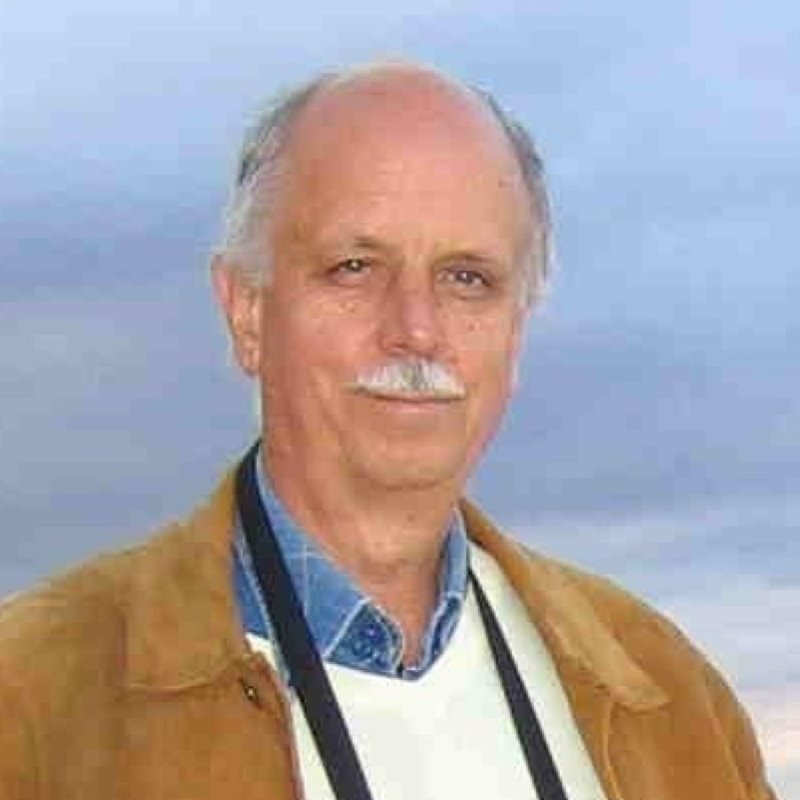
Kellogg S. Stelle
These pages are dedicated to the memory of Kelly Stelle and aim to celebrate his rich life and important scientific achievements.
Kelly became ill while travelling in Egypt with his wife, Marise, and passed away on 23rd October 2025.
Kelly was a truly remarkable man, a brilliant scientist and a wonderful human being. His kindness, intellectual curiosity, mischievous sense of humour and love of life inspired all who knew him.
He will be greatly missed.
Kellogg Stelle 1948-2025
Kelly was a truly remarkable man, an outstanding scientist and a wonderful human being. Kelly was not only a brilliant researcher and inspirational teacher of physics. He was a true polymath, possessing an encyclopaedic knowledge of politics, literature, the arts and languages, speaking Russian, French and Italian in addition to his native English. (Our Russian colleagues were unable to tell he was not Russian.) His kindness, intellectual curiosity and love of life inspired all who knew him.
Kelly made groundbreaking contributions to supersymmetry, supergravity, quantum gravity and M-theory. He was awarded the IoP Rayleigh Medal in 2020 for “his seminal contributions to fundamental physics: the first quantum theory of gravity, the construction of braneworld cosmologies, and the discovery of the supermembrane and fundamental work on supersymmetric field theories and supergravity.” He was a Fellow of the Institute of Physics and a Fellow of the American Physical Society.
Kelly studied History and Science at Harvard and then spent 1970-2 at the Antarctic, observing Cosmic Rays at Amundsen-Scott South Pole Station. He returned to study for a PhD at Brandeis with Stanley Deser. As a graduate student, he found what is arguably the only quantum theory of gravity that we have to date. He showed the curvature squared gravity theory is renormalizable and so is a consistent quantum theory. However, this came at a price: the theory is not unitary as there are negative norm states. Yet many have tried and are still trying to find ways around this problem and his paper now has almost 3000 citations.
He held postdoctoral positions at Kings College London, Imperial College London, CERN, and the École Normale Supérieure in Paris. He returned to Salam’s theoretical physics group at Imperial with a SERC Advanced Fellowship in 1982, leading to appointment as Lecturer in Physics in 1983, followed by promotions to Reader in 1988 and Professor in 1995. He was Head of the Theoretical Physics Group from 2002 to 2007 and presided over a significant strengthening of the Group. Then from 2007 to 2024 he served as an outstanding Course Director for the MSc course Quantum Fields and Fundamental Forces, inspiring generations of students.
He was a pioneer of supersymmetry and supergravity and wrote many seminal papers. With Howe and West, he showed that N=4 supersymmetric Yang-Mils theory is finite. There was much speculation that supergravity could also be finite but with Deser and Kay he found the candidate counterterm that was the first indication that supersymmetry alone is not enough to save supergravity from UV divergences. The issue of divergences in supersymmetric theories has been a major theme of his research over the years. With Duff, he found the supermembrane solution of D=11 supergravity (a paper written on a long-haul flight back from a conference in Singapore). With Lukas, Ovrut and Waldram, he went on to do much great work on branes in supergravity, and to pioneer brane-world scenarios.
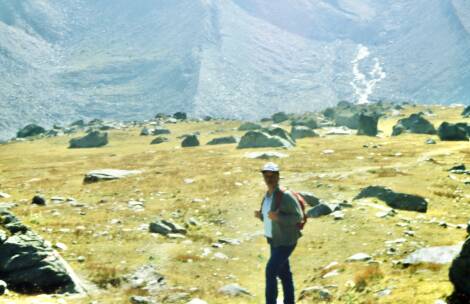
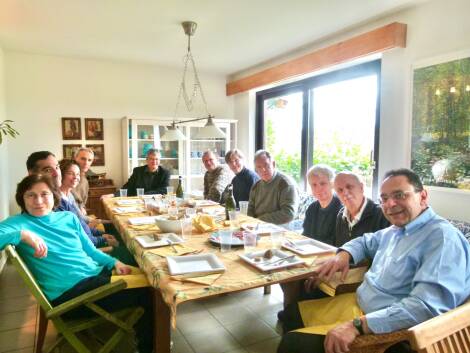
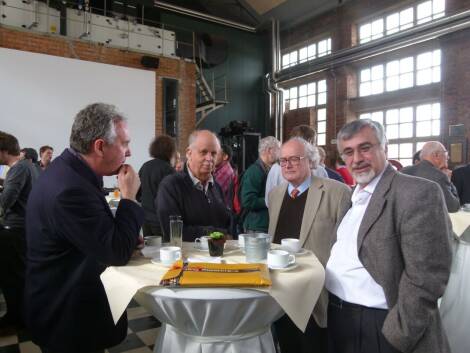
Kelly was a great traveller and adventurer and that was one of his sources of his many great anecdotes. His breadth of knowledge together with his mischievous sense of humour and great stories made him great company at dinner, and he was an enthusiastic participant in seminars and conferences and especially the dinner opportunities that they afforded. There was never a menu so grand that Kelly could not home in on its most expensive item. With Kelly you would dine like a king but go home a pauper.
Since his demise, we have received many messages from colleagues all round the world about Kelly saying how much Kelly had meant to them and telling of the kindnesses he had shown them. Many wrote with ‘Kelly stories’: stories about where they had met Kelly, often in strange and exotic places, or about wonderful adventures they had shared.
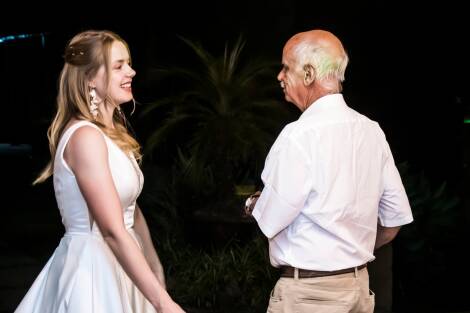
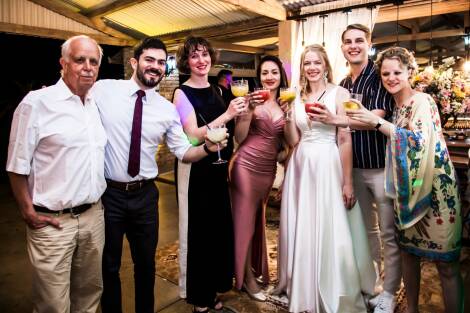
Kelly married his long-time partner Marise on 14th September 2025 in a beautiful wedding in Sicily. The wedding involved three days of good food and good wine, combined with time on a lovely beach. The climax was the wedding ceremony at a spectacular Norman castle on the Sicilian coast near Catania. Many of Kelly’s friends from many parts of the world and from many different stages in Kelly’s life were there to celebrate the wedding and to swap stories about Kelly.
For their honeymoon, Kelly and Marise went on a cruise on the Nile, followed by further travelling in Egypt. While in Egypt, Kelly fell ill and was hospitalised in Alexandria. He fought the illness for four weeks before passing away on 23rd October 2025.
Kelly will be greatly missed. We extend our sincere condolences to his family and loved ones, and above all to Marise.
Chris Hull and Mike Duff
Gallery
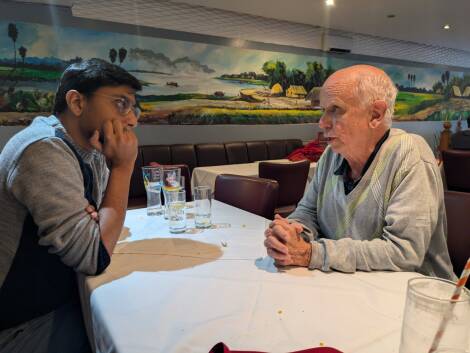
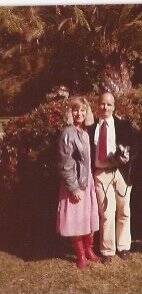
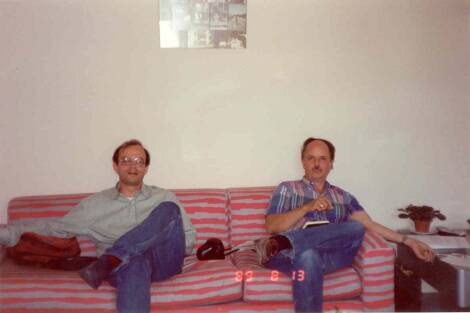
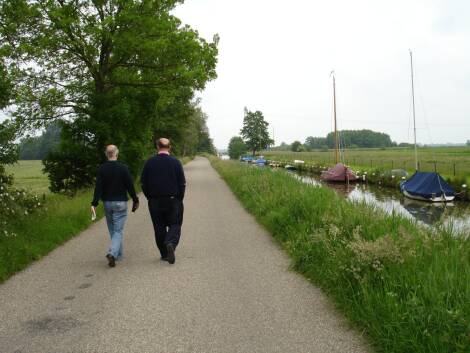
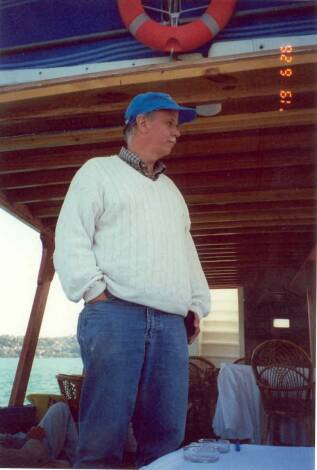
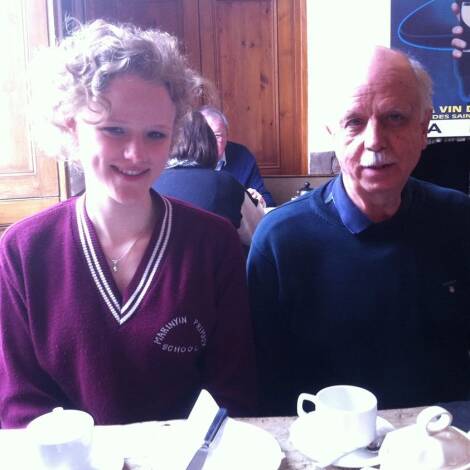
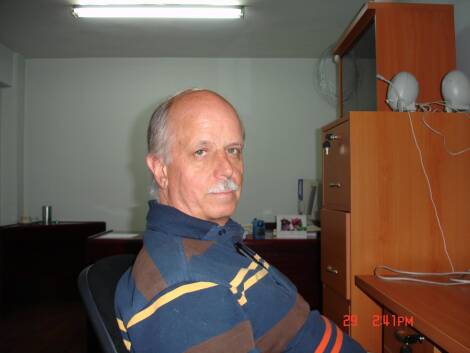
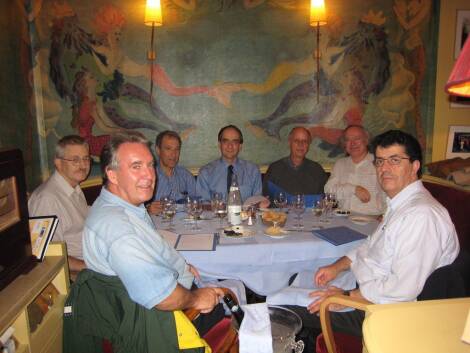
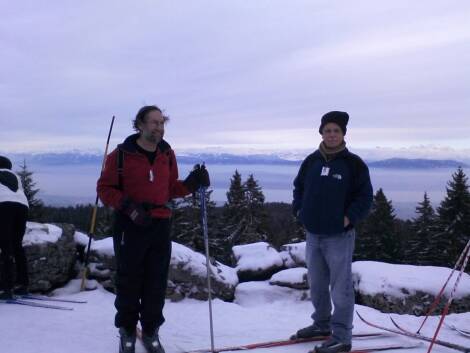
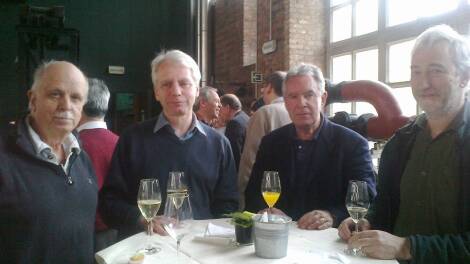
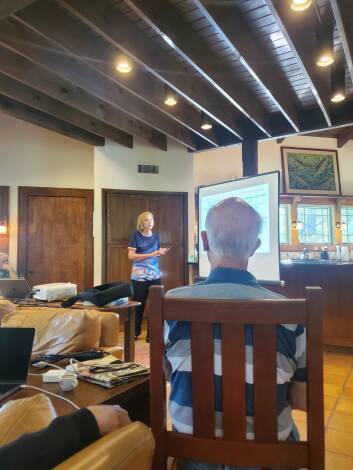
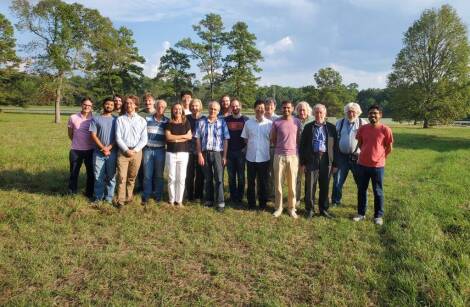
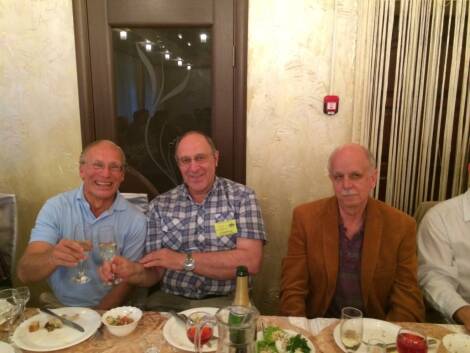
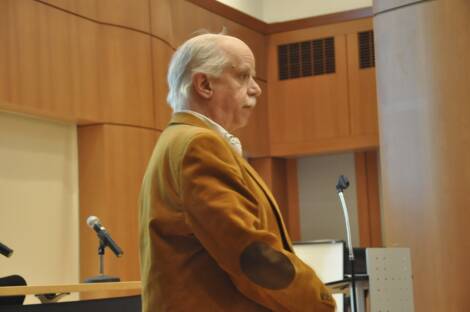
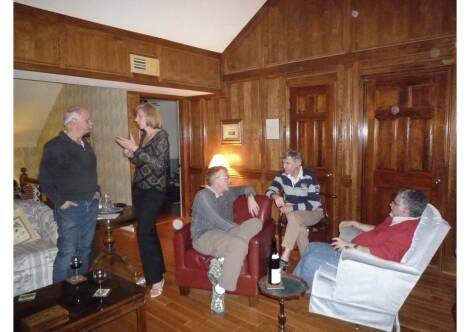
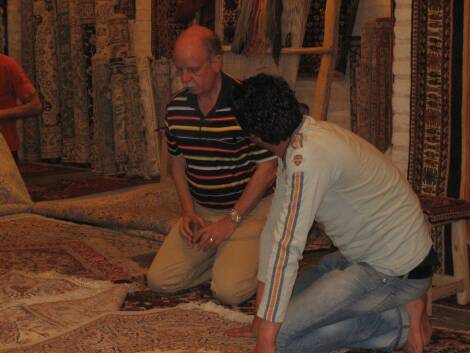
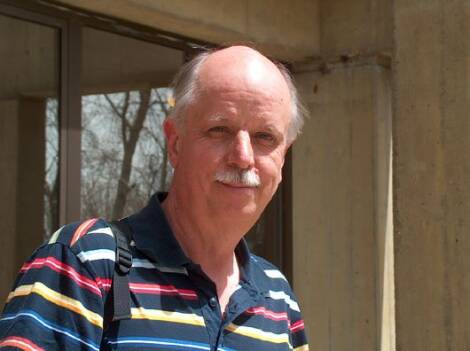
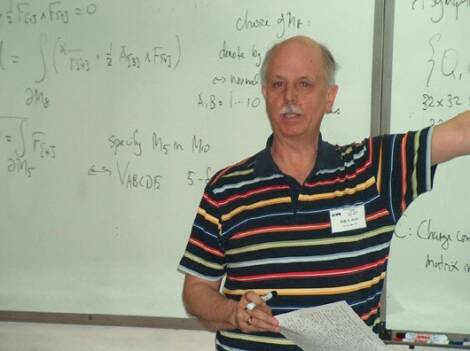
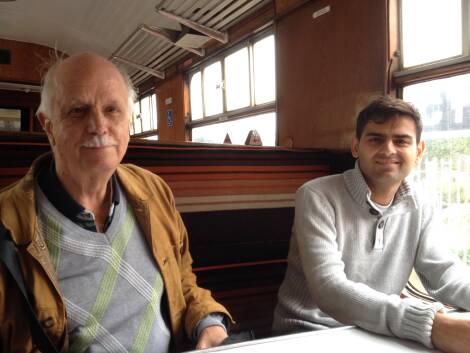
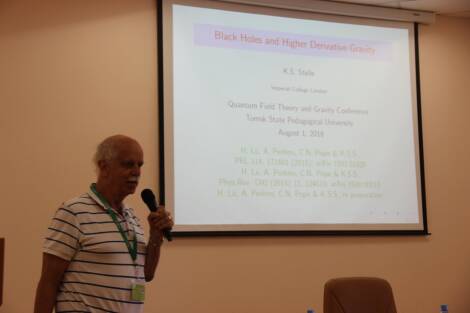
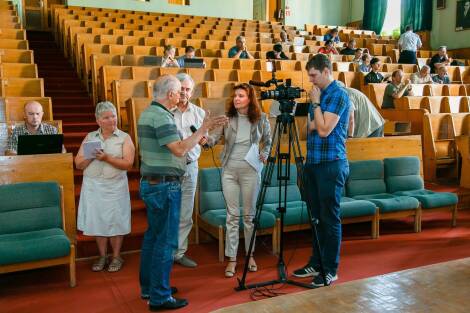
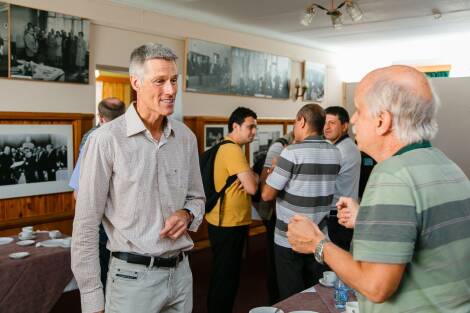
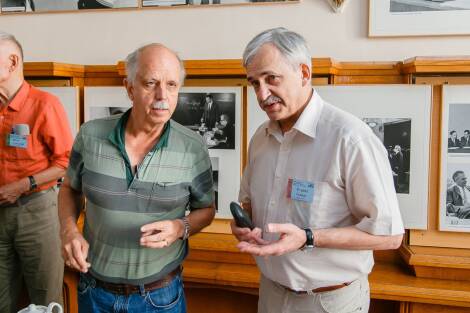
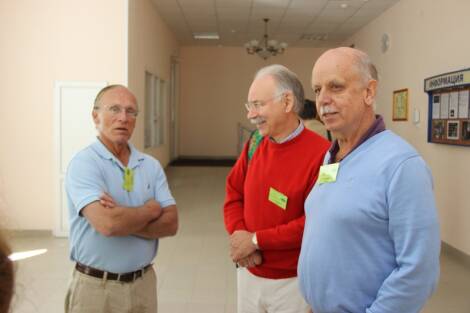
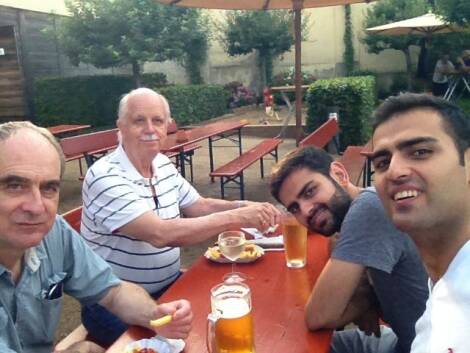
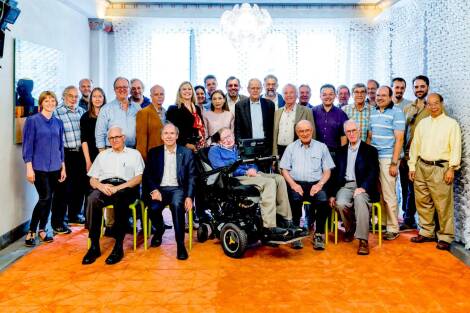
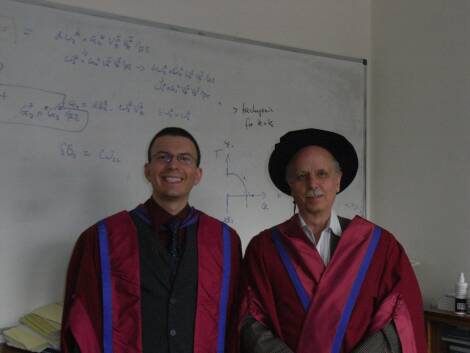
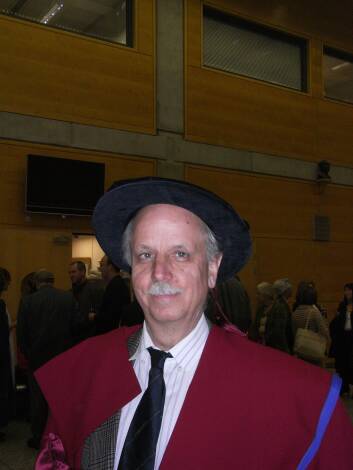
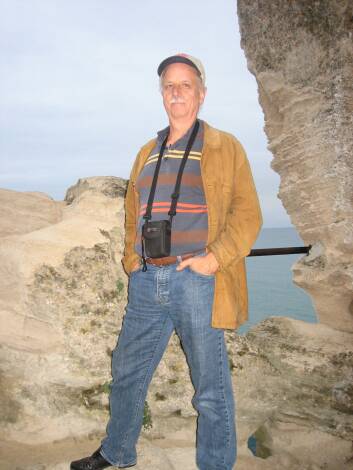
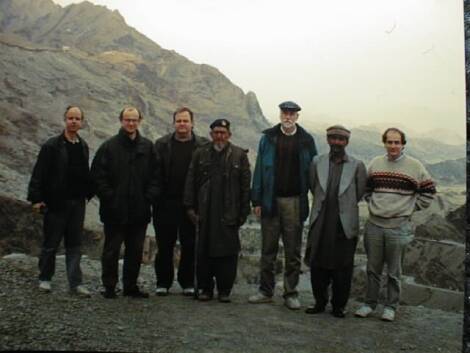
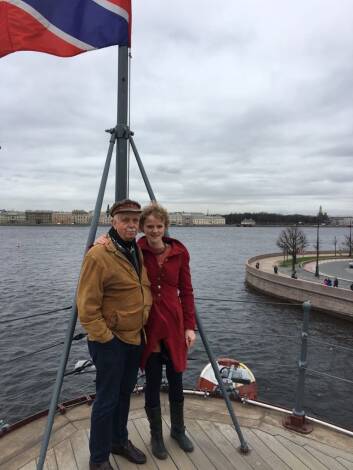
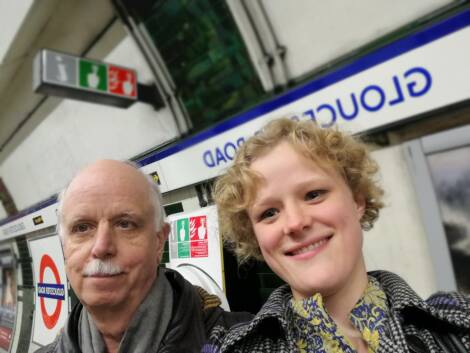
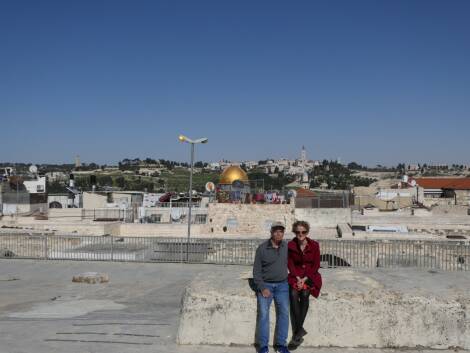
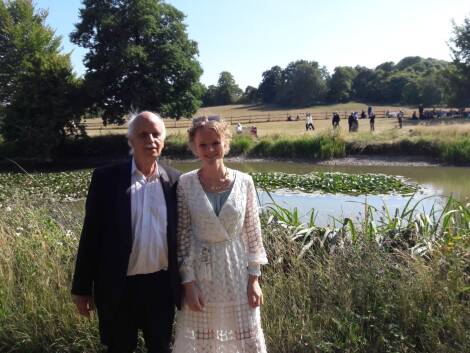
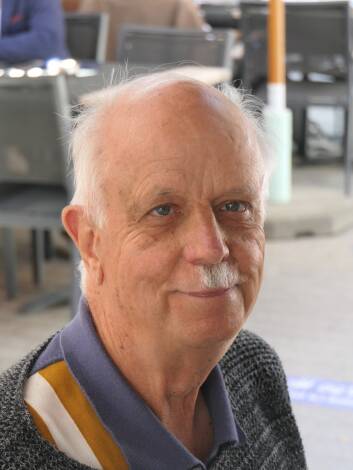
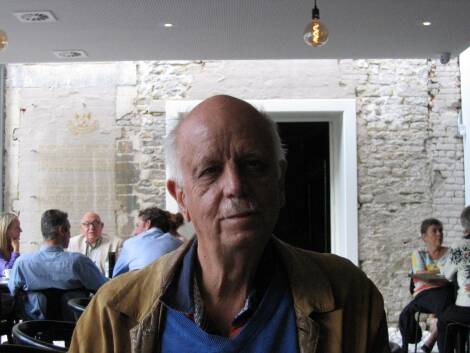
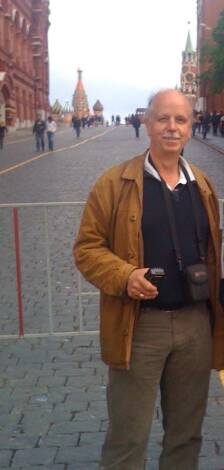
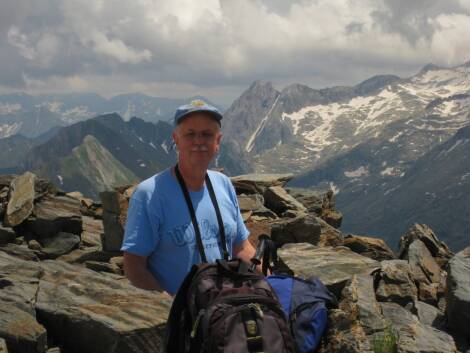
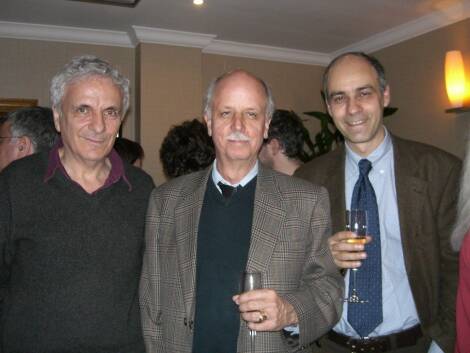
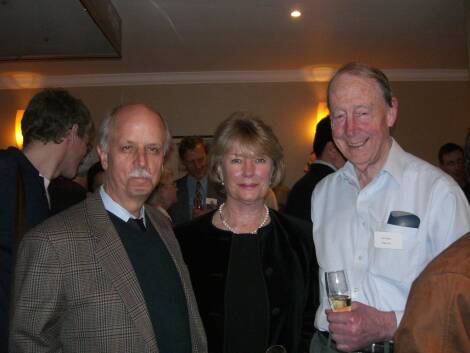
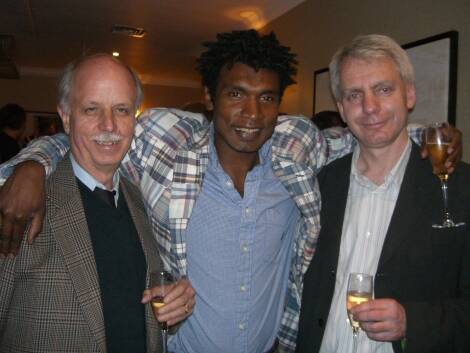
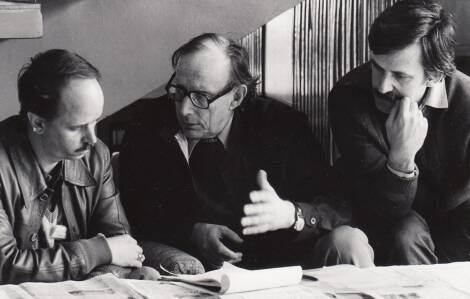
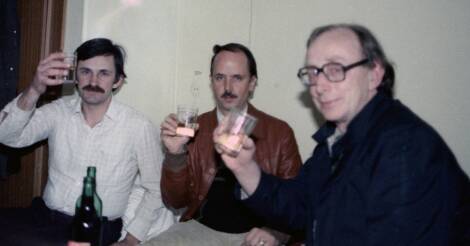
Messages and memories
In our senior year at high school (1965-6), Kelly was one of the stars of our math class, churning through real analysis and modern algebra. Even then, there was a laser clarity to Kelly's work. And although some others in that class achieved similar reputations in other fields, Kelly was the one who took math the furthest. To be sure, he took it to physics, not to math per se. Indeed, much later he told me that the most important math class in his life had actually been not that first encounter with truly beautiful math, but rather his first applied math course at Harvard, an exercise in getting the tools sharpened and ready for use.
Math was one thing, in those days at Andover. But then as later there were many other sides to Kelly. The adventuresome, well-traveled, outgoing Kelly that one reads about in these tributes was already evident in his activities at school. Looking at our graduation book, one finds him of course in the Math Club, but also in the French Club, the Archeology Club (president in his senior year), the Folk Music Society, the Radio Club, the Outing Club, the debate society, the annual musical comedy performances, and the student congress. He's simply everywhere.
Those of us who knew the young Kelly can discover from this site how much he made of the magnificent gifts we saw as budding possibilities for our classmate. Students, acquaintances, colleagues, intimates: all tell us of a man who touched dozens of people in myriads of ways. It is an impressive life. That it has ended is a great sadness.
Kelly will be solely missed by all that knew him.
In 1993, I flew with Kelly to Sochi where we gave some lectures at a summer school for students from Moscow State University. It was on that trip I realised quite how brilliant his Russian was, as he took me under his wing as we dealt with the peculiarities of travelling in the Soviet Union whilst it was breaking up.
His teaching was legendary, I was the external examiner for their MSc programme Quantum Fields and Fundamental Fields, and Kelly’s lectures were always praised by the students for their clarity. Over the following years, whenever I met up with Kelly, he asked how things were, he was genuinely interested. It nearly always ended up in a trip to the pub followed by an expensive meal.
The last time I saw Kelly, in June 2025 we sat together at the Royal Society Faraday Discovery panel meeting and then went for a beer. He was so happy, and full of life, he was getting married. He was a wonderful friend, I feel so lucky to have known him, and still struggle to think he won’t be there when I next visit Imperial.
My sincere condolences go to his wife Marise and his family.
In the years that followed, I met Kelly many times at conferences in Russia and abroad. He also gave a talk at the seminar of my home institute, the Lebedev Institute. I remember that talk especially well, as it was based on his joint paper with Eric Bergshoeff and Miles Blencowe, “Area-Preserving Diffeomorphisms and Higher-Spin Algebra” (Commun. Math. Phys. 128 (1990) 213), which was closely related to my own research interests. As far as I recall, this was the only direct scientific interaction I had with Kelly, but it proved to be a very productive one. The published version of the paper contains a footnote acknowledging my comments.
Of course, Kelly and I discussed many other scientific matters at meetings and conferences we both attended. Yet, in truth, the most memorable conversations with him were about culture and history. Kelly had an exceptional breadth of interests and a deep appreciation of history and art. Once, when I was in London, he suggested that we visit together an exhibition on the Assyrian Empire at the British Museum; it was a remarkable experience. On another occasion, Kelly guided my wife Olga and me through an ancient Christian church in Istanbul, sharing his knowledge of its remarkable wall paintings.
Whenever I met Kelly in Moscow or in other scientific cities, such as Tomsk, I would ask him what interesting events were taking place around us. He always seemed to grasp the broader cultural and intellectual landscape far better than most.
Kelly Stelle was a person of rare character—a distinguished scientist, an inspiring companion, and a truly remarkable individual. He will be deeply missed.
Thank you, Lynette for this information. I am very sad. Kelly was a close friend of mine. I have a lot of good memories and funny stories about Kelly, including how I discovered in Mr. Stock's French class through surreptitious Morse code messages with Kelly that his mother and my mother were freshman college roommates. Kelly and I were both in Gary Abrecht's boy scout patrol in troupe Gottard. Because of his erudition and energy on all hikes with the troupe he was given the scout name "Chamois scientifique." That was kind and deserved. Many names were not flattering. Mine was Raton loufoque. I had to look that one up and wasn't too pleased when I found it. Kelly left Ecolint to attend Philips Andover Academy. He then went to Harvard. At Harvard he wanted to major in physics but also take Russian and Italian. The physics department said he couldn't do that because at Harvard the physics curriculum was prescribed and there was no space for Russian and Italian. So Kelly majored in the "History of Science," took the entire physics curriculum and also Russian and Italian. In his senior year he applied to the Harvard Ph.D program in physics. They turned him down, saying they only accepted physics majors. So Kelly went to Brandeis for his Ph.D and studied theoretical physics with Einstein's colleagues who had left Germany at the same time as Einstein. Kelly worked at CERN and was a professor at Imperial College, London, for decades. The bureaucracy at Harvard didn't hold him back. I saw him a few times over the years--in DC, the Copper Mountain reunion, and London--and he was always his fun, energetic, perceptive self, though I thought his gentle sense of humor became slightly more acerbic, in a good way. I'm so glad he finally got married. The last few times I talked with him he sounded extremely happy.
Stephen
He leaves behind an impressive scientific legacy: in gravity, notably his first two papers which included curvature squared terms in the classical action, in quantum field theory, supersymmetry and in string theory.
It was a great pleasure to have had the opportunity to work with him on more than 20 papers.
He will be greatly missed.
He leaves a very impressive scientific legacy, mainly in quantum field theory, gravity (notably his first two papers), supersymmetry and string theory. It was a great pleasure to have worked with him on more than twenty papers. He will be greatly missed.
Kelly was a wonderful person and an outstanding scientist. Already his
entree with his work on the renormalization of higher derivative gravity was a brilliant achievement. I had the privilege of knowing Kelly since the early 80ies (I still remember him in our kitchen in Thoiry more 40 years ago discussing physics, politics and the merits of good food!), thus being able to interact with him for a long time. I won't repeat here all the beautiful things previous contributors on this memorial website have already said about him, save to say that I can
fully confirm from my personal experience everything that has been said!
In spite of having known each other for so long, it took us almost
30 years to finally team up and collaborate (on the BPS structure of
stationary supergravity solutions, together with Guillaume Bossard).
This was when Kelly was awarded the Humboldt Prize which enabled him to spend extended periods of time at the Potsdam institute. During this time we had the pleasure of his continued presence, after which he remained a regular visitor so we continued to benefit from his wit and wisdom.
My condolences for this terrible loss go to his wife Marise and his family. I will retain shiny memories of Kelly, as a scientist and a human being.
Perhaps that is one of the reasons why I chose to be a TA for this course throughout my PhD. Even though he must have had extensive experience with the Rapid Feedback sessions, Kelly was always open and supportive whenever I came up with suggestions to change the format, the order of questions etc.
I also remember our tea time conversations, on physics and so much more
I attach several pictures of him from the RTN Meeting in Kolymbari Crete in 2004.
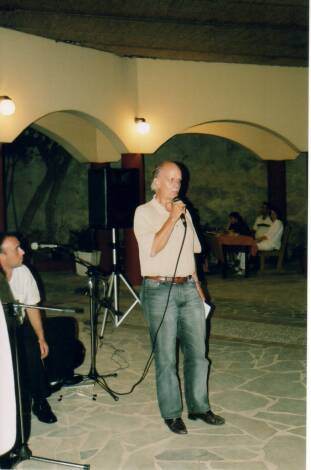
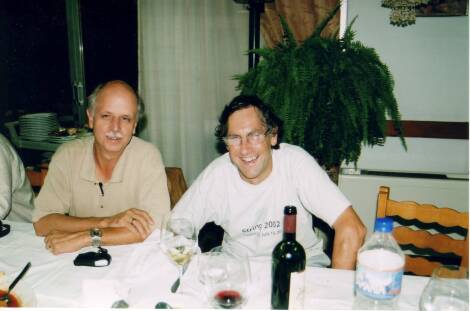
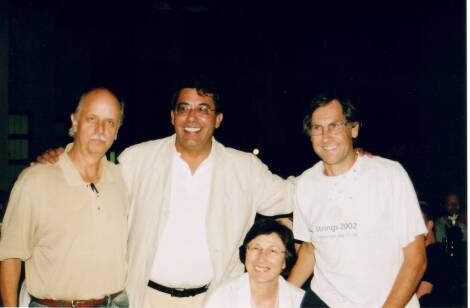
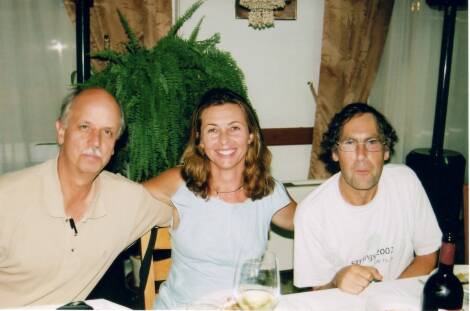
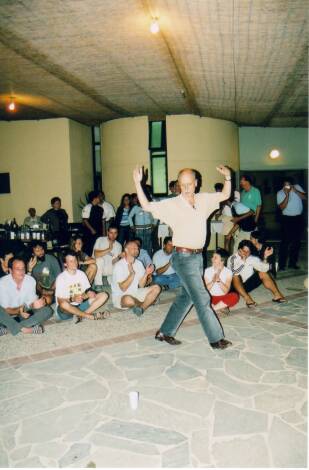
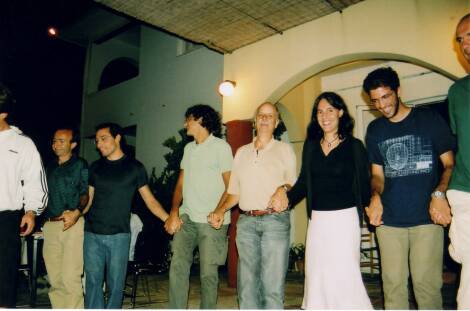
From the beginning, I was attracted to Kelly’s curiosity and his unusually open mind. I never fell out of love with his habit of suddenly brightening and sharing an anecdote about a distant time or place.
It didn’t matter to Kelly if he had already been someplace or seen a particular movie. Sharing an experience with me added a whole new dimension for him, and he took pleasure in showing me the most interesting places he had discovered around the world.
Kelly took a genuine interest in my PhD work. Towards the end of my time at Imperial, he even proposed a collaboration on the application of the renormalization group to the path integrals I had been studying.
What I valued most in my relationship with Kelly was his never-ending love and kindness. Whenever I had difficult emotions to work through, Kelly would hold me – literally and figuratively. He would cook for me or glue my broken watch strap back together.
Kelly and I married in Sicily, on the 14th of September 2025. Our wedding ceremony was one of the most beautiful moments of my life. I will never forget the way Kelly smiled and thanked me quietly after I concluded my wedding speech. Even though we were husband and wife, Kelly maintained that first and foremost, we were friends. Friendship was the essence of any of Kelly’s relationships.
A new year has just begun. While my grief will take a long time to process, I will take Kelly with me wherever I go. I love you, my best friend.
My own memories of his generous kindness include the afternoon he sat with my octogenarian father, an ex-Navy pilot later involved in developing a new kind of cockpit display. Kelly gave my dad his full attention for a good part of the afternoon, asking insightful and somewhat technical questions that roused enthusiasm I had not seen for a long time. One summer day on the Cantabrian coast, Kelly’s conversation with local fisherman on the methods of collecting gooseneck barnacles enhanced the moment and pleased the fishermen so much that they gifted us two kilos of the precious harvest. Kelly cheered us on at significant moments. When our twin daughters were born in Paris he arrived within days to pay his compliments. Thirty years later, when one of these daughters married, he — and Marise — were in attendance. Kelly’s interest, his presence or his recognition of key events in our lives has enriched us. We, like so many others, have been the beneficiaries of his steadfast, genuine consideration and support. We will miss him but are eternally grateful to have known him.
Dear Kelly, Your festivity in Catania was very nice. We were all happy when we left you. Now we remember this festivity together with so many nice moments that we had together. Despite what happened, I will never forget these nice moments with you in my life.
In conferences, I was always looking for you; for a chat in the coffee break and for arranging to have dinner together.
You knew so many things, and you could tell them in a beautiful way: with some humour. Not the humour that we all started to laugh loudly, but a humour that made you think. Your sentences kept me happy for several days.
I enjoyed the dinners with you, and we did also many other things together. We were in the mountains together, as you also enjoyed the walking in nature: in the Alps, in Benasque in the Pyrenees, cross-country skiing in the Jura, and even walking in the sea in the Netherlands.
You were a physicist in your way of thinking. I was often struck how you described the 'ordinary life' with physics concepts. When I had to make a decision for yes or no, you said " put yourself in an eigenstate". When money was flowing easily you said " living at very low Reynolds number" (which means the flow is smooth). You wanted to be "disentangled from heads of groups meetings".
You became a key figure in our European string community. You cared that your institute always made part of the European collaborations, and you were always there to help the community. That community was important for European high-energy physics. But that community is also a group of friends, in which you will be missed.
I liked to find you always when possible, and you seemed also to be happy to meet me. Indeed, each time you passed through Belgium, you took contact with me to meet. We were good friends. We had also nice moments together with Marise and my partner, Laura. I wish Marise that she will continue her life being happy with all these special memories.
Oh, Kelly, I will miss you a lot in the next years, but in my mind your beautiful voice will remain.
The unexpected and untimely death of Kelly Stelle became a shock for all his friends andcolleagues. It is still difficult for me to realize that we will never meet again on the earth. We were on friendly terms with Kelly for approximately 40 years and I would like to present below some memories about my distinguished friend.
For the first time we came across in the middle of eighties, at the Winter School in Karpach (Poland) organized by Jurek Lukierski, though maybe I listened to his talks on auxiliary fields in
N=1 supergravity earlier, at some conferences in Moscow, not being yet personally acquainted with him. Besides his great knowledge in the most urgent problems of gravity and supergarvity, I was very surprised by Kelly’s fluent Russian in which we preferred to talk in view of my rather pure practice in the spoken English that time. We discussed not only the science, but also politics and especially the so-called “perestroika” which started in USSR approximately in
those years. It proved that our views of all that were rather close. I also remember that he was very interested in the history of inventing the harmonic superspace approach which was one of
the subjects of my lectures and which he frankly admired. Once we with him and Dima Sorokin decided to climb the highest summit of the Krkonoshe Mountains nearby Karpach, “Snezhka”
(“Snow Mountain”). It was situated just near the board of Poland and Czechia and the guard on the board carefully checked our passports, that caused a few ironical comments from Kelly’s
side (I should say that he disliked all these officials, especially the military ones). Anyway, we have crossed the board and successfully on the pick which rose approximately 1000 metres above Karpach. Dima Sorokin was a former mountaineer and of course seriously passed ahead us with Kelly, though we tried to do our best to keep pace of him. Finally, we drunk cups of coffee in the bar on the tip and just looked on the very steep wall by which the mountain
descended to the Czechian side. On the way back we passed by some yard with a big hound barking rather ferociously. Kelly told us that he knew how to make it quiet: he squatted and moved some distance along the fence, leaning on the hands and barking a way quite similar to the dog which was highly surprised by such a strange behavior of the human being and stopped any threats in our address.
Later on, Kelly frequently visited our Laboratory in Dubna and closely contacted our supersymmetry group consisting then of Victor Isaakovich Ogievetsky, Sasha Galperin, Emery
Sokatchev, me and some other colleagues. He was a permanent member of the Advisory Committee of our biennial workshops “Supersymmetries and Quantum Symmetries”. All bad events
of twenties did not influence this his membership, though hampered his further visits to Russia (it became impossible to prolong his Russian long-term visa which was few times arranged
for him by International Department of JINR). When he was in Dubna, our meetings and discussions were not restricted solely to science, and our friendly human contacts were rather extensive. Once I invited him to my modest apartment where I was living with my first wife Svetlana and the two-year old son Dmitry. My son was very impressed by Kelly and frequently asked me later, after Kelly has departed, when we will meet him again. Kelly taught him the first English lesson: he stretched out the open palm and said “give me five!”. And Dmitry gave.
Much later, in 1997, we with my second wife Larissa arranged a party in our new appartment for some participants of the SQS meeting dedicated to the memory of V.I. Ogievetsky who
passed away in 1996. Kelly was among the guests and I was very glad to welcome him in our place. So Kelly visited two my apartments in Dubna and was well acquainted with my both
wives.
Apart from Dubna, we met many times at various scientific events in CERN, Alushta, Moscow, Yerevan and Tomsk. Last time I met him seemingly in the end of tenths at the workshop in Tomsk organized by Ioseph Buchbinder. I also listened to his on-line talk at the
Conference in Steklov Institute dedicated to memory of Andrey Slavnov. It happened just two years ago.
One more bright reminiscence of Kelly is related to my three-month visit to CERN in 1987. Once Kelly said me that he is going to visit his fomer teacher of French in Martigny and invited
me to join him. It was a very exciting trip by Kelly’s car with looking at the Saint- Bernard pass, Mont-Blanc and all that. We spent two days in Martigny and I took part in preparing some alcohole from the local grapes, using a special manual wine-press. It was a rather hard work of us both and Kelly encouraged me by exclamations “Keep turning!” or something like that. The owner awarded me two bottles of nice local wine.
To make more clear the attitude of Kelly to our country and to his Dubna friends, I attach reference to his interesting contribution to the remembrance site of Victor Isaakovich Ogievetsky whom Kelly respected very high.
http : //theor.jinr.ru/people/Ogievetsky/Appreciation−Stelle.pdf
Dear Kelly, Rest In Peace! We will remember you always.
Evgeny Ivanov (Dubna)
2
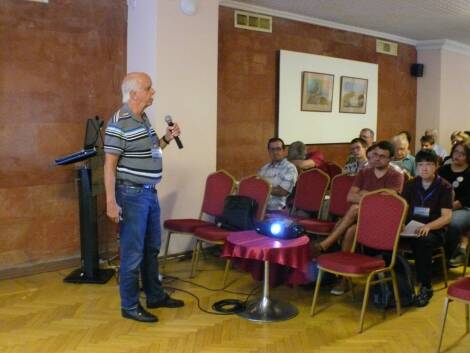
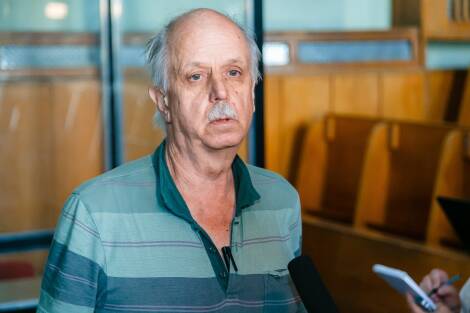
On a regular basis, quite late in the evenings, or early at night, Kelly was popping in the post-docs office asking us to stop working and inviting all of us for dinner. Group cohesion, social interactions, new science ideas were actually made there.
Thank you for those times Kelly, and have a nice trip into the 11 dimensions!
With sadness,
Chris.
He will be remembered for his scientific contributions—which influenced my own work—his infectious love of life, and the wonderful company he always was.
Rest in peace, Kelly. You are greatly missed.
Kelly was my PhD advisor and I am forever infinitely grateful for that.
When I think of him, I immediately think of the German word "Doktorvater", meaning doctoral father, as it signifies much better the close, mentor-like, and even familial relationship we had. Kelly was way more than a supervisor to me. He was a caring mentor, a wise counselor and most importantly, a very good friend!
My journey with Kelly began in the autumn of 2004. I came to Imperial as an ERASMUS undergrad exchange student and I took part in the Master's course. Kelly gave the course on string theory and I was particularly interested in it. Together with two other students, I would often ask questions after the end of his lecture and in his distinctive and characteristically sharp-witted manner, he soon devised a nickname for us: he called us "the three usual suspects". I did not do too bad in the end of year exams and Kelly asked me if I wanted to become his next PhD student. I did not have to think twice.
Through many conferences, schools, and workshops that Kelly generously supported me to attend, along with countless meetings in his Huxley office, we had the opportunity to truly get to know one another. I soon discovered that our biorhythms were remarkably in tune -- neither of us ever quite mastered the art of the early morning. By the end of my first year as a PhD student in 2006, he had converted me into an 'Apple guy.' I cherish the many afternoons spent in his office, immersed in physics discussions that often found their way to "Da Mario's," his favorite restaurant near Imperial. As a non-native speaker with a deep affection for the English language, I was continually fascinated by his extensive vocabulary and, as Chris Pope aptly described, his "memorable folksy expressions."
Honored with a Humboldt Research Award, he spent a sabbatical year at the AEI in Potsdam from 2007 to 2008. As a thoughtful advisor, he recognized the importance of this critical phase in my PhD journey and arranged for me to join him as a visiting student in Potsdam. During that time we spent many hours almost every workday trying to calculate the fermionic part of a supergravity dimensional reduction, including the four-fermi terms -- a painful but very insightful exercise. Oftentimes the day ended in one of Potsdam's restaurants. There were moments when I struggled, and he was always there -- offering unwavering support and deep understanding.
A memorable event was the "Kellyfest" in 2008, celebrating his 60th birthday. While it's customary to name such events after a professor's surname -- like Duff-Fest or Gibbons-Fest -- using his first name was a unique tribute that perfectly captures how beloved Kelly was within the theoretical physics community.
Having completed my PhD and a year-long postdoctoral fellowship, I left London in 2010. Yet, our paths continued to cross e.g. at conferences and workshops. Years later, we met again at the AEI in Potsdam during the summer of 2014, coinciding with the soccer World Cup. I found myself watching the World Cup final with Kelly and my girlfriend in a lively bar downtown -- naturally, he chose the spot. Surrounded by enthusiastic German soccer fans, we shared a truly memorable evening.
To Kelly: Thank you for all your support, guidance, encouragement, inspiration, time, as well as the countless enjoyable meetings and conversations. I miss you.
While we mourn Kelly's passing, his legacy endures in the profound contributions to theoretical physics and in the lives he touched. Farewell, dear friend -- your light remains with us.
We met also in 1989, when I came to London as a visitor at King’s College. Later, in 1991, when I was a visiting fellow at Trinity College, Cambridge, Kelly hinted that he would not mind being invited to one of Trinity’s formal dinners. As I had the privilege of inviting a guest, Kelly drove up from London, bringing his black tie dress with him, and looked completely at home among the dons.
Kelly was a one of the main reasons I eventually came to Imperial College as a lecturer in the fall of 1992. We were then colleagues for 33 years, with many discussions on both physics and politics. One unusual memory I have of Kelly is his reaction to having his Audi stolen while he was visiting Berlin in the late 1990s: “I just need to get a new one—this is what a checking account is for.” Another is from 2008, during his 60th birthday conference, when we organized a football match in Hyde Park and Kelly volunteered to referee. He was a gentle one—running from one end of the pitch to the other, but hardly interfering with the game.
It is hard to come to grips with the fact that Kelly is no longer with us. Although we did not collaborate directly, I continue to use and cite his papers, so in that sense, through his work, he is still very much alive for me.
I have many memories of travelling somewhere with Kelly in his various cars. I recounted a couple of these car anecdotes at his wedding. Another was a trip, to Italy I think, but of course we had to stop at a famous chateau to try the wine; Montrachet I think it was. There was a wine tasting going on in the cellar, with the appropriate utensil for sipping and a bucket for spitting it out. I thought that it was a shame not to drink it; it didn't seem like much but of course it all adds up. Kelly abstained entirely because he was driving, but he bought himself a case to imbibe later. On some similar occasion but with other companions, Kelly bought a case of a Margaux with the name``Le Baron de Brane'' and he gave me one of the bottles. I put the label on my office door in Cambridge for several years and now I have it on the door of my study at home as a reminder of Kelly.
Memories are notoriously unreliable, but they are what we have. In his autobiography ``Mon dernier soupir'' the film director Luis Bunuel writes ``You have to begin to lose your memory, if only in bits and pieces, to realise that memory is what makes our lives. Without it we are nothing.'' The more you think about it, and maybe the longer you live, the more you see how true that is. Kelly is no longer with us but our memories of him are part of what we are while we still live.
I may not have known Kelly as long as Mike Duff and Chris Hull, but still—36 years for me!
Kelly sometimes made me a bit angry with his late or early calls when he wanted to spend some money on his college accounts or ask for a purchase order. How I wish he would still do that.
Three months into my contract here, I was about to hand in my notice when I decided to talk to Kelly and share my doubts about whether to take another job I had been offered. After a long dinner and chatting away he successfully convinced me not to resign. Only 36 years have passed, and I am still working for Imperial.
We both usually worked late. For me, it was often reassuring to be in College at, say, 8 p.m. and to know that he was still in his office next to mine.
I fondly remember the 1990s, when I mingled more with the students, as we were roughly the same age. Many times we would go out—not dining, but dancing in South American clubs. Kelly would always be the first to say yes to the adventure of dancing salsa, samba, or lambada.
It has truly been a pleasure to have worked with Kelly and to have had him as a friend.
I sincerely miss him now and will miss him for many years to come.
Bless his soul.
Almost every other day, we would spend the entire afternoon working together until quite late, and then go out to find a restaurant for dinner. He taught me an enormous amount of physics during the day, and in the evening he would share his knowledge of American politics and countless other topics. He was full of stories—among them the time he ran naked through the Antarctic snow from the sauna back to the station.
He was not only a collaborator, but also a friend. I will miss him deeply.
Kelly was a great lecturer, who inspired me when I spent a year as an exchange student at Imperial College and learnt the basics of string theory from him. Later, he became a much-valued discussion partner, when he challenged (always in a very friendly manner) my ideas on quantum gravity, while I was a postdoc at Imperial College. We continued to discuss, whenever we met at conferences, and I always came away from these discussions with a new perspective or question to think about.
Kelly will be much missed!
Funny enough, our first encounter was in the Royal Geographical Society, on Kensington Gore near Imperial, where Kelly had invited me for a talk in the 1996 annual meeting of Toine Van Proyen's European Network. We met many times thereafter in not-so-exotic places: At Ecole Normale (where Kelly was a frequent visitor), in Crete, and of course at Imperial where his door was always open for any visitor willing to chat about any subject: physics, politics, cuisine.. .
In recent years Kelly got interested in the question of gravity localisation, and we had numerous discussions and arguments. In all our encounters Kelly was his usual self: courteous, passionate, good-spirited, generous. It is ironic but bitterly fitting that he passed away while traveling in a distant land, the one where civilisation began. Like all his friends, I will miss him.
Les Houches
I first met Kelly at the 1975 Les Houches summer school in the French alps devoted to Quantum Field Theory. Many of that year's students were to become leaders in the field, for example Ed Witten. I drove my old Triumph Spitfire there but the Alps took their toll, and the driveshaft broke. Luckily there was someone who knew all about cars and could speak fluent French with the mechanics at the local garage....Kelly. We also found we had common interests: quantum gravity and good food and wine and we became great friends.
Balham
There is a novel by David Lodge called “Changing Places” about a British and an American academic crossing the Atlantic in opposite directions which Kelly and I were to imitate. In 1978 I was going from a postdoc at Queen Mary College London to one with Stan Deser, at Brandeis University near Boston, while Kelly was moving from Brandeis (where he was Stan's student) to King’s College London. We even swapped apartments; I to his in Cambridge Massachusetts and he to mine in Balham (arguably the most boring and unremarkable suburb of London, hailed as “gateway to the south” in a famous comedy satire.)
Moscow
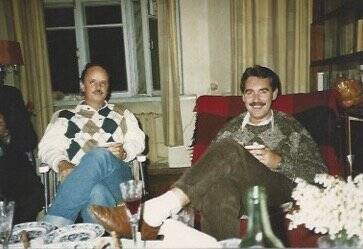
About this time a series of annual conferences on Quantum Gravity started in Moscow. The likes of Stephen Hawking, Andrei Sakharov, and Yakov Zeldovich would be there. In those bleak days before Glasnost travelling behind the iron curtain still had an air of danger and mystique about it. I also seem to remember much more vodka and caviar being consumed. I met many Russian colleagues who were to become friends, thanks in no small part to Kelly who seemed to know everyone already and of course spoke perfect Russian. (If I am not mistaken the photo of Kelly and me was in the home of Viktor Ogievetsky in Dubna).
Aspen
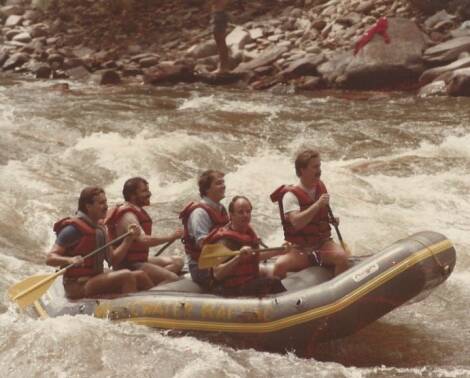
The physics summer school in Aspen Colorado is close to the marquee that houses the music festival, attended by the millionaires and showbiz celebrities. One night, Dionne Warwick was the main attraction and members of the Kennedy family and the cast of the TV series Dynasty were in the audience. Needless to say the ticket prices were beyond what the physicists could afford but Kelly and I were able to “walk on by” to the back of the tent and enjoy the concert for free. (For a different Aspen event see the whitewater rafting photo).
Geneva
Kelly was one of the pioneers of supersymmetry. He and I were both enamored of supergravity in 11 dimensions, the maximum that supersymmetry allows. But this was knocked off its pedestal in 1984 by D=10 superstrings. Yet strings had there own problems: Why D=10? Why 5 different candidates? Why not non-perturbative calculations? Why not membranes or more generally p-branes? The Oxford English Dictionary attributes first usage of the word 'brane' to a 1987 CERN preprint that Kelly wrote with Takeo Inami, Chris Pope, Ergin Sezgin and me, published in NPB 1988.
Singapore
In 1990 Kelly and I attended a conference in Singapore. On the flight back to London we wondered whether such supermembranes could emerge as solutions of the D=11 supergravity field equations. By the time we landed at Heathrow we had not only found the solution, but had completed the paper which we dispatched to Physics Letters B. This so-called M2-brane solution (which when wrapped around the eleventh dimension described a string solution of D=10 Type IIA supergravity ) proved to be a cornerstone of M-theory, the non-perturbative D=11 theory developed in 1995 by Ed Witten, Chris Hull, and Paul Towsend, that subsumes all five D=10 string theories. The aeroplane paper with Kelly is one of my most cited publications.
Haute Cuisine
The Singapore conference was memorable not only for the physics but also the sumptuous meal Kelly and I enjoyed at the famous Raffles Hotel, washed down with several Singapore Slings. (Sling theory?) There was never a menu so grand that Kelly could not home in on its most expensive item. With Kelly you would dine like a king but go home a pauper. In one of the Michelin starred restaurants mentioned in Chris Pope’s message, I forget which, the world-famous chef came to our table after the meal, no doubt expecting to bask in the glory of our compliments. But Kelly, glancing over his shoulder, mistook the chef for the waiter and said ''deux cafés, s'il vous plait''.
Catania
Kelly was a remarkable human being, always willing to help others and with a keen sense of humour; he will be sorely missed. It was a privilege to have known him for these fifty years and especially to have attended his wonderful wedding in Sicily in September to Marise, to whom I extend my sincere condolences.
although we only have one joint paper.
I was surprised when he did not show up for an announced talk at NTUA in Athens and did not reply to my emails. I feared something serious had happened. Unfortunately that was indeed the case.
I shall miss him and our pleasant encounters, lately most frequently at Imperial.
Nicole Ribet-Callan
Like others, I have many fond memories of hikes and meals at conferences and after Triangle seminars with Kelly. Those charming and memorable stories - like the “Prowokacja!” story about bringing in diapers to socialist Poland - will stay with me for ever.
For me, it was his support and empathy towards the younger generations and those yet to become established that showed the true character of the man. He cared, he thought about others, he made sure to give the benefit of the doubt and think the best of people. Combined with his formidable physical instincts and knowledge, these qualities I will miss the most. We’ve lost a good one. RIP, Kelly.
untimely passing of Kelly Stelle. He was a distinguished scientist and a very friendly personality known world-wide by his classical seminal papers on gravity and supergravity. He kept long-lasting scientific and human contacts with our Laboratory and was a good friend of many of us. Kelly visited our Lab many times with the brilliant lectures on supergravity and related topics and served as a permanent member of the Advisory Committee of the biennial Workshops on "Supersymmeties and Quantum Symmetries" held in BLTP from the beginning of nineties and founded in those times by Victor Ogievetsky and Julius Wess. He also frequently participated in other conferences of similar trends organized in Moscow and Tomsk, where we enjoyed additional fortune opportunities to meet him and discuss with him the urgent problems, both in science and in life. It is very painful to realize that we will never meet again this great theorist and cheerful and fascinating man. In these days of turbulence the value of personal ties and friendship become invaluable. We will miss Kelly as you do.
We express our deepest condolences to all relations, friends and colleagues of dear Kelly Stelle!
Dmitry Kazakov, Evgeny Ivanov, Joseph Buchbinder, Alexey Isaev
and the other members of Particle Physics and Mathematical Physics divisions of the Bogoliubov Laboratory of Theoretical Physics, JINR, Dubna
Kelly was a real all-rounder. He was as comfortable talking about politics, world cultures, music, and art as he was discussing physics. I remember with fondness the stories of his many adventures from getting out of Georgia during an invasion of the country without his yellow jumper (which was saved later only to disappear in London!) to his childhood in Tehran.
Kelly was intellectually curious - above all about people. He cared about people and generously gave his time. No wonder he had friends in every corner of the world! I will miss him.
I first met Kelly in 2010 when he visited Cambridge as an external PhD examiner. His easy-going and kind nature meant that it felt like we’d known each other for years. Kelly never failed to surprise with his experiences, anecdotes, knowledge, and kindness. Chris Pope’s reference to Kelly’s “memorable folksy expressions“ reminded me of another expression of his: a “hands off the steering wheel calculation”; what a wonderful expression!
It was always an adventure when Kelly was around. I remember the time when a bunch of us were going up the valley for lunch in Benasque. Kelly suggested a direct route up; a couple of hours later, having fought through shrubs, streams, and fields, we arrived at the restaurant looking completely dishevelled (Chris Pope holding his torn shirt together with his hands). We laughed so much and the lunch was much better than it could ever have been without that adventure.
He was a very unique and wonderful man.
I will fondly remember Kelly's calmness, kindness and in particular his joie de vivre: those meals and the stories that went along with them, a jaunt around Geneva for car parts that became an impromptu history lesson (his and the city’s), excited advice about a particular library or museum to visit in some other destination, and his simple joy at hoping to fit the entire arXiv on an early iPod.
Another memorable feature of almost every arrangement to meet up with Kelly was that he would arrive "fashionably later" than anyone else in the group. "Waiting for Kelly" was a constant theme over the years. It was a bit like "Waiting for Godot," except that Kelly did always show up...eventually. It could seem infuriating at times while we were waiting, but of course in retrospect it was just one of Kelly's most endearing traits.
Those were great days, and lest it seem as if it all centred around the dinner table, it was also wonderful to work with Kelly, to argue over fine points of physics (and sometimes grammar when writing the paper), and generally have a lot of fun discovering new things and then celebrating the achievements with fine food and fine wine. Kelly had a wonderful physical insight, and, of course, a deep understanding and intuition for all things "super." He also had a fine way with words, coming up with memorable folksy expressions, like "the letter to grandmother," to encapsulate the notion of an externally-supplied constraint over and above what was implied by the other equations. All in all, it was a great adventure; we shall not see his like again.
But of course, as many have remarked, we did not talk only about physics. In fact, there was basically no topic that was off-limits, be it the repairs to his green Audi quattro, some castle in France, a jazz concert he had experienced, the fascination of men in the Kashmir for British cricket results, or the time his cat accidentally ate some hash and was stoned for two days…
In working with Kelly, the division of labour was always clear: he would talk and I would calculate. Kelly always had an idea of what the result should be, and I always had an idea of what a certain calculation showed. Then we would compare notes, and often he would update his expectation of the results, and I would update my premises in the calculations. We did this until we agreed, however long that took – it could be days, or it could be years. Kelly was never in a hurry, all that mattered was that we were happy with the result.
In this way, Kelly and I stayed in touch after my PhD, and we continued working together on regular occasions. What makes me happy is that in our most recent work, we came to appreciate a new facet of his starting theory in physics, quadratic gravity, because we realized that it may have useful implications for the early universe.
What a stroke of luck it was to have known Kelly. Every conversation with him was enriching and made me appreciate the world a little more. I will miss him deeply.
Kelly was very kind to me personally when my late wife Sonia Stanciu was in hospital in London. I remember that Sonia's parents were having difficulty in getting their passports and visas to visit her in the UK. Kelly solved the problem in real time through a "close contact" at the Home Office and in the Romanian Embassy in London.
Rest in peace, my friend.
I got to know him well when I was external examiner for the Imperial Master's course. Kelly was in charge. What struck me most was how deeply he cared. He cared about how the course was run and taught, and about keeping standards high. But more importantly he cared about the students -- that they were being treated fairly, that they had the chance to succeed, that each would ultimately thrive.
Yet seeing him in the corridors, chatting with him at tea time, or attending his notorious examiner meetings, was nothing compared to bumping into him at conferences around the world. In the middle of the most agitated physics discussions, Kelly was always the most grounding presence. Instead of quizzing me about the latest scattering-amplitude subtleties, the relevance of any of our work, or the state of funding, he would lift everyone’s spirits (or at least mine) by talking about the history of whatever beautiful city we were in, the hidden streets worth wandering, or the best place to watch the sunset over an old castle.
Back at Imperial, as the intense scrutiny from my colleagues would still be buzzing in my ears, he would drop by my office with insightful stories — often about women scientists during the war or other overlooked figures in our field. Kelly will be deeply missed here, but it’s at my next conference, when I don’t see his calm, quietly profound presence — as if from another place in space and time — that I will feel his absence most.
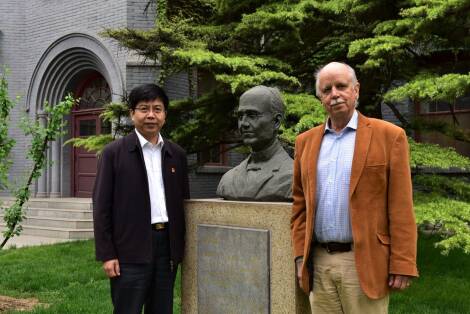
Last summer I took a train from Shanghai to Beijing. When I arrived at the station, I immediately spotted Kelly (you cannot miss that when he was the only white man among so many Chinese), who was going to visit the Luhe International School, which was founded by his great-grandfather Davelle Z. Sheffield as a missionary school (you can find a picture of Kelly, the school principal, and the sculpture of his great-grandfather in the gallery). We were both shocked (confused too) as we were in Shanghai and here in Beijing for completely different purposes, but ended up taking the same train. It was an interesting encounter. Though it was not a particularly meaningful encounter, but still felt somehow symbolic for me. I am sure in his life there were many more encounters much exciting than this one, with the people he used to know, the people he was about to know, and the people he would know, as if there was some sort of “gravity” bringing them (and us) together.
Kelly was a kind and supportive friend. I have very fond memories of the times we spent together, collaborating and socializing in Trieste, CERN, Benasque and other places around the world.
His kindness to me and my family have left an indelible mark on my life. I will cherish memories of him.
Although our time working together was shorter than we had hoped, I feel very fortunate to have learned so much from him over the past two years. He was not only a great supervisor, but also a kind friend, almost like a grandfather figure to me.
We will miss him deeply.


 Français
 Deutsch
 Nederlands
 Español
 Português
 Magyar
 Русский
 繁體中文
繁體中文