
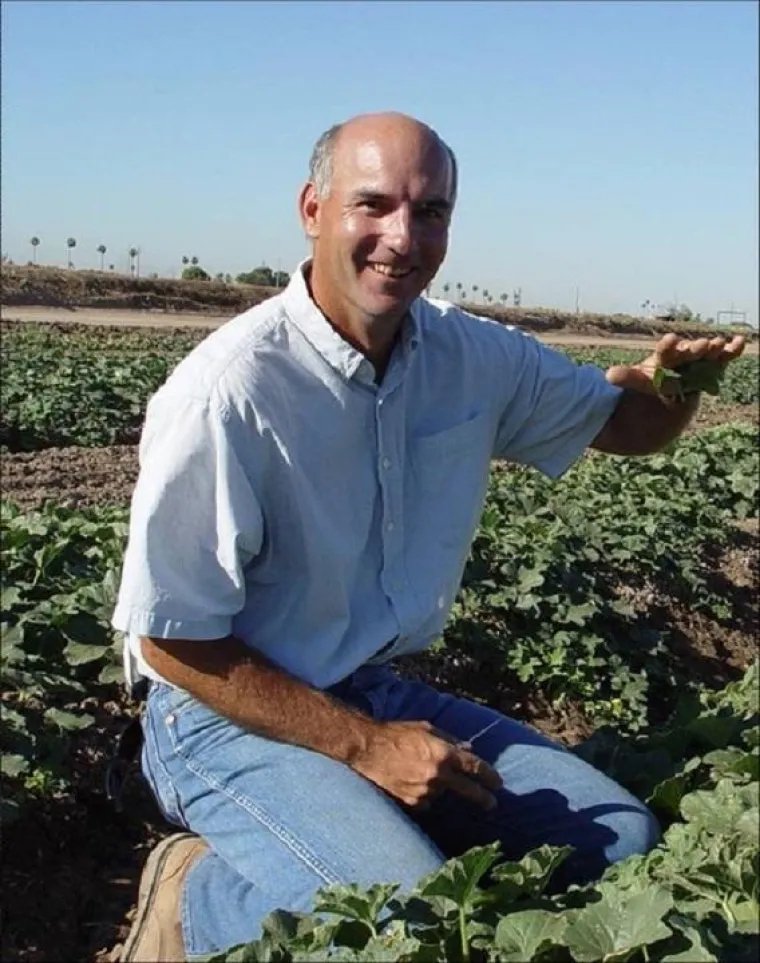
John C. Palumbo
Dr. John Palumbo meant a great deal to our entire community. We invite you to use this platform to share your memories, photos, and reflections as we honor his legacy and grieve the loss of a remarkable person. Your stories help keep his spirit alive.
Gallery
Memory wall
Post a message or share your memories and photos.
August 25, 2025
I had the honor of knowing Dr. John Palumbo, then chairman of the Select committee for the position of Assistant Specialist, IPM Specialist for Specialty Crops, in Yuma, AZ, in 2023.
Despite the short meeting, his warmth and kindness made a lasting impression on me. Upon arrival at Yuma, John welcomed me to a breakfast meeting, during which we discussed a wide range of issues, including his health. Although I could see he was in pain, he took extra time to share pieces of advice, which made me feel more comfortable during the interview.
His genuine enthusiasm for Yuma and UA's mission was clear to me, and I could feel his conviction in hard work and leaving a legacy, which deepened my interest and respect for him.
Thank you, Dr. Palumbo. Please accept my heartfelt condolences. My thoughts are with Yuma, UA, and his family during this challenging time.
Despite the short meeting, his warmth and kindness made a lasting impression on me. Upon arrival at Yuma, John welcomed me to a breakfast meeting, during which we discussed a wide range of issues, including his health. Although I could see he was in pain, he took extra time to share pieces of advice, which made me feel more comfortable during the interview.
His genuine enthusiasm for Yuma and UA's mission was clear to me, and I could feel his conviction in hard work and leaving a legacy, which deepened my interest and respect for him.
Thank you, Dr. Palumbo. Please accept my heartfelt condolences. My thoughts are with Yuma, UA, and his family during this challenging time.
June 11, 2025
A Lasting Legacy in Yuma
I had the privilege of knowing Dr. John Palumbo for nearly a year, and in that short time, he left a lasting impact on me both personally and professionally. From the moment I joined the Yuma Agricultural Center, John welcomed me with genuine generosity, readily offering his help and connecting me with key stakeholders in the Yuma area. Despite the demands of his extensive and impactful program, his office door was always open for any questions I had. Just a few weeks ago, I was attending a workshop in Imperial, California, hosted by the University of California Cooperative Extension. During the IPM session, I believe his name was mentioned more than ten times, underscoring the depth and influence of his research, findings, and recommendations. John was a true leader of the agricultural community in the Southwest, and his contributions will continue to shape the field for years to come. He leaves behind a legacy of excellence, mentorship, and service. Thank you, Dr. John Palumbo, for everything you have done. You will be deeply missed and fondly remembered.
I had the privilege of knowing Dr. John Palumbo for nearly a year, and in that short time, he left a lasting impact on me both personally and professionally. From the moment I joined the Yuma Agricultural Center, John welcomed me with genuine generosity, readily offering his help and connecting me with key stakeholders in the Yuma area. Despite the demands of his extensive and impactful program, his office door was always open for any questions I had. Just a few weeks ago, I was attending a workshop in Imperial, California, hosted by the University of California Cooperative Extension. During the IPM session, I believe his name was mentioned more than ten times, underscoring the depth and influence of his research, findings, and recommendations. John was a true leader of the agricultural community in the Southwest, and his contributions will continue to shape the field for years to come. He leaves behind a legacy of excellence, mentorship, and service. Thank you, Dr. John Palumbo, for everything you have done. You will be deeply missed and fondly remembered.

May 30, 2025
I was lucky to have known Dr. John Palumbo as a mentor during my time at University of Arizona. He was one of my advisors during my Master's program in Entomology working on the diamondback month populations in crucifer crops. I will always appreciate the patience and kindness he showed as I was learning how to do research in Yuma. My research took several unexpected turns and John's experience was always there to help steer me in the right direction. I was very lucky to have him as a mentor.
May 21, 2025
In 2008, the Desert Valleys Chapter of the California Association of Pest Control Advisers (CAPCA) honored Dr. John Palumbo with the prestigious “Outstanding Contribution to Agriculture” award. During the ceremony at the Southwest Ag Summit, attendees were reminded of a passage by R.L. Metcalf, a professor of Entomology at the University of California Riverside Agricultural Experiment Station. Metcalf wrote, “The struggle between insects and mankind commenced long before the emergence of civilization. This conflict arises from the fact that insects and mankind desire the same things simultaneously.”
Pest Control Advisers across Arizona and California, who are constantly engaged in this struggle with insects, recognized Dr. John Palumbo as a valuable ally. John’s tenure in Yuma witnessed significant transformations in crop protection, characterized by the continuous introduction of novel, safer, and more effective technologies. Dr. Palumbo’s work encompassed these newer technologies, but he also provided guidance and insights on the ‘older’ technologies, explaining where they best ‘fit.’
Amidst competing interests and diverse stakeholders in crop protection, Dr. Palumbo consistently led with sound scientific recommendations. These recommendations have contributed to the credibility and effectiveness of the work of Pest Control Advisers across California and Arizona. In recognition of these contributions, the membership of CAPCA recognized the value and significance of Dr. Palumbo’s work.
During my work in the agricultural industry in Yuma, my earliest memories of John are from the weeks leading up to vegetable season at the Yuma Agricultural Center. During this busy time, John was constantly receiving calls from Pest Control Advisers and growers from diverse backgrounds and experiences. He would patiently answer each call, providing factual and non-judgmental responses tailored to each caller’s level of knowledge. As years passed and technology made information accessible to everyone with a smartphone, I witnessed John and others at the University of Arizona ‘supercharging’ the research and teaching mission of the university Cooperative Extension by equipping PCAs, whether veterans or just starting their careers, with up-to-date information on diagnosing crop damage and identifying threatening pests.
Working with John during my years in Yuma was a rare privilege. After retiring from the industry, I always looked forward to occasional visits to his office at the Agricultural Station to discuss changes in agriculture, browse his extensive bookshelf, or simply catch up on the day’s events. Reflecting on those visits, I marvel at how much he accomplished, in spite of interruptions like those.
I regard John as a role model, mentor, and a friend. He was an exceptional scientist, entomologist, and human being. I miss him and I will never forget him.
Pest Control Advisers across Arizona and California, who are constantly engaged in this struggle with insects, recognized Dr. John Palumbo as a valuable ally. John’s tenure in Yuma witnessed significant transformations in crop protection, characterized by the continuous introduction of novel, safer, and more effective technologies. Dr. Palumbo’s work encompassed these newer technologies, but he also provided guidance and insights on the ‘older’ technologies, explaining where they best ‘fit.’
Amidst competing interests and diverse stakeholders in crop protection, Dr. Palumbo consistently led with sound scientific recommendations. These recommendations have contributed to the credibility and effectiveness of the work of Pest Control Advisers across California and Arizona. In recognition of these contributions, the membership of CAPCA recognized the value and significance of Dr. Palumbo’s work.
During my work in the agricultural industry in Yuma, my earliest memories of John are from the weeks leading up to vegetable season at the Yuma Agricultural Center. During this busy time, John was constantly receiving calls from Pest Control Advisers and growers from diverse backgrounds and experiences. He would patiently answer each call, providing factual and non-judgmental responses tailored to each caller’s level of knowledge. As years passed and technology made information accessible to everyone with a smartphone, I witnessed John and others at the University of Arizona ‘supercharging’ the research and teaching mission of the university Cooperative Extension by equipping PCAs, whether veterans or just starting their careers, with up-to-date information on diagnosing crop damage and identifying threatening pests.
Working with John during my years in Yuma was a rare privilege. After retiring from the industry, I always looked forward to occasional visits to his office at the Agricultural Station to discuss changes in agriculture, browse his extensive bookshelf, or simply catch up on the day’s events. Reflecting on those visits, I marvel at how much he accomplished, in spite of interruptions like those.
I regard John as a role model, mentor, and a friend. He was an exceptional scientist, entomologist, and human being. I miss him and I will never forget him.
May 17, 2025
The best thing I can say is: Thank You.
The business I work for does not produce or market insecticides, so I haven’t had a lot of opportunities to interact with you. Even so, whenever I have asked for help, I have gotten it, warmly, with care and with a great attitude. In the past I have offered CEU credit courses for PCAs and you have gladly participated by giving talks about the state of the insect situation, the diseases they vector and what you anticipate the near future will bring. You did a valuable trial for our company even though you don’t usually do adjuvant trials.
It is obvious that the agricultural community in Yuma and the surrounding area has looked at you as the heart of our business, the go-to person that could always be depended on to provide recommendations, direction and general counsel. You have always been a beacon, shining brightly without trying to be the center of attention. You have simply been at the center of our livelihood because you have always been available, honest, fair, extremely dedicated and extraordinarily competent.
It is said that no one is irreplaceable. In this case you are clearly irreplaceable, in part because your spirit will live on. You will be sorely missed, but the example you have set forth with continue indefinitely. Spirits live on and you will continue to shine in the hereafter. We will all miss you, but your example will help us carry on.
With kind regards,
Joe
The business I work for does not produce or market insecticides, so I haven’t had a lot of opportunities to interact with you. Even so, whenever I have asked for help, I have gotten it, warmly, with care and with a great attitude. In the past I have offered CEU credit courses for PCAs and you have gladly participated by giving talks about the state of the insect situation, the diseases they vector and what you anticipate the near future will bring. You did a valuable trial for our company even though you don’t usually do adjuvant trials.
It is obvious that the agricultural community in Yuma and the surrounding area has looked at you as the heart of our business, the go-to person that could always be depended on to provide recommendations, direction and general counsel. You have always been a beacon, shining brightly without trying to be the center of attention. You have simply been at the center of our livelihood because you have always been available, honest, fair, extremely dedicated and extraordinarily competent.
It is said that no one is irreplaceable. In this case you are clearly irreplaceable, in part because your spirit will live on. You will be sorely missed, but the example you have set forth with continue indefinitely. Spirits live on and you will continue to shine in the hereafter. We will all miss you, but your example will help us carry on.
With kind regards,
Joe
May 14, 2025
Tribute to Dr. John Palumbo
Ian Watkinson, retired entomologist and biochemist, Yuma, AZ
My initial contact with John Palumbo began way before his start at UA. In the late 1970’s I was an entomological scientist working for Shell Research in the UK. At that time the first pyrethroid insecticides were being developed, then commercialized. It quickly became clear that resistance to them was rapidly developing in many heavy use areas around the world, mostly in cotton and leafy vegetables. At that time, I was tasked with developing test methods to measure the degree of resistance, and it proved much higher than anyone anticipated. In talking with colleagues in other agricultural companies, despite enormous “resistance” from all our respective upper managements, a multi company/national task force was put together to find ways of countering the increase in pyrethroid resistance problems. It was called the Pyrethroid Efficacy Group, or PEG which worked with many university entomology departments in key resistance regions around the world. That quickly brought me into contact with Dr. Leon Moore and Dr. Theo Watson at UA.
Soon after that in 1980, I was seconded to Shell’s research lab in California to help work more closely with the key university groups here in the USA. By then PEG was quite a large group of scientists representing almost all the main pyrethroid manufacturing companies and it met quite regularly with researchers like Watson and Moore. Somewhere in those early years, at the suggestion of the universities in Arizona, Louisiana, Mississippi, Arkansas, Georgia, Alabama and others, the PEG was expanded to all groups of insecticides and renamed the Insecticide Resistance Action Committee, or IRAC. By then it was into the 1990’s and the IRAC group used to meet in different places around the world. Watson and Moore were strong advisors to the group and at one of those early meetings, probably at UA, Dr. John Palumbo was there, and the rest is history.
It quickly became clear that John was not only on top of all the issues around insecticide resistance but had many wonderful ideas about how to direct research to understand the mechanisms for resistance in each class of insecticide. He quickly became an essential part of the group and his ideas, guidance, connection and incredible knowledge, wit and his close camaraderie with a vastly varied group of researchers was a huge driving force behind better understanding Insecticide Resistance. Some of those meetings were held here in Yuma at the Agricultural Research Center. He was admired all over the world for his contribution. From that early work came the universal resistance numbering system then used first on insecticides and then other classes of pesticide. His rallying cry of “when in doubt, scout” was frequently used even back then.
In late 1992 when I was first employed here in Yuma, I was overjoyed to work more closely with John, and have done so ever since then, even though I retired 8 years ago, As I an avid lepidopterist, John would often call me to help confirm unexpected moth pests and sometimes we would carry out small breeding programs to help confirm identifications. My wife and I were so excited to be part of his Endowment Chair ceremony and have stayed close friends over all those 30 years or so. He was a great man, personally and professionally, and will be enormously missed here in the agricultural community and across entomological connections in an almost global way. Rest in Peace dear John, enjoy your future scouting where pests will be harder to find.
Ian Watkinson, retired entomologist and biochemist, Yuma, AZ
My initial contact with John Palumbo began way before his start at UA. In the late 1970’s I was an entomological scientist working for Shell Research in the UK. At that time the first pyrethroid insecticides were being developed, then commercialized. It quickly became clear that resistance to them was rapidly developing in many heavy use areas around the world, mostly in cotton and leafy vegetables. At that time, I was tasked with developing test methods to measure the degree of resistance, and it proved much higher than anyone anticipated. In talking with colleagues in other agricultural companies, despite enormous “resistance” from all our respective upper managements, a multi company/national task force was put together to find ways of countering the increase in pyrethroid resistance problems. It was called the Pyrethroid Efficacy Group, or PEG which worked with many university entomology departments in key resistance regions around the world. That quickly brought me into contact with Dr. Leon Moore and Dr. Theo Watson at UA.
Soon after that in 1980, I was seconded to Shell’s research lab in California to help work more closely with the key university groups here in the USA. By then PEG was quite a large group of scientists representing almost all the main pyrethroid manufacturing companies and it met quite regularly with researchers like Watson and Moore. Somewhere in those early years, at the suggestion of the universities in Arizona, Louisiana, Mississippi, Arkansas, Georgia, Alabama and others, the PEG was expanded to all groups of insecticides and renamed the Insecticide Resistance Action Committee, or IRAC. By then it was into the 1990’s and the IRAC group used to meet in different places around the world. Watson and Moore were strong advisors to the group and at one of those early meetings, probably at UA, Dr. John Palumbo was there, and the rest is history.
It quickly became clear that John was not only on top of all the issues around insecticide resistance but had many wonderful ideas about how to direct research to understand the mechanisms for resistance in each class of insecticide. He quickly became an essential part of the group and his ideas, guidance, connection and incredible knowledge, wit and his close camaraderie with a vastly varied group of researchers was a huge driving force behind better understanding Insecticide Resistance. Some of those meetings were held here in Yuma at the Agricultural Research Center. He was admired all over the world for his contribution. From that early work came the universal resistance numbering system then used first on insecticides and then other classes of pesticide. His rallying cry of “when in doubt, scout” was frequently used even back then.
In late 1992 when I was first employed here in Yuma, I was overjoyed to work more closely with John, and have done so ever since then, even though I retired 8 years ago, As I an avid lepidopterist, John would often call me to help confirm unexpected moth pests and sometimes we would carry out small breeding programs to help confirm identifications. My wife and I were so excited to be part of his Endowment Chair ceremony and have stayed close friends over all those 30 years or so. He was a great man, personally and professionally, and will be enormously missed here in the agricultural community and across entomological connections in an almost global way. Rest in Peace dear John, enjoy your future scouting where pests will be harder to find.
May 14, 2025
Tribute to Dr. John Palumbo
Ian Watkinson, retired entomologist and biochemist, Yuma, AZ
My initial contact with John Palumbo began way before his start at UA. In the late 1970’s I was an entomological scientist working for Shell Research in the UK. At that time the first pyrethroid insecticides were being developed, then commercialized. It quickly became clear that resistance to them was rapidly developing in many heavy use areas around the world, mostly in cotton and leafy vegetables. At that time, I was tasked with developing test methods to measure the degree of resistance, and it proved much higher than anyone anticipated. In talking with colleagues in other agricultural companies, despite enormous “resistance” from all our respective upper managements, a multi company/national task force was put together to find ways of countering the increase in pyrethroid resistance problems. It was called the Pyrethroid Efficacy Group, or PEG which worked with many university entomology departments in key resistance regions around the world. That quickly brought me into contact with Dr. Leon Moore and Dr. Theo Watson at UA.
Soon after that in 1980, I was seconded to Shell’s research lab in California to help work more closely with the key university groups here in the USA. By then PEG was quite a large group of scientists representing almost all the main pyrethroid manufacturing companies and it met quite regularly with researchers like Watson and Moore. Somewhere in those early years, at the suggestion of the universities in Arizona, Louisiana, Mississippi, Arkansas, Georgia, Alabama and others, the PEG was expanded to all groups of insecticides and renamed the Insecticide Resistance Action Committee, or IRAC. By then it was into the 1990’s and the IRAC group used to meet in different places around the world. Watson and Moore were strong advisors to the group and at one of those early meetings, probably at UA, Dr. John Palumbo was there, and the rest is history.
It quickly became clear that John was not only on top of all the issues around insecticide resistance but had many wonderful ideas about how to direct research to understand the mechanisms for resistance in each class of insecticide. He quickly became an essential part of the group and his ideas, guidance, connection and incredible knowledge, wit and his close camaraderie with a vastly varied group of researchers was a huge driving force behind better understanding Insecticide Resistance. Some of those meetings were held here in Yuma at the Agricultural Research Center. He was admired all over the world for his contribution. From that early work came the universal resistance numbering system then used first on insecticides and then other classes of pesticide. His rallying cry of “when in doubt, scout” was frequently used even back then.
In late 1992 when I was first employed here in Yuma, I was overjoyed to work more closely with John, and have done so ever since then, even though I retired 8 years ago, As I an avid lepidopterist, John would often call me to help confirm unexpected moth pests and sometimes we would carry out small breeding programs to help confirm identifications.
My wife and I were so excited to be part of his Endowment Chair ceremony and have stayed close friends over all those 30 years or so. He was a great man, personally and professionally, and will be enormously missed here in the agricultural community and across entomological connections in an almost global way. Rest in Peace dear John, enjoy your future scouting where pests will be harder to find.
Ian Watkinson, retired entomologist and biochemist, Yuma, AZ
My initial contact with John Palumbo began way before his start at UA. In the late 1970’s I was an entomological scientist working for Shell Research in the UK. At that time the first pyrethroid insecticides were being developed, then commercialized. It quickly became clear that resistance to them was rapidly developing in many heavy use areas around the world, mostly in cotton and leafy vegetables. At that time, I was tasked with developing test methods to measure the degree of resistance, and it proved much higher than anyone anticipated. In talking with colleagues in other agricultural companies, despite enormous “resistance” from all our respective upper managements, a multi company/national task force was put together to find ways of countering the increase in pyrethroid resistance problems. It was called the Pyrethroid Efficacy Group, or PEG which worked with many university entomology departments in key resistance regions around the world. That quickly brought me into contact with Dr. Leon Moore and Dr. Theo Watson at UA.
Soon after that in 1980, I was seconded to Shell’s research lab in California to help work more closely with the key university groups here in the USA. By then PEG was quite a large group of scientists representing almost all the main pyrethroid manufacturing companies and it met quite regularly with researchers like Watson and Moore. Somewhere in those early years, at the suggestion of the universities in Arizona, Louisiana, Mississippi, Arkansas, Georgia, Alabama and others, the PEG was expanded to all groups of insecticides and renamed the Insecticide Resistance Action Committee, or IRAC. By then it was into the 1990’s and the IRAC group used to meet in different places around the world. Watson and Moore were strong advisors to the group and at one of those early meetings, probably at UA, Dr. John Palumbo was there, and the rest is history.
It quickly became clear that John was not only on top of all the issues around insecticide resistance but had many wonderful ideas about how to direct research to understand the mechanisms for resistance in each class of insecticide. He quickly became an essential part of the group and his ideas, guidance, connection and incredible knowledge, wit and his close camaraderie with a vastly varied group of researchers was a huge driving force behind better understanding Insecticide Resistance. Some of those meetings were held here in Yuma at the Agricultural Research Center. He was admired all over the world for his contribution. From that early work came the universal resistance numbering system then used first on insecticides and then other classes of pesticide. His rallying cry of “when in doubt, scout” was frequently used even back then.
In late 1992 when I was first employed here in Yuma, I was overjoyed to work more closely with John, and have done so ever since then, even though I retired 8 years ago, As I an avid lepidopterist, John would often call me to help confirm unexpected moth pests and sometimes we would carry out small breeding programs to help confirm identifications.
My wife and I were so excited to be part of his Endowment Chair ceremony and have stayed close friends over all those 30 years or so. He was a great man, personally and professionally, and will be enormously missed here in the agricultural community and across entomological connections in an almost global way. Rest in Peace dear John, enjoy your future scouting where pests will be harder to find.
May 14, 2025
The annual Southwest Ag Summit will never be the same, at least not for me. For the past 12 years, I have had the opportunity to work closely with Mr. Palumbo on the continuing education courses and hours. He made the task so easy for me, ensuring that I had every little bit of information that I could possibly need and he made sure to have it to me in a timely manner, knowing there were timelines that had to be met. Mr. Palumbo was truly the kindest person to work with and his impact on our agriculture community has been one that will for sure be everlasting. You will be greatly missed.
made with 

 Français
 Deutsch
 Nederlands
 Español
 Português
 Magyar
 Русский
 繁體中文
繁體中文