

Jimmy Adams
Sharon and Charlotte would love for you all to share memories, stories and photos of Jimmy that can one day be shared with his Granddaughter.
Obituary
It is with deep sadness, we announce the passing of Jimmy. He fell asleep peacefully, surrounded by his wife, daughter and granddaughter on the 6th June.
Jimmy will be remembered for his kindness, generosity, and his extensive knowledge of chess and chess history. Family, friends, neighbours, and colleagues all experienced the warmth and sincerity that made time spent with Jimmy so meaningful.
Throughout life, Jimmy built lasting connections and touched many lives through simple acts of care, encouragement, and friendship. His career in the chess industry took him to many places and allowed him to connect with people from all different backgrounds, from teaching children chess in schools, to meeting Grace Kelly.
Conversations, shared moments, and everyday gestures created memories that will remain with those who had the privilege of knowing him.
Family meant a great deal to Jimmy and relationships were always nurtured with patience and devotion. He lived to see his granddaughter born and each moment with her was treasured by his family.
Friends valued his loyalty, generosity and sincerity, while colleagues appreciated his dedication and a thoughtful approach to work and collaboration. With Jimmy’s extensive knowledge and precision to detail, he was a joy to work with.
The passing of Jimmy leaves a space that cannot ever be filled. Yet the memories, lessons, and moments shared will continue to live on in the hearts of those who were fortunate to know him.
Jimmy will be deeply missed and lovingly remembered and his legacy will live on through his family, his lasting work, publications and contributions to the chess world.
Memory wall
Jimmy was a unique colleague and a dear friend, who I will miss greatly. It feels as if I have known him from the moment that I entered chess journalism, but of course that cannot be true. Probably, I first met him at a major chess event in London. What is for sure is that we became friends when I started to come over regularly for the London Chess Classics. Every year, as December approached and I made my schedule for the days I was going to spent in London, one of the first things I planned was a get-together with three friends: Jimmy, Mark Huba, the chess photographer, and Sarah Hurst, who worked on many projects with Jimmy as journalist and Russian-English translator.
The procedure was always the same. Somewhere around noon, we’d meet at the souvenir shop of the National Portrait Gallery and then go to a pub nearby. There Mark expertly selected the beers and Jimmy naturally led the conversation. Occasionally, he would interrupt himself, saying that he was talking too much and I’d wholeheartedly encourage him to continue doing so, because he told his stories well and I loved listening to them.
Besides our annual meetings, we’d be in touch at irregular intervals to discuss articles that he or I wanted to have in New In Chess, or books that he was working on and was hoping we’d be interested in. For the magazine he wrote great articles on a wide variety of subjects, from American women’s champion Lisa Lane to the Monaco tournament that Bobby Fischer won in 1967 and that Jimmy attended, and from his friendship with Viktor Korchnoi to his personal experiences with Paul Keres.
Paul Keres was also the subject of his magnum opus, the 4-volume set that Jimmy published in 2024. The boxed set was only one of many important contributions to chess history that he made. In impressive volumes he also paid tribute to Zukertort and Breyer, and shortly before he died he saw his last book in print, another monumental monograph, on Salo Flohr.
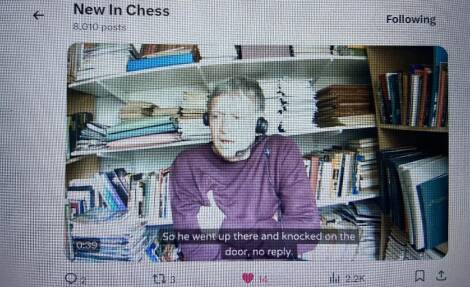
When the Keres set came out, I managed to persuade Jimmy to appear on the New In Chess Podcast. At first he was reluctant, but when I promised to send him most of the questions beforehand, he agreed. Nevertheless he looked very nervous when I watched the video as we started the recording. Much to my disappointment this was not Jimmy the great talker, who was answering the questions, but a very tense and clearly uncomfortable Jimmy. Suddenly I realized what was happening. He was reading out the answers from a paper that was just out of the camera’s view! After some ten minutes I stopped the recording and tried to convince him that he would do much, much better if he simply trusted his talent for story telling and forgot about the paper. It was a simple trick that worked perfectly, and when we started again it was the Jimmy that we wanted to hear who was telling the stories.
In the months that he was seriously ill and it was clear that he would not get better, we spoke on the phone a couple of times. Jimmy never complained, but he did say that he hoped to get a small table as he wanted to write an article on Korchnoi for New In Chess. It was finished in his head, he only had to put it to paper. That did not happen. But in our very last conversation he did tell me that his granddaughter had been born and said how grateful and happy he was that he had had the chance to welcome her into this world.
The memory of that last conversation, I will cherish. Initially, Jimmy had sounded weak and we mainly talked about practical, everyday matters that had now become part of his life. However, once we switched to chess he began to sound reenergized, and before I knew it, he was telling stories and sharing memories as in the good old days. He even waxed so enthusiastic, moving from one story to another, that after half an hour I had to tell him that I had to go, I didn’t have all day! We laughed and said goodbye, not knowing it would be the last goodbye.
Dirk Jan ten Geuzendam, editor in chief New In Chess Magazine
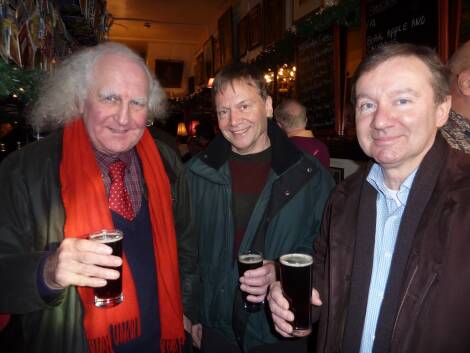
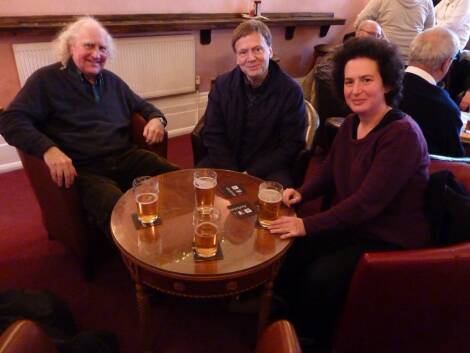
He was an inspiring presence — endlessly enthusiastic and armed with an encyclopaedic knowledge of chess books and chess history.
I first met Jimmy in the 1970s when I drew a game against him. Unlike the usual gruffness I encountered when facing stronger players, he was generous with his praise and encouragement. He didn’t remember the moment years later, but I never forgot it.
From the 1990s onward, he became my editor at Chess magazine and the publisher Batsford. In every interaction he was unfailingly encouraging, professional, and supportive.
One of my favourite stories — which I made him retell whenever we met at his favourite Italian restaurant — was about Bobby Fischer. Hearing that the American prodigy was scheduled to play in Monte Carlo in 1967, Jimmy packed his bags and headed there. He loved recounting how someone approached Fischer mid-game to ask for an autograph while the future World Champion was deep in thought.
I was also fascinated by the tale he shared on the New in Chess podcast about meeting Paul Keres — an encounter that ultimately inspired him to write four books and some 4,000 pages on the great Estonian champion.
Jimmy’s own extensive body of work as an author ensures his chess legacy will endure for generations. In recent years he developed a particular passion for historical works, including Salo Flohr: From Chess Fighter to Chess Writer. He was delighted to receive an advance copy while already ill, personally giving the project his thumbs-up.
Jimmy’s chess reputation was impeccable and his kindness legendary.
He will be deeply and sorely missed.
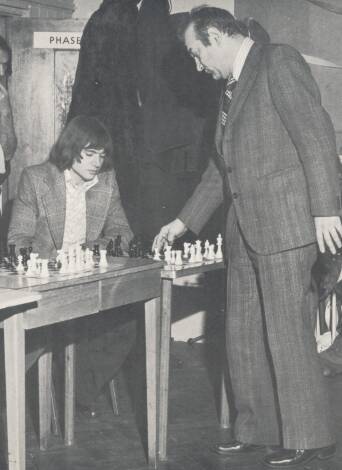

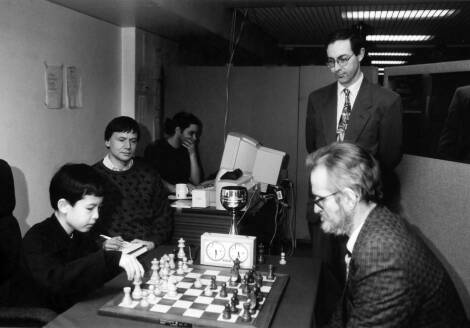
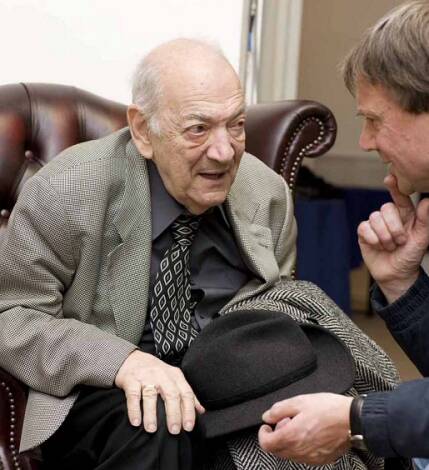
Jimmy was proud of his work for CHESS, building a brand that reflected his character and deep love of the game. The magazine was at once breezily humorous and instructive, modern and yet steeped in the game’s history; it looked good too, with the help of photographer Mark Huba, who became a close friend. It was no accident that some of world’s leading chess players and writers regularly contributed to CHESS while Jimmy was at the helm. He was a vital part of the 80s chess boom known as ‘The English Chess Explosion’.
He is perhaps best known and admired for several acclaimed historical biographies of chess players, all deeply researched and yet written in his affably accessible style. He wore his learning lightly, which is a rare gift. He made chess history fun.
One of his proudest achievements was Gyula Breyer: The Chess Revolutionary (New in Chess, 2017), the product of 40 years’ research. In his quest for material and insight he would immerse himself in his subject and go to extreme lengths to squirrel out the most obscure sources in various languages. He once told me, ‘For a few years I imagined myself as Breyer and experimented with his ideas and openings in my own games.’ I guess you might call that ‘method biography’.
I came to know Jimmy in the 1990s, after I had launched my own chess magazine. Ever since, he was an unfailingly jovial source of support and knowledge. It was a privilege to publish his articles, always rich in anecdote, humour and insight (they can all be read on the Kingpin website). He would never accept money for this work, despite my best efforts – selflessness, humility and a sense of mission were marks of his character. In return I'd buy dinner or send him a book he was after. When I told him I was working on a chess biography, he was very generous with his memories and advice. He would alert me to unusual sources, people to contact, and send material and illustrations, even after illness had struck.
Meetings with Jimmy and friends were always celebrations. His natural warmth and zest made him excellent company. A long Italian lunch would flow naturally into dinner, fuelled by wine and his fund of stories about the chess people he had known, met or researched. I have never met anyone with such passion for the history and culture of chess, and so driven to communicate it.
Our last conversation might have been sad but somehow it wasn’t. ‘Who do you think should write my obituary, Jon?’ (said confidently, with that quizzical half-smile of his). I offered some names, and he seemed to nod approval. He would have been touched that several of them have paid tribute here and elsewhere. I shall miss him.
Jon Manley
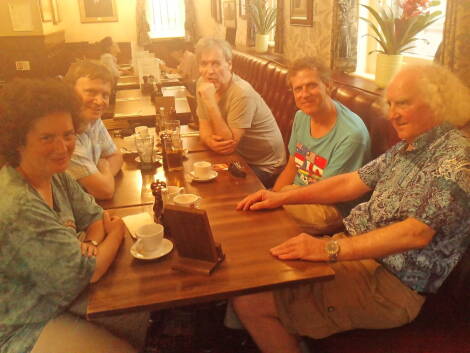
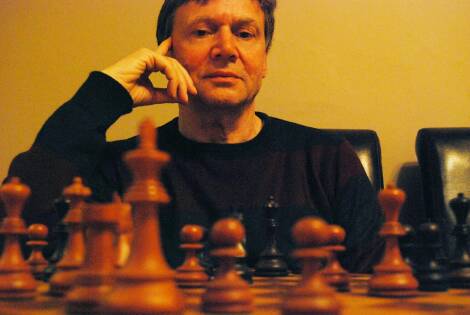
Jimmy helped me personally, and my colleagues here at British Chess Magazine, rebuild and improve BCM in recent years. He gave generously and unstintingly of his time and knowledge by writing many fascinating well researched articles and offering us his insights as one of the UK’s leading chess authors and editors. In so doing we became good friends as well as chess world colleagues, and we did many things together - in particular Jimmy and I worked closely together creating, designing and co-writing articles for the Junior British Chess Magazine during 2013-14, and it was then that I really became aware of his exceptional abilities and kindness.
Amid all the work Jimmy and I met regularly in London for lunch usually at one of his favourite pubs or at The Athenaeum Club in Pall Mall (I was then a member). We spent many hours together chatting about the chess world, discussing the various chess related books he was planning and published, designing new initiatives and building new relationships for BCM, and reflecting more widely on family matters and wider topical issues. Joyous occasions.
Jimmy will be very much missed by me personally, and by all his chess world friends and admirers.
May I offer his family my sincerest condolences.
Stephen (Lowe)
Jan Mol vs. Jimmy Adams
Beverwijk, 1967
1. d4 Nf6 2. c4 g6 3. Nc3 d5 4. cxd5 Nxd5 5. e4 Nxc3 6. bxc3 Bg7 7. Bc4 O-O 8. Ne2 Nc6 9. O-O b6 10. Be3 Bb7
Though Bent Larsen had lost to Boris Spassky in the grandmaster tournament with this development of pieces, I thought it had a lot of potential and so decided to try it out myself.
11. f4 e6 12. f5
If I remember correctly, my opponent had stood in as a late replacement when one of the original entrants had pulled out of our all-play-all section of ten players. So I had no idea of his playing strength. On thing was clear, however – he was moving quickly and wasting no time in coming after my king.
12… Na5 13. Bd3 exf5 14. exf5 Re8 15. Qd2 c5
When I was on a trip to Holland in 1979, I took the opportunity to visit another traditional tournament, held in Tilburg in the south of the country. There I was amused to see that a game between Spassky and Hubner had reached the same position as this – over ten years later! Hubner continued instead with 15… Be4, but lost after 16. Bg5. However, why exchange such a fine bishop which bears down on White’s vulnerable g2 square?
16. Rac1
16. dxc5 bxc5 17. Bxc5 Qd5 threatens mate on g2 as well as the queen’s bishop.
16… Rc8 17. Bh6
17… Bxh6
Though it looks treacherous, I could have gone for a win of a piece by 17… c4 since after 18. Bxg6 (18. Bb1 Bxh6 19. Qxh6 Rxe2 and if 20. f6 Rxg2+ followed by mate with the queen’s bishop) 18… cxd3 19. fxg6 (19. Qh6 Rxe2 20. Rf4 Qd5 threatening mate on g2; while if 19. Ng3 Kxg7 20. f6+ Kh8 21. Qh6 Rg8 22. Rf4, the threat of 23. Qxh7+! mating can be parried simply by 23… g5) 19… Rxe2 20. gxf7+ Kxg7 21. f8=Q+ Qxf8 22. Qg5+ Kh8 23. Rxf8+ Rxf8, although Black loses his queen, he wins the game. But I’m glad that I played the way I did, as some spectacular tactics now emerge.
18. Qxh6 Qe7
Now 18… c4 loses to 19. f6.
19. Rf4
Bravely avoiding an exchange of queens by …Qe3+. If 19. Nf4, with a similar idea, then 19… cxd4 20. f6 Qf8! and not 20… Qxf6 21. Nh5! Qe5 22. Nf6+.
19… Qe3+ 20. Kh1
20… Rc6!
A neat way to defend and attack at the same time. Not 20… c4 21. f6 mating. Nor 20… Qxd3 because of 21. f6 Bxg2+ 22. Kg1! Qe3+ 23. Kxg2 Qxe2+ 24. Kh1 winning. And, finally, if 20… Bxg2+ 21. Kxg2 Qxd3 22. f6 Rxe2+ (22… Qxe2+ 23. Kh1) 23. Kh1 Rxh2+ 24. Kxh2 Qe2+ 25. Kg3 Qe3+ 26. Kh4 leaves Black with no more credible checks.
21. fxg6
My opponent played this confidently. After 21. Rh4 Qxh6 22. Rxh6 c4 Black wins a piece, while 21. f6 allows 21… Rxf6 exploiting the pin on the rook. However, I also had to anticipate the possibility of 21. Bb5, which would be met by the surprising 21… a6! Then 22. f6 (on 22. Bxc6, I would have continued as in the game) 22… Rxf6 23. Bxe8 (if 23. Rxf6 Bxg2+ 24. Kxg2 Qxh6 25. Bxe8 Qg5+ and 26… Qxf6 wins) 23… Qxe2 24. Rg1 (to stop the mate)
analysis position after 24. Rg1
Qe3-e4-e2 – a striking queen manoeuvre!
24… Qe3! 25. Rgf1 (25. Rh4 allows an economical finish: 25… Bxg2+! 26. Rxg2 – 26. Kxg2 Qf3 mate – 26… Rf1+ 27. Rg1 Qf3 mate) and now the prettiest way to win is 25… Qe4!! (threatening mate) 26. R4f3 (26. R1f3 Qe1+ 27. Rf1 Qxf1+! mates; or 26. R4f2 Qxg2+! 27. Rxg2 Rxf1 mate) 26… Qe2! (threatening 27… Qxf1+! again!) 27. Qc1 Bxf3 28. Rxf3 Rxf3 29. gxf3 Qxe8 and wins.
Returning now to the mainline after 21. fxg6
21… Rxg6!!
Shock tactics
22. Bxg6
If 22. Qh5 Bxg2 mate. that vulnerable g2 square again…
22… Qxc1+!
More shock tactics. White now sees that 23. Nxc1 Re1+ mates. The whole idea of my last two moves was to divert White’s bishop from its defence of the f1 square, thereby preventing an interposition on f1, stopping the back rank mate. Luring that bishop to c6 or g6 amounts to the same thing!
23. Ng1
Forced
23… hxg6
Not 23… fxg6? 24. Rf8+! Rxf8 25. Qxc1.
24. Qh4 Qe1
24…Re1 could be met by 25.Qf2.
25. Qf6 Qe7
Black is now a piece ahead, so simplification is the quickest way to victory.
26. Nf3 Qxf6 27. Rxf6 Bxf3 28. gxf3 cxd4 29. cxd4 Rd8 30. Rf4 Nc6 White resigns 0-1
Jimmy Adams vs. Andrew Whiteley
London, 1981
1.e4 e6 2.d4 d5 3.Nc3 Bb4 4.Nge2
4… Ne7
Mostly I found my opponents played 4… dxe4 here, as happened for example in my game against John Century, Eastman Cup 1974, which I conducted in brutal fashion: 5. a3 Be7 6. Nxe4 Nf6 7. N2g3 Nbd7 8. Bd3 0–0 9. Qe2 e5 (A natural freeing move, but because White has a knight on g3 in this line, as opposed to the more usual f3, I had a strong reply.) 10. Nf5 Re8 11. Bg5 exd4 12. 0–0–0 Nf8 13. Nxe7+ Qxe7 14. Bxf6 gxf6 15. Nxf6+! Qxf6 16. Qxe8 Qxf2 17. Rde1 Qf4+ 18. Kb1 Qd6 19. Rhf1 Qd7 20. Bxh7+! Kg7 (If 20… Kxh7 21. Rxf7+ wins.) 21. Rxf7+! (Anyway!) 21… Qxf7 22. Re7 Be6 23. Rxf7+ Bxf7 24. Qxa8 1-0. I could say that here I sacked three pieces – knight, bishop and rook – for three kingside pawns!
5. a3 Ba5 6. Qd3 Bd7
This bears some resemblance to the Fort Knox variation, where White’s knight is better placed on f3. Black intends to play 7… dxe4 8. Qxe4 Bc6, gaining time with an attack on the queen, so I continued…
7. e5 0–0 8. Bg5 f6
Challenging the centre, but at the cost of weakening his kingside.
9. exf6 gxf6 10. Bh6 Rf7 11. Ng3 Nbc6
If 11… e5 12. 0–0–0 e4 13. Qe3 Nf5 14. Nxf5 Bxf5 15. f3 with aggressive intentions.
12. Be2 f5
On 12…Ng6 I think I would have proceeded with 13. 0-0-0 rather than 13.f 4 e5.
13. Bh5 Ng6 14. f4
Halting any further advance of Black’s f-pawn, and securing control of the e5 and g5 squares.
14… Qf6 15. 0–0–0 Bb6 16. Nge2
16… Kh8
On 16… Qh4 White has 17 .g4! and if 17…f xg4 18.Bxg6 winning.
17. h4 Nce7 18. Bg5 Qg7 19. Bf3
Making way for the advance of the h-pawn.
19… h6 20. h5 Nf8
Of course if 20… hxg5 then 21. hxg6+ wins.
21. Bh4 Nh7 22. Rh3
This was an easy choice for me as I always used to develop my rooks this way when I was a beginner!
22… Nf6 23. Rg3 Qh7 24. Qe3
Anticipating Black’s next.
24… Ne4
25. Bxe4 fxe4
If 25… dxe4, I would have continued 26. Rh1, to meet 26… Rg8 with 27. R1h3, preserving a rook on the g-file and leaving Black constantly on guard against a possible invasion there. Then 26… Nd5 would be bad because of 27. Nxd5 exd5 28. Rg6 (intending 29. Bf6+) and if 28… Raf8 then 29. g4 fxg4 30. f5! threatening Rxh6 winning the queen. In general, my plan after 25… dxe4 and 26. Rh1 would then have been to play Qd2, perhaps followed by Nc3-d1-e3 or d4-d5 at some stage, opening the a1-h8 diagonal leading to the enemy king. Black’s queen remains shut in and his cornered king is vulnerable to attack.
26.Bxe7
But now the time has come for the breakthrough.
26…Rxe7
A study of Chigorin’s games had convinced me that knights were superior to bishops!
27. f5!
Opening a diagonal for the queen. 27. Rg6 Be8 28. f5 Bxg6 29. hxg6 Qg7 29. Rh1 also looked pretty good.
27… Qxf5
Of course, 27… exf5 28. Nf4, intending both 29. Ng6+ and 29. Ncxd5, would lose quickly for Black.
28. Rg6!
Cutting off the queen’s diagonal line of retreat as well as hitting the h6 pawn.
28… Rh7 29. Ng3 Qe5
Neatly exploiting the pin on White’s d-pawn, but the queen will soon be a liability on this square. 29… Qf8 30. Rf1 would have allowed White to bring his rook into the attack with gain of time.
30. Nce2!
Vacating the c3 square whilst providing new opportunities for the knight on the kingside.
30…Rf8
31. Qc3!
Attacking the Black queen.
31… Qd6
Though the queen is placed right in the middle of the board, she has only one safe move – and even this is not so safe!
32. Nxe4!
An unusual combination. If now 32… dxe4 33. d5+, when the forced reply 33… e5 opens the third rank and loses the queen! Though the game goes on after 34. Rxd6 cxd6 35. Qb4 Bc5 36. Qxe4 White should still win eventually.
32… Qe7 33. Nc5 Be8
So if 34. Rxe6 Qg5+.
34. Qe3
The pressure increases move by move. An immediate threat is 35. Qe5+ Rg7 36. Rxh6+ Kg8 37. Nxe6.
34… Rf6
34… Bxg6 35. hxg6 Rg7 36. Qxh6+ Kg8 37. Rh1 decides.
35. Nf4
The opening up of the game has exposed many weak squares in Black’s camp.
35… Bxc5
Or 35… Bxg6 36. Nxg6+ Rxg6 37. hxg6 Rg7 38. Qxh6+ Kg8 39. Rh1 mates.
36. dxc5 Rg7
37. Nxd5! exd5 38. Qxe7 Rxe7 39. Rxf6
The rest is easy.
39… Kg7 40. Rf5 c6 41. Kd2 Bd7 42. Rf4 Re5 43. Re1 Black resigns 1-0
The chess world has thus lost one of its most devoted custodians with the death of Jimmy Adams: FIDE Master, author, editor, publisher, historian, and lifelong champion of the royal game. Only recently he received an English Chess Federation award in recognition of his outstanding contribution to chess. He was also a member of the Ken Whyld Association, founded to commemorate Ken’s memory and legacy. Yet Jimmy’s most enduring significance lies in the field of chess literature.
He wrote numerous chess books, among the earliest being the highly successful K is for Karpov, which he self-published in the early 1970s. This pioneering venture foreshadowed a lifetime dedicated to bringing chess history and culture before a wider audience. New In Chess later published several of his monumental works, many approaching a thousand pages in length, devoted to figures such as Chigorin, Breyer and Zukertort. He also produced four substantial volumes on Keres, while his latest work, on Flohr, is due to appear this month. Each represented a genuine labour of love.
Jimmy was renowned as a workaholic where chess was concerned and was an ardent admirer of Bobby Fischer. In 1979, while appearing on television in the Philippines, he discovered a number of previously unpublished Fischer games in newspaper archives. Recognising their importance, he ensured their publication in the British Chess Magazine, thereby adding to the historical record of Fischer’s career.
As a player, Jimmy was no less dedicated. He became London Junior Champion in the 1960s, and I regarded him as one of my principal rivals for distinction when I was selected to compete in the Eastbourne Premier Tournament of 1963. A year later we met again over the board. Conscious of his diligence, erudition and formidable preparation, I abandoned the risky but fashionable Taimanov Sicilian, which I had employed at Eastbourne, in favour of the more solid Caro-Kann. I was well satisfied with the resulting draw and experienced a modest sense of achievement in having neutralised the ambitions of so dangerous an opponent. Eastbourne, incidentally, was organised by the legendary B.H. Wood and, by one of those curious ironies so common in chess history, Jimmy would later devote many years to editing Wood’s celebrated monthly magazine CHESS.
Over the years he represented several London clubs, including Islington & North London, Bayswater, London Central YMCA and Metropolitan. He took considerable pride in his achievements as a club player and amassed an impressive record against some of the strongest competitors in the country. He often recalled drawing with Jonathan Penrose and defeating Paul Littlewood, among others, during the 1970s and 1980s.
In later life Adams attained the title of FIDE Master, awarded in 2014, and continued to compete actively in both American and international events. He regularly encountered master-strength opposition and earned a reputation as a knowledgeable, resourceful and resilient competitor. Yet his interests were never confined solely to tournament success. He neither sought nor required the public prominence accorded to grandmasters, remaining throughout his life a serious student of the game and a respected figure within the international chess community.
Jimmy edited both CHESS and the British Chess Magazine, and at the time of his death served as Deputy Editor of American Chess Magazine. He also contributed regularly to New In Chess and played an important role in the revival of Chess Informant during the 2010s, helping to modernise its appearance and presentation for the digital era while preserving its unique identity.
Through Caissa Editions, the publishing house he founded and directed, Adams became one of the principal custodians of classical chess history. At a time when many important tournament books and historical studies were unavailable, untranslated, or long out of print, he undertook the demanding tasks of translation, editing, annotation and republication. Under his guidance, Caissa Editions produced volumes highly valued by historians, collectors and serious players alike. The imprint acquired a reputation for scholarly rigour, careful sourcing and fidelity to original authors.
Among his most substantial achievements was Gyula Breyer: The Chess Revolutionary, an 880-page biography that restored one of the neglected pioneers of hypermodern chess to his rightful place in history. Drawing upon archival material, translated Hungarian sources and extensive game annotations, the work demonstrated a rare combination of historical scholarship and chess understanding. It was widely recognised as a landmark contribution to chess biography.
His other major studies included Johannes Zukertort: Artist of the Chessboard and Mikhail Chigorin: The Creative Chess Genius, both devoted to influential nineteenth-century masters. In these works Adams combined biography, tournament history and detailed analytical commentary. His expanded edition of the Chigorin study eventually exceeded 700 pages, reflecting the same thoroughness that characterised all his endeavours.
Adams also prepared new editions of classic tournament books. His work on Baden-Baden 1925, often regarded as one of the defining tournaments of the hypermodern era, brought back into circulation an event associated with the ideas of Réti, Nimzowitsch, Tartakower and their contemporaries. In doing so, he helped ensure that pivotal moments in chess history remained accessible to future generations.
Beyond his own writing and publishing, he typeset more than one hundred books for Batsford, many authored by Andy Soltis, with whom he enjoyed a productive and enduring professional relationship.
What distinguished Jimmy Adams was not merely the breadth of his knowledge but his profound sense of responsibility towards the past. He regarded chess not simply as a competitive activity but as a cultural and intellectual inheritance worthy of preservation. Forgotten manuscripts, foreign-language sources, obscure periodicals and ageing tournament bulletins received from him the same attention and care that others reserve for tournament preparation. His books were acts of recovery as much as publications.
Those who knew him describe a man of immense learning, unwavering enthusiasm and remarkable generosity. He was always willing to discuss historical controversies, assist researchers navigating difficult sources, or share new discoveries with fellow historians. For many he became one of the most dependable authorities on the game’s past.
In an age increasingly dominated by engines, databases and instant information, Jimmy Adams represented a different and deeply valuable chess culture, rooted in scholarship, continuity and historical awareness. Through his publishing work he preserved material that might otherwise have vanished from common view.
His death leaves a conspicuous void in the world of chess literature. Yet his legacy endures in the books themselves and in the countless readers who encounter Chigorin, Zukertort, Breyer, Keres and, most recently, Flohr through his efforts, or who study the great tournaments of the past in editions he painstakingly prepared.
Jimmy Adams’s contribution to chess cannot be measured simply by games won or titles earned. It is measured instead by preservation: by what was saved, explained and transmitted to future generations. The benefits of that work will continue to be felt for many years to come.
He will be remembered with gratitude and respect by all who value the history of chess. In the case of the British Chess Magazine, it was Adams’s editorial skill, dedication and personal generosity that helped sustain the publication through some of its most challenging periods.
May he rest in peace.
Later we planned to write a book about British chess together and Jimmy introduced me to some of the all-time greats including Leonard Barden, Bob Wade, Ray Keene and the fantastic (and very charming and erudite) chess historian Ken Whyld, whose home we visited so that we could interview him at length and peruse his library. That book didn't materialise, but the interviews went into my book of collected articles, Curse of Kirsan: Adventures in the Chess Underworld.
And it's impossible to remember Jimmy without talking about his love of Bobby Fischer, with whom he no doubt identified as a self-taught player who took on the establishment. By the way Jimmy also taught himself Russian to be able to read Soviet chess materials. He really enjoyed Fischer's straight talking in interviews (when he was still playing, not later in his life), and like so many people had been inspired by the way the Fischer-Spassky match turned the whole world chess mad - inspired enough to write a poem about it. He was very proud that he had seen Fischer in person in Monte Carlo in 1967 and the future world champion actually spoke to him, saying: "Move out of my way!" This was typical of Jimmy's brilliant sense of humour.
When I lived in London for a couple of years we would meet up regularly with other chess journalists and players at Attilio's, where Jimmy always had his favourite spaghetti carbonara - it's fair to say that he was not a fan of exotic foods. Shortly before he died he admitted to me that he wasn't sure what broccoli was! We spent hours at Attilio's, often with the regulars Mark Huba, Jon Manley and Gary Lane, who also became my lifelong friends. On one or two other occasions when our meetups started at lunchtime, they lasted until dinner time and we had to order a second meal to go with the multiple bottles of wine.
After I moved abroad we would still get together during my visits to the UK, and when I came back to live here from 2013 we usually met once a year, at Christmas. A few months before his death Jimmy asked me to translate an article about Salo Flohr to help with the book that he was completing, but he made no mention that he was seriously ill. It was very satisfying to be able to do this because one of the first jobs I did for Jimmy was to translate the introduction to the book on the Second Moscow International Tournament of 1935. On my last visit to see Jimmy in a nursing home in May this year I was able to pick up a copy of his Flohr book which he had happily lived to see. He was proud of the title he had come up with: "From Chess Fighter to Chess Writer." The same description could be given to Jimmy himself.
He wasnt a friend because I only ever met him a few times in my life. But when i did meet him, he felt like a friend and I was always disappointed when our interaction came to an end.
I am actually surprised how old he was, because he seemed so much younger. He was so youthful looking,and had a warmth about him that was so endearing.
I first met him when we played chess across the board in the London League. Jimmy was board 1 for Metropolitan Chess Club in division one of the London League, and I was board one for Lewisham. This was probably in the late 1970's (I probably have the scoresheet of the game somewhere). I think we were two of the lowest rated Board one players, but in fact, we were two of the highest scorers. Jimmy outplayed me, and beat me. I recall his humbleness, and he was almost apologetic for his win. I was immediately endeared to him, and even though I hardly ever met him in person again, I remained endeared to him. When I did meet him, he would mention our game, and how lucky he had been to beat me ( which he wasn't)
Jimmy seemed to disappear off the active playing chess scene from the 1990's onwards.
My next interaction with him was when I submitted an extract from what I said was going to be a book I had written about my experiences in playing chess. My article was called ' Fawlty Towers' and I submitted it to the Editor of CHESS Magazine. I am not sure I realised that Jimmy was the editor.
Jimmy responded almost immediately. He loved the article, and when I said that I had drafted the contents for a book, he was almost as enthusiastic as I was !
He offered to help me, because he detected my naivety and uncertainties.
He encouraged me to submit more articles, which I did.
He was always wonderfully supportive and generous in spirit.
As time evolved, I submitted numerous extracts from my proposed book and Jimmy always published them, exactly as I had written them. He also encouraged me to write tournament reports of events I went to, like Gibraltar and Isle of Man.
Eventually, I did self publish my book in 2021, nearly 17 years after my my first extract appeared in CHESS!
Jimmy got it touch, and we agreed that he would send me a copy of his recent book in exchange for a copy of mine.
Without Jimmy's initial enthusiasm and support, I probably wouldn't have had the confidence to press ahead with my book.
Jimmy had a unique warmth and enthusiasm about him that made me want to meet up with him more often, but sadly that never quite happened.
He is a great loss primarily to his family but no less so, to the chess community. For the second half of his life, he worked and influenced very much from behind the scenes, but his influence was significant.
A humble man with substance and, in his time, a very strong chess player.
Of course, I recognized his name. A few feet away, my chess bookcase contained several of his fine books. (“K is for Karpov!” was my favorite.)
Jimmy introduced himself and explained he was calling on behalf of the B.T.Batsford publishing firm. It wanted to issue a new book about the subject in which chessplayers never lost interest, Bobby Fischer. Batsford had tried but so far failed to get the rights to Fischer’s “My 60 Memorable Games.” Would I be willing to analyze those games again, in a new Batsford book?
It was a striking idea – and I hated it. Rewriting “60 Memorable” was sure to look like cheap exploitation.
But as we talked I couldn’t help liking Jimmy. This would be a tribute to Bobby, not a ripoff, he said. We can work together to ensure even the finicky Fischer would appreciate it.
Well, maybe, I said. Perhaps if we made it 100 games, with more context and perspective on Fischer’s career. I was already talking about “we.”
This began what Jimmy called our “special relationship.” For 25 years he inspired, coaxed and corrected me as we collaborated on some 20 Batsford books.
He suggested subjects and titles for books and ways to organize the chess content. He handled all the technical details. Some other chess authors know how to typeset, format and create diagrams for their work. I haven’t a clue. I relied entirely on my indispensible London ally.
I was used to waiting a year to see my typed manuscript returned in page proofs. Jimmy managed to do it in two or three weeks. Then we would exchange emails with corrections. He was more than tolerant of my sloppiness. I habitually found more than 100 typos, misspellings, analytic howlers and other errors in the page proofs. No problem, Jimmy said. He would send back another fully corrected PDF in a day or two.
It’s remarkable that with all the back-and-forth we enjoyed over the years I only met Jimmy once. It was in 2024 when my wife, Marcy, and I were in London. Jimmy introduced us to Charlotte. Over an Italian lunch, we talked and talked, about chess personalities, Jimmy’s Keres magnum opus, Charlotte’s dancing career, life in New York compared with London, and so on. I realized how much I had missed by only knowing Jimmy on a professional level. Maybe we could change that in the future?
The last time I heard from him was in emails early in 2026. He had a suggestion for the title of another Batsford book. “I hope we can continue our ‘special relationship,’” he wrote.
It was special and so was Jimmy.
Ray


 Français
 Deutsch
 Nederlands
 Español
 Português
 Magyar
 Русский
 繁體中文
繁體中文