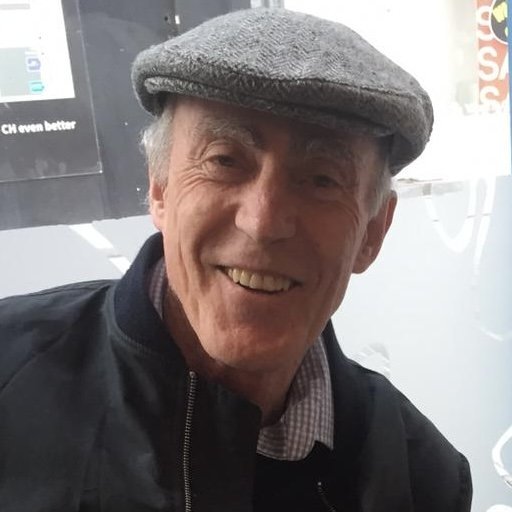
David Kaplan
This memorial site is dedicated to David, his life, his work, and the lasting impact he has had on all of us.
For those who have had the privilege of knowing him - as friend, family member, colleague, or teacher - we invite you to gather and share your thoughts, memories, and photos. David was a lifelong gatherer of people and ideas, connecting across continents, generations and interests. Your contributions are a tribute to what he has brought into our lives.
Life
David was born in Bulawayo on the 25th March 1948. He passed away in Paris on the 26th December 2025 after a year-long illness which he endured with extraordinary courage.
Dave was schooled in Bulawayo. When his parents divorced and his mother and young brother Mark moved to Cape Town, Dave stayed with his father but had to go to boarding school in Bulawayo. Boarding school was dominated by rural white Rhodesians and a culture of bullying which he found traumatic but where he learnt survival skills. His father’s voluble and public opposition to Ian Smith’s UDI government gave him a foundation in the importance of the politics of non-racism. His time in Habonim introduced him to left wing ideas which he carried through his entire life.
Following pursuit of his education at the Universities of Cape Town, Kent, and Sussex, David took up his first full time academic position at the University of Massachusetts. He returned from Boston to take up a position at UCT in 1980. Jennifer agreed to pick him up at the airport (his brother Mark was out of town and his friend Mike in detention) and this first meeting matured into a long and loving marriage of 46 years. Within a few years they had two children, Daniel in 1984 and Julia in 1988. Cape Town became firmly entrenched in his heart, as a place where he lived, and where he made deep friendships. He was committed to UCT and used it as a base for his contributions to policy development in post-Transformation South Africa. Even when he moved to Johannesburg in 2010 and to Paris in 2015 (giving Jenny the space to follow her own career), his heart remained in Cape Town and in his deep and fond memories of Zimbabwe.
Dave was known to some of his closer friends as ‘Kappie’ (although Jenny always called him David). Dave stood out. He was a wise loving son, sibling, husband, father and grandfather. He was warm and supportive, nurturing, humouring and mentoring a wide range of friends, students and acquaintances. Friendships were very important to Dave. This was especially so as his illness took hold of him. He kept in contact with people across the globe who mattered to him. When he returned to Cape Town in late 2025, he constructed manic itineraries to try and see everyone that he felt deeply about.
Dave was an academic who not only made a contribution to the world of ideas, but also had a significant impact on political processes. He was a great raconteur, with a fund of jokes and anecdotes which lit up his conversations. He was a mental gymnast with numbers and, especially in his later years, would recite an astonishing number of poems he had memorised in his childhood.
Dave had an abiding interest in history, not just in his professional life as an economic historian, but as a way of understanding the world in which he lived. Highly adaptable, after moving to Paris in 2015 he studied French and immersed himself in French history and culture. He always read widely – art, literature, politics, economics and more – and could be relied on to recount the entire tome he had just read in the most vivid detail, including whilst walking on the mountain with friends. Dave exemplified what has now come to be referred to as ‘an engaged academic’.
We miss Dave in all of these respects. He profoundly influenced so many of our lives and contributed to making the world a better place. Like all of us he was increasingly concerned that his generation had left the world in a mess. However, until the end he believed that by working together, we can build a more sustainable and equitable future for the generations to come.
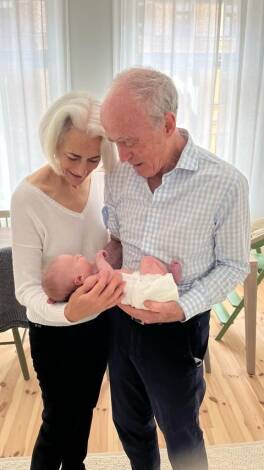
Amongst all these wide attributes, Dave was at heart a family man. In the months before he died he said that his abiding wish was to become the best grandfather in the world. His granddaughter Sofia was a treasure in his life - together they were exuberant, imaginative, inquisitive, and playful.
Thank you Dave for all you have given us. You have made us all better people and the world a better place. You will live on.
Obituaries
. As featured in BusinessDay:
"Prof David Kaplan - a lifelong engaged academic", published on January 15, 2026
by Raphael Kaplinsky and Mike Morris
. As featured in FinancialMail
"Farewell to a warm and witty intellectual" , published on January 22, 2026
EDITORIAL by the Financial Mail editorial team
Engaged Academic
Trained initially as an economist and economic historian Dave spent most of his professional career as an economist, primarily basing himself at the University of Cape Town, with sabbaticals at the Institute of Development Studies in Sussex, the Centre for International Studies, University of Toronto. After graduating from the IDS, he spent two years as a teaching assistant in the Economics Department at the University of Massachusetts. After moving residence to Paris in 2015, he maintained his association with the Economics Department at UCT, and was linked with the International Science Council in Paris.
Throughout his professional career Dave maintained an abiding interest in innovation, in the roles played by states and markets in economic growth and in the distributional outcomes of growth. He addressed these issues through a multidisciplinary lens, combining insights from economic history, economic theory, political economy and innovation studies. But most of all, he was an ‘engaged academic’, making a significant contribution to the development and implementation of policy in relation to industrial development, international trade, labour markets, science and technology and innovation, primarily but not exclusively in South Africa.
Completing his BA/BCom degree at the University of Cape Town in 1970, Dave graduated with an MA from the University of Kent in 1792 and a D Phil at the Institute of Development Studies in Sussex in 1978. He was immensely proud of his role as a research assistant to Professors Hans Singer and Scarlett Epstein during his graduate studies at the IDS. He returned to South Africa in 1980 and was employed in the Faculty of Economic History at UCT, becoming the Head in 1989. In 1990 he moved to the Economics Department with a joint professorial position in the Graduate School of Business. Dave remained an active member of the Economics department at UCT until his passing. He regarded this as his academic home. Dave was a devoted and rigorous teacher. His lectures were eagerly attended by students at UCT, including those who were not studying economics, and he was a dedicated and rigorous supervisor of many postgraduate dissertations and young researchers.
The role played by states and markets was a central thread during Dave’s professional career. His voluminous D Phil dissertation Class Conflict, Capital Accumulation and the State in 20th Century South Africa, focused primarily on the positive role played by the state in the development of South Africa’s considerable industrial development. But as the Apartheid state became increasingly predatory and obstructionist to economic growth, Dave shifted to a more critical analysis of the state. His growing interest in innovation from the mid-1980s, evidenced in his book The Crossed Lines (which focused on South Africa’s telecoms sector) led him to argue that the key to productivity led growth lay in a dynamic private sector, working together with state, business services, educational and research institutions in an efficient National System of Innovation (NSI). His many publications analysed the way in which the considerable strengths of South Africa’s NSI were disabled in the post-Transition era by a predatory and often incompetent state. His underlying hope was that, in time, the South African state would provide the framing environment for a productivity enhancing private sector.
Notwithstanding this focus on innovation and productivity, Dave recognised the crucial role which employment played in the distribution of the fruits of growth. Perhaps surprisingly given his secondment as the Chief Economist at the Department of Trade and Industry between 2000 and 2003, and later (2004 - 10) as part time Chief Economist to the Western Cape Department of Economic Development and Tourism (DEDAT), his independence of thought led him to argue that South Africa’s employment challenge could not be met only through industrial development. It also necessarily required substantial public-private sector collaboration.
Dave increasingly felt that his professional contribution to economic development lay less in producing academic publications and more in the design and execution of policy. He came to argue that top down state directed economic policy was at best ineffective and at worst damaging; the primary driver of growth was the private sector working in a collaborative partnership with government and institutions in the NSI; the role of the state and public policy was to provide the framing conditions which enabled growth; and this depended on having suitably capacitated, independent institutions comprised of private and public representatives to enable effective implementation. This required efficient markets, appropriate human resources, independent institutions, and incentives to promote investment in productivity enhancing technological progress.
This focus on the institutional determinants of growth arose from Dave’s extensive experience in working with stakeholders across society. He was a member of the Economic Trends group established in early 1987 to advise COSATU on development policy. In 1990, he co-founded the Development Policy Research Unit (DPRU) at UCT which addressed a range of economic policy agendas, particularly with regard to the labour market and policies to strengthen science and technology capabilities and to enhance innovation and productivity. Dave was also one of the first Corresponding Editors of the journal Transformation founded in the mid 1980s to provide an intellectual forum for left wing critique of South Africa.
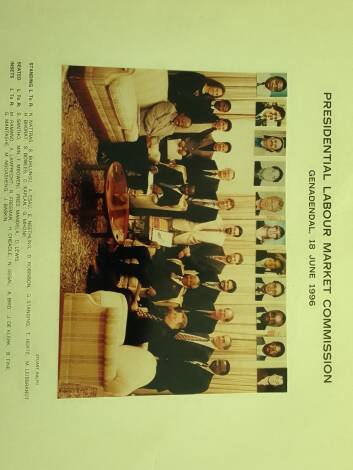
In the early 1990s, Dave co-directed the Industrial Strategy Project (the ISP). Working in concert with COSATU, this large multi-year programme produced a policy blueprint designed to deliver a more dynamic and inclusive post-Apartheid industrial sector (Improving Manufacturing Performance in South Africa). Perhaps more significantly, the ISP provided the training for a number of young academics and policy practitioners who subsequently came to play an important role in post-Transformation South Africa. Soon after the ISP project was completed, Dave participated as a prominent member of the Presidential Labour Market Commission, established in 1995 with the objective of developing the human resources and policies required to promote a more employment intensive growth path.
After his stint at the DTI, frustrated by policy failures at the national level, Dave then turned his attention to policy design and implementation at the regional level. In his role as Chief Economist within the Western Cape’s DEDAT he was tasked with developing industrial policy for the Western Cape government primarily through developing and implementing a provincial industrial strategy. This resulted in the Western Cape Micro Economic Development Strategy (MEDS), which involved substantial engagement with a multiplicity of private sector actors, and the establishment of relatively effective independent public/private institutions across a variety of sectors.
In 2006 Dave assisted in founding the Policy Research in International Services and Manufacturing (PRISM) unit within the School of Economics which was committed to using academic research to engage with governments and industry on various policy frontiers across Africa. Dave remained an active member of PRISM until 2026.
Dave had a long-term interest in science, technology and innovation, sparked by his book on telecoms which was published in 1990. During the mid-1990s he coordinated the Task Team producing the Green Paper on Science and Technology for the Department of Arts, Culture, Science and Technology. He was also a senior Advisor in the writing of the Green Paper on Telecommunications Policy. Over the past decade, he played an active and senior role in the National Council on Innovation (NACI) and was a founding Board Member of the Technology Innovation Agency (TIA) and devoted considerable energy in steering it through choppy waters. In the immediate period before his death, Dave became increasingly involved in the development of policies facilitating the growth of venture capital backed innovative enterprises. Whilst in Paris he extended this focus on science and technology beyond South Africa, working as a consultant and advisor to the International Science Council. On the international stage he played an important role as a member of the Scientific Committee and a mentor in the global consortium of researchers (GLOBELICS), and particularly in its African sub-division (AFRICALICS).
Gallery
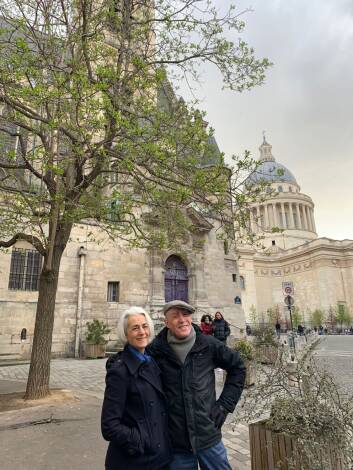
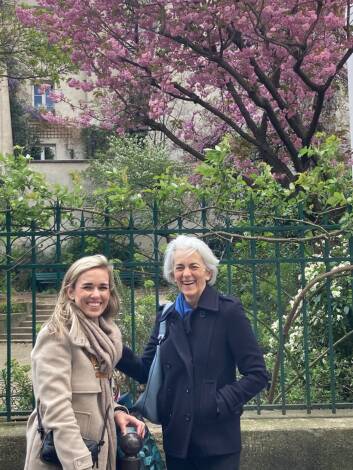
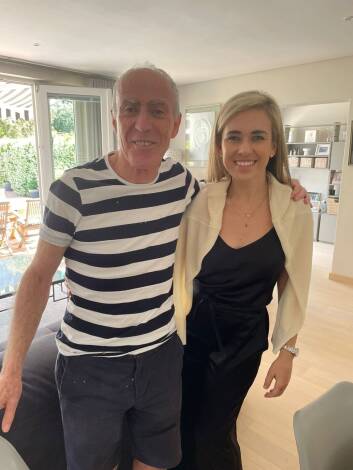
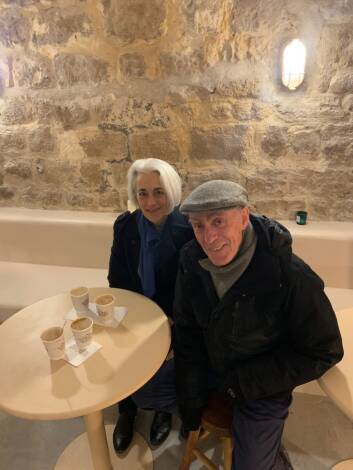
Videos
Memories and Tributes
We grew up in different cities in Rhodesia as it was – he in Bulawayo and I in Salisbury - and first met as teenagers in Habonim, the Zionist Jewish youth movement. Subsequently while at the University of Cape Town in the late 1960s & early 1970s we shared a house on the wrong side of the tracks in Claremont where we’d stay up to all hours discussing politics, female ‘talent’, sports, the usual. We had some terrific parties. Naturally our phone was tapped and the house was watched by the Bureau of State Security. The goons were often in evidence in a grey VW across the street.
Due to Kappie, the Radical Students Society sometimes held meetings at our house, and occasionally I’d sit in on one. There was a lot of highly theoretical rambling on various shades of far-left ideology, and who could ‘out-left’ the next person. Mention of mass extermination by the likes of Stalin and Mao was strictly verboten! Being a simple medical student and plain vanilla liberal myself, I was skeptical and impatient. At one point I told Kappie the discussions were self-indulgent posturing and delusional, of little practical relevance to the realities of apartheid and repression in South Africa. Piling it on, I ventured to predict that he would in time leave the Commie stuff behind and live a conventional upper middle-class life far above that of the hoi poloi / the proletariat. I avowed that in his adult life he’d be an academic with a house in the finer suburbs of some nice city with a family and a lovely garden, maybe a swimming pool. He was suitably outraged – pretty much what I’d aimed for! - but also somewhat amused that I would have the gall to make such a prediction while also admitting my own aspirations. In truth, while Kappie as a student seemed more committed to staying in Southern Africa and I was certain I would soon be permanently leaving, neither of us had much idea what shape or style our lives would take.
Some years later I visited Cape Town from ‘overseas’ to find Kappie an academic at UCT, comfortably ensconced with Jen and children in a beautiful home with a lovely garden! In Claremont but on the right side of the tracks! In the shadow of Table Mountain and Kirstenbosch Gardens where he would run and hike. I was delighted to find that my provocative prediction of my intellectually radical friend turned out pretty spot-on. He and I had a good laugh about it. Our family lives had fragmented and we had been uprooted – no wonder we craved stability and comfort.
One plus of having the Radical Students Society meet at our house was that Steve Biko once came over for a meeting – well-attended especially by our female friends. Biko was a smart and charismatic guy with a sweetness about him. He too was a medical student, but due to his political activities he was very far behind in his studies, so he asked to borrow some class notes from Steven Perl, the other medical student in the house. But I digress.
Over the years Kappie and I continued to spar about one political thing or another. As others have noted, talking to Kappie about the world, one felt its collapse was imminent!
It was only upon visiting him in Paris in 2019 did I realize that while he held various uniformly pessimistic constructs in his head about the world, these were in sharp contradistinction to the way he actually lived his life day-to-day – which was with passion, positivity, love and loyalty for his family, warmth and affection for friends, and a real joie de vivre.
Some of the apparent contradictions persisted: While in discussions he would sometimes share the Left’s relentless negative obsession with Israel; but when I’d press him hard, I was relieved to hear that he hadn't forgotten whence he came, his intensely Jewish family history, and that he remained fundamentally a liberal Zionist.
It was also only later in life and in our friendship when I learned of the difficulties he’d experienced as a young person in Bulawayo, and of some of his own tragic family history. The latter had some similarities to my own family. These were discussions that drew us closer and explained our own complexities to each other.
While at UCT and in our shared house in Claremont, we were partners in crime in a few adventures together. One night we decided to go ‘grape rustling’ – basically, dressing in dark clothes and going to steal grapes from various vineyards. In retrospect, it sounds creepy and perhaps even risky, but we were pretty naïve to danger. We were young people, students, innocents, obviously not thieves as such! just out for fun - what could possibly go wrong?
One wintry Sunday afternoon, we went to try and catch crayfish in Simonstown. Getting stoned ahead of time was not our most brilliant idea because it made the endeavor – dark cold waters, kelp wrapping around us while trying to grab crayfish with our hands – scarier and more difficult. Basically, we had to admit we were clueless and wimps. So, we gave up and simply bought some on the way home.
Another shared experience was listening to Dollar Brand, the SA jazz pianist, perform live. Being ‘colored’ he wasn’t allowed to play before white or racially mixed audiences. So, Kappie helped organize a performance ‘offshore’, specifically on a boat in Cape Town Harbor. A US-based college program called Semester at Sea sails the world with its students, and when it was docked in Cape Town harbor for a couple days, we attended the concert together, sitting on the floor at the feet of the great musician.
Later, to great fanfare in the press, the luxury ocean liner QE2 came to Cape Town. Kappie and I decided we simply had to get on board and take a look around. So, he picked up some flowers from his mom’s florist – and the ruse was we’d pose as delivery people. He fabricated some recipient on the boat for the flowers – and up the gangplank we went, on board the QE2! Two highly unlikely flower delivery people – langhaarige hippy-ish wit mense. Once on board, we split up to explore different parts of the ship. The boat was largely empty – the passengers were all ashore. There were two giant grand semicircular staircases that Kappie delighted in running up and down with great glee shaking his fist and shouting anti-capitalist slogans. We were basically a couple of truant mischievous schoolboys given the run of this massive luxury cruise liner for a few minutes. It felt to me like a Marx Bros caper. We beat a retreat before we could be discovered.
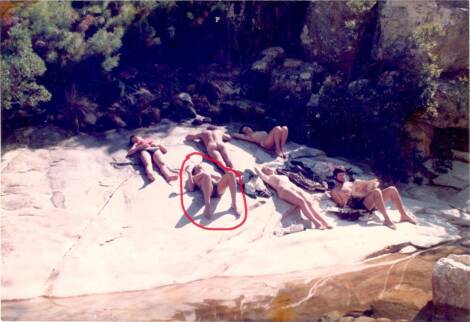
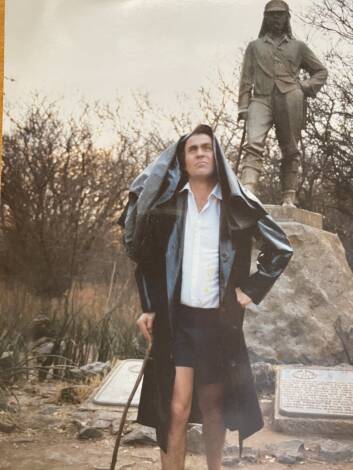
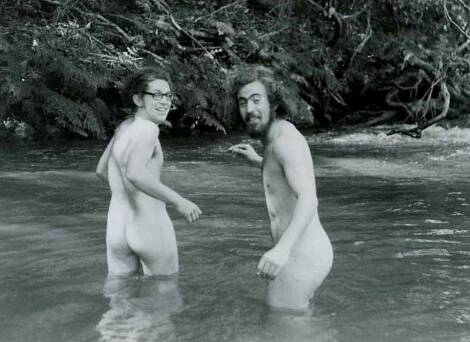
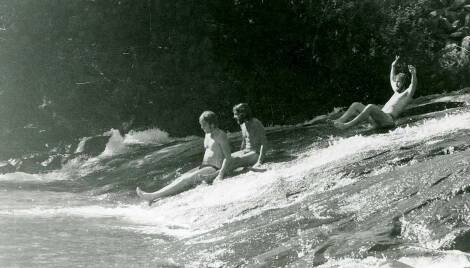
In the midyear / winter university vacation of 1970, along with several friends from Salisbury, Bulawayo & Cape Town we took a road trip to Inyanga – in the Eastern Highlands of Rhodesia staying in parks cottages. A couple pictures of Kappie from that trip are attached. In one photograph, he and I are shown wading into a river in the buff, which was de rigeur – obviously we were simply too hip to wear clothes in such a setting!
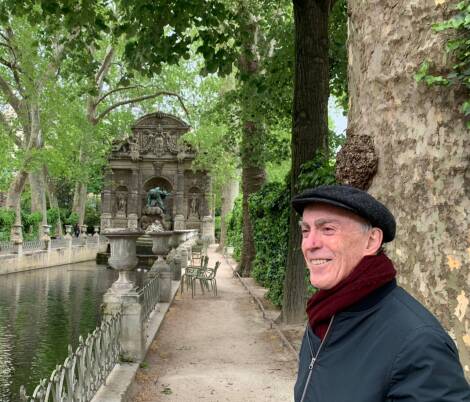
By the time of our most recent meetings at my home in San Francisco, then in Paris in 2019 and 2022 – I learned he wanted to be known as Dave rather than Kappie. He gave me tours of the Luxembourg Gardens and his various favorite landmarks, regaling me with history, impressively and passionately told.
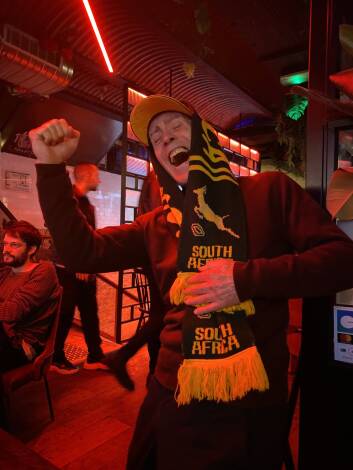
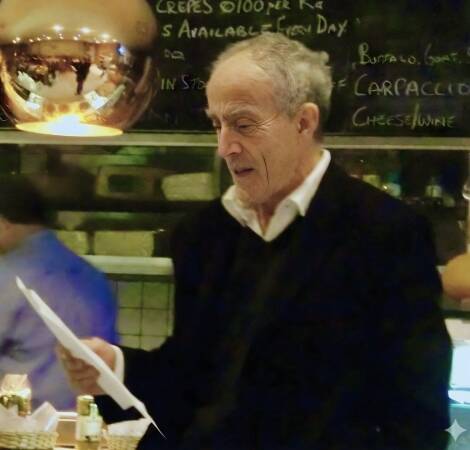
From his communications during his fast-moving illness I was struck by his bravery, his faith in his doctors and the medical system, and his optimism. The video clip of Dave singing in a Paris bar - late into his illness, just a few months before he died - shows his joie de vivre to the end.
I will miss you Dave – your company, your warmth, your spirit.
You left too suddenly and too soon.
Eric Hassall
San Francisco, CA
David Kaplan was my cousin, and although I lived in Harare and Dave in Bulawayo, we had known each other. We both ended up as students at UCT, and when I became the girlfriend of his dear friend, Mike Morris, we three spent a fair bit of time together.
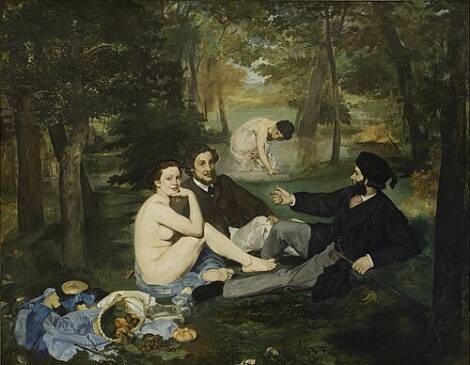
One beautiful Cape morning, probably late in the academic year, we decided to go to the beach. The three of us drove to a far away beach, parked and walked long, long way along the strand before settling down. The beach stretched for miles in both directions, and looking as far the eye could see in either direction, we were the only people there. The boys decided to take all their clothes off, but being rather shy, I sat with them in my summer dress. Think, Manet’s Le Dejeuner sur l’herb, but with the genders reversed. We had idled away a pleasant hour in the sun, when we noticed a very tiny figure in the distance. We watched the figure get closer and could see it was a man trudging towards us. Eventually we could make out that he was white, and wearing well pressed khaki shorts and shirt, long khaki socks and boots. We began to feel some small concern.
We continued to sit and chat until he reached us, stopped and greeted us. We replied politely. At this point he took a notebook and pen out of his pocket and asked the guys why they were naked on the beach. Didn’t they know this was not allowed. They explained that they didn’t think they were upsetting anyone as the beach was completely deserted. In an aggrieved tone he then pointed out that he was on the beach and they had done nothing to “cover themselves” as he approached. This was true. He outlined their offence and then mentioned something about them reporting to a police station the next morning. Things were not looking good. After more stern words about their bad behaviour he turned to me and remarked, more gently, that he was pleased to see that at least I was properly dressed. He and I chatted for a while, the usual stuff, name, where I was from, what was I doing in CT etc. The notebook was put away. The guys were given a stern warning and told not to do it again. Then he trudged on past us until he disappeared from view.
I have often worried why he decided to let the matter go. I had been educated by the nuns at the Dominican Convent in Salisbury. I wonder if, even when seated between two naked men, I had a demure look about me which he liked. On the other hand, In my experience Afrikaaners can be antisemites or have a soft spot for Jews. Maybe the man was of those Afikaaners who liked Jews. After all, the Jews are God’s chosen people and so are the Afikaaners. It was evident that all three of us were Jews- me from my face. We’ll never know why he relented, but Dave and Mike were very relieved to have been spared reporting to the police station.
Manet's Le Dejeuner sur l'herb 1863
We’d been taking for a while about all the things he done when he said there was one thing he was more proud of than anything else. This was that him and Jennifer had found a way for her to do her medical studies and for them to have and care for their children. have two children. They worked together in the face of very strong opposition from both sets of parents and many dire warnings from others. Together they had managed what they set out to do. For David this mattered more than anything else.
I shall always be grateful for those conversations and for his loyal friendship.
Our thoughts are with you today Jennifer, Daniel, Julia and Mark.
With love, Jeanne and Guy
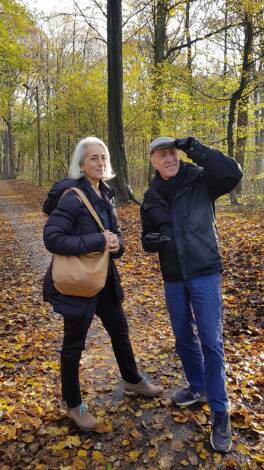
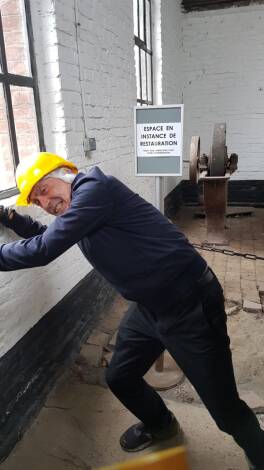
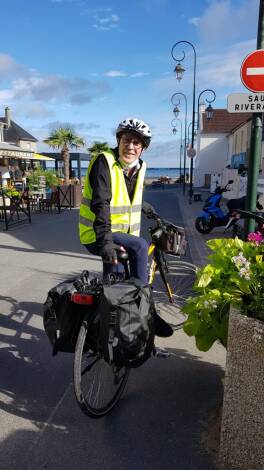
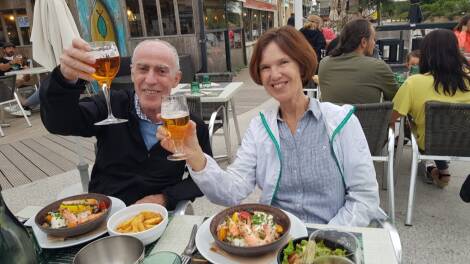
Despite Dave being 13 years my senior, (I was a mere medical student, Jens' younger friend and Dave a full professor), he was always interested in me - maybe we shared a common bond, both being from Zimbabwe and having the same last name.
Fortunately, despite the fact that my husband, Peter, and I moved to the US in 1987 we saw Jens and Dave whenever we visited Cape Town and when Daniel came to study in Boston, where we had settled, we were able to see them more often. They visited us on Martha's Vineyard, we visited them in Paris, they joined us in Fontainebleau, and we were fortunate to celebrate Dan and Cauvery's wedding together in India.
What I remember most about David was his kindness and compassion, his intellectual curiosity and sharp wit. In his last year, despite the fact that he was contending with his own serious illness, he was constantly in touch with me to find out how my own daughter was doing, as she had been involved in a serious accident.
I was fortunate to have been able to spend quality time with both Jens and Dave when they were in Cape Town in Dec. I still remember how good he looked the night before they retuned to Paris. He was so animated, bright and full of hope as he seemed to be responding to his new treatment.
We are fortunate to have so many fond memories of both you and Dave Jens, and look forward to many more special times in the years ahead with you.
With much love to you, Dan and Julia.
Linda and Peter
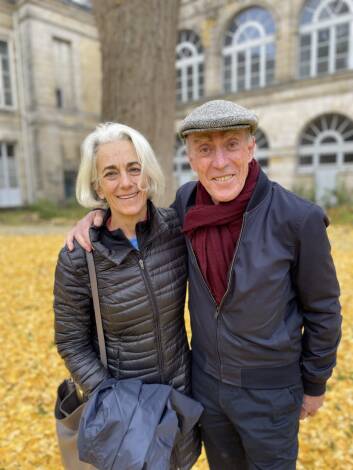
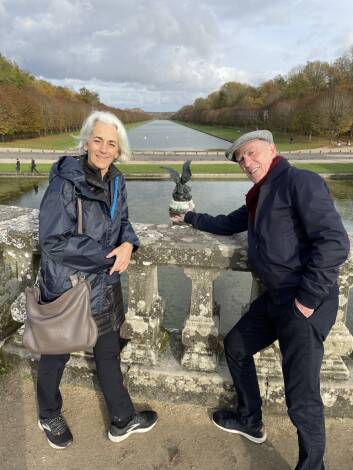
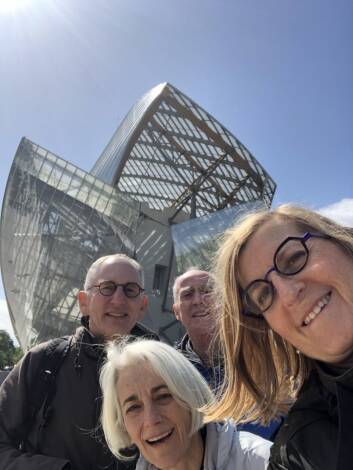
Over the next 6 months I worked closely with Dave preparing graphs and tables for the ISP synthesis report as well as other papers that Dave was working on. Although he must have been incredibly busy, he never let on and answered my many questions carefully and without any hint of disappointment at the quality of discourse I offered.
Many years later I would again work with Dave when he was the Chief Economist of the DTI. This must have been a frustrating time for him as he argued passionately at the Department's many 'strategy' and leadership workshops for a more nuanced industrial policy than simply providing financial incentives to the same industries that had already been supported over an extended period. At these workshops, Dave's voice was often the only contrarian view but he argued his position with conviction and again without any sign of disrespect to the many strident critics in the room - many of whom were far less experienced and certainly less qualified than him.
Dave devoted significant effort to strengthening the research and data capabilities of the DTI and there were at least 20 or so young, black economists, policy analysts and researchers who benefited from his wisdom and coaching. When he was - for institutional reasons - increasingly isolated within the DTI, he continued to carry himself with the utmost professionalism and dignity. Many years after Dave left the DTI, I found that although many of the people he had trained had left, the institutional structure, data capacity and research priorities of the Chief Economist's office were still visible and indeed in many cases still appropriate to the DTI - a testament to Dave's foresight and research rigour.
It was a privilege to have worked for and with Dave.
We first met at Sussex University in 1972. Dave was still officially studying at Kent, but his great buddy, Mike Morris (another treasured life-long friend) ,persuaded him to hang out at Sussex, and Dave joined our M.A. seminars with Geoff Lamb on Southern African politics.
Those years were the highpoint of the Althusser and Poulantzas moment in leftwing Western academia, and Dave and Mike were theoretically light years ahead of me. As we constantly discussed our work, our views on South and southern African politics, David’s erudition and eagerness to debate and learn left me breathless. I learned an immeasurable amount from him, and from Mike. But most of all I discovered, as so many of these tributes have stated, the mensch — David’s wonderful sense of humour, zest for life and profound humanity. I retain a vivid memory of his delighted account of a Rolling Stones concert (1974, I think) he went to in London, his love of the energy and creativity.
Those intense discussions and debates with Dave and Mike, the writing of an article with them (and Rob Davies) on the South African state, our disagreements about Poulantzas, marked me forever; they were the highpoint of my intellectual life, something I have missed for almost fifty years. I remember particularly one of the last of them (Mike had already returned to SA). David, Rob and I met in my London flat it discuss reading group on Poulantzas’s book of fascism. We were deep into an intense debate over its merits when the phone rang and I was given news of the shooting down of Soweto students. It was the evening of June 16, 1976.
Our lives would change. David went to America and I to Tanzania and we only saw each other sporadically. Still, each time we reconnected it was as if had just left the room a few minutes previously. Talking to him was always a joy.
Over the past years we had several Zoom conversations. And typical of David, once his illness seized hold of his life, his spirit remained. We had an almost two-hour Zoom conversation in June 2025 while he was being transfused in a Paris hospital, and though the physical toll of the disease was evident, he was bubbling with enthusiasm for and suggestions about the research project I was working on.
I consider myself immensely privileged to have known him and to have benefitted from his friendship and his remarkable intellect and generosity.
Hamba gahle, Dave.
Firstly, a very personal note: from some of these posts by friends, I realise how affected Kapie was after the divorce he experienced in his youth in relation to his parents. I knew about this divorce but had not realised how impactful this had been on him. What I do know however is how much he supported me emotionally in the decade after my own divorce in the 1990s. He kept close to me, regularly inviting me to go on Table Mountain walks and other get-togethers; he was ever-ready to listen to my long rambling thoughts and pain during this period of my life of single-parenting with my kids each half-week - offering ideas and hugs every time we met. However it was not only that he had insights into divorce from seeing his own parents separated; it was because he was basically such a compassionate and loving person, and thus he could embrace me strongly. I will never forget this, and I was sad to lose many of our happy meetings when he moved during the past decade to Paris.
Secondly, a professional ’note’: as we interacted at UCT as lecturers from 1981 onwards for the next nearly 4 decades (we had already become friends beforehand while at Kopano Residence as UCT undergraduates in the late 1960s) - I came to see him as the MOST rigorous and scholarly-astute academic colleague with whom I interacted during all my years as a researcher. In other words, I view him as the best scholar-intellectual I ever had contact with during all those years. For me he stands highest in my ranking of what I term ’scholar-intellectual’ - I am grateful for this experience.
I will miss both his personal compassionate-friendship, and intellectual powers, very dearly.
David Cooper
I served with Dave Kaplan in the SA Presidential Labour Market Commission established by new Labour Minister Tito Titus Mboweni from March 1995 to June 1996. We presented the Labour Market Commission report to President Mandela, by June, 1996.
Dave was a very warm, brilliant & engaging Academic with deep interest in Social Democratic Economic Strategies & in developing progressive labour market policies for the New SA that were aligned with the RDP. Our policy debates in the mid 1990s were engaging & relevant.
We hereby express our deepest condolences to his dear Wife & family - MHSRIEP
We finally gelled with Jen's year of fellowship at the University of Toronto. While Suanne and I had married in 1998, we still lived apart, me in London, Ontario (two hours away from Toronto). Jen even brought the kids for a weekend visit on the train, while David was off much of the time, in Switzerland, I believe, serving South Africa's interests. My best memory was of David, back in Toronto, with leisure time on his hands, telling of his delights to find treasures in Toronto's Kensington Market, actually a neighbourhood of old, run-down shops where the language on the streets had changed from Yiddish in the mid-20th century to a multitude of mainly Asian languages. He was delighted with a hat (that I wouldn't wear) and other memorable pieces. David, the senior Cape Town professor and government envoy to Switzerland, is enjoying bargain-hunting at Toronto's Old Market.
We met David and Jen again in Prague in 2004, and then again in Jo'bourg in 2012. See photos from Prague.
Allan Fox, Toronto
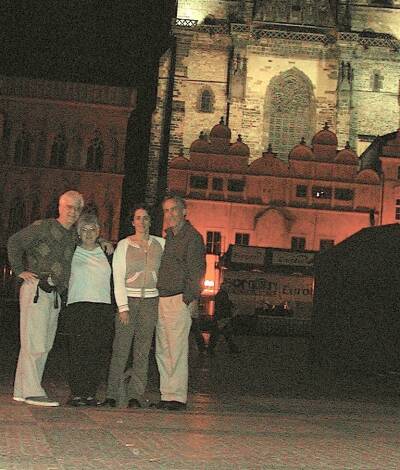
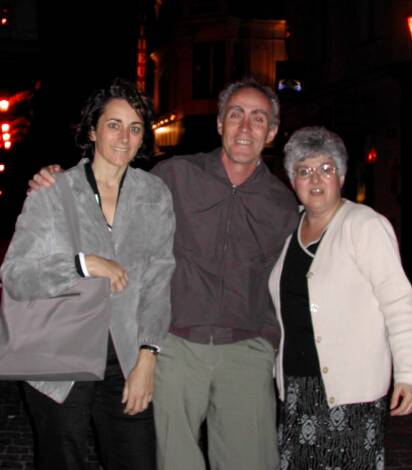
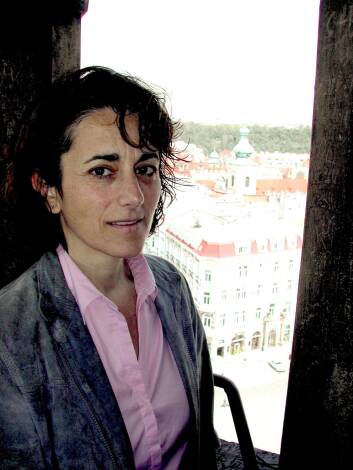
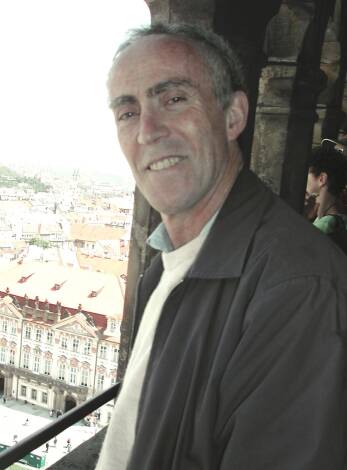
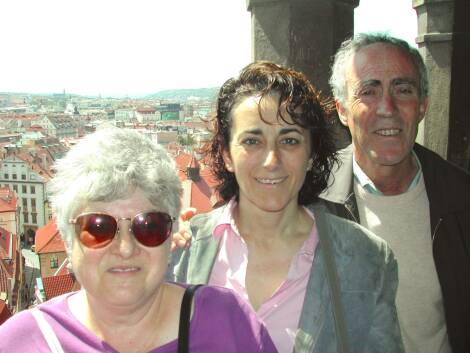
I met David in 1971 at the University of Kent at Canterbury. We had our first of many arguments immediately, some at the nursery-school level. My father was a furrier at that time. When I said that at least my father didn’t make his living exploiting African workers, David countered with, ‘At least my father doesn’t make his living by selling tiny, murdered animals.” Yet somehow, we became fast friends.
David loathed Canterbury and took the first opportunity to move to the University of Sussex. Visits there were like entering a 24/7 politics seminar. One memory stands out: Reeling from intellectual overload, I asked one of David’s friends, a Turkish Ph.D. candidate, about his thesis topic. With a straight face, he told me he was writing about Trotsky’s Bar Mitzvah.
I visited Jennifer and David in Capetown in the late 80s. I’ve never forgotten a party at their place. At home, it’s normal to introduce people by stating their profession. At their place, the introductions went like this: “This is Diana. She’s been in prison twice. This is Harold – he’s banned. Alice was under house arrest for three years.”
By the way, the South African apartheid government was nervous about letting me enter the country because an election was looming and I was a journalist. I offered David as a reference, and he promised them solemnly that I was a friend of the Republic. It gave me an extremely low opinion of the old regime’s security forces.
Our friendship has been life-long, and only strengthened with our marriages. Our foursome was cemented by the year Jennifer, David, Daniel and Julia spent in Toronto in the late 1990s. We had a wonderful time years later when Daniel and his wife visited Toronto to revive his memories.
David could sometimes be a brat. I remember him telling an American tourist in London that the new Tube line was for the Queen’s private use. Once, when we were trying to buy some treat at Fortnum’s – an unusual indulgence – he became frustrated by the number of shoppers in front of us and remarked loudly, “You know, it’s strange, but when I see one maggot on a cheese, it really puts me off.” The line of shoppers evaporated.
Through all of this, we talked: politics, music, books, theatre, people. I miss him terribly. No one enjoyed life more than David, and I feel very lucky to have known him.
Deepest sympathies to Jennifer, Daniel, Julia, and spouses and of course his pride and joy, Sofia. Rest in peace, dear David. You will always be treasured.
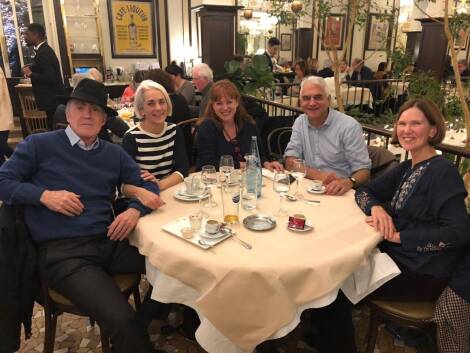
Dave was very special to me.
He served as my part-time Chief Economist when I was at the Department, and I valued not only his sharp intellect and unwavering integrity, but also his quiet generosity of spirit. He carried his brilliance lightly — never needing to dominate a room, yet always elevating it.
One of my most treasured memories was entirely unexpected. After I left the Department and found myself working in France at the Delville Wood Heritage Site in the Somme, David emailed to say he had moved to France — completely unaware that I was there too. I surprised him with a visit.
I can still see him standing in the museum, studying every detail of the reconfigured exhibits with intense focus and curiosity. He observed attentively, meticulously (as seen in photo), and then followed up with a myriad of thoughtful questions. That was Dave — deeply engaged, intellectually alive, and genuinely interested.
We later spent an entire day in Paris doing everything we possibly could — cheese tasting, wandering through backstreets, visiting museums, strolling through parks, sitting among locals, walking and talking for hours. We walked so much I was surprised we didn’t end up in Nice. It was a day of laughter, exploration, and rich conversation. I will treasure it forever.
What strikes me most, especially now, is how true he remained to his nature — thoughtful, engaged, curious, and deeply human.
David touched my life in ways he probably never fully realised. I am profoundly grateful for the privilege of knowing him.
Warmly,
Ivan
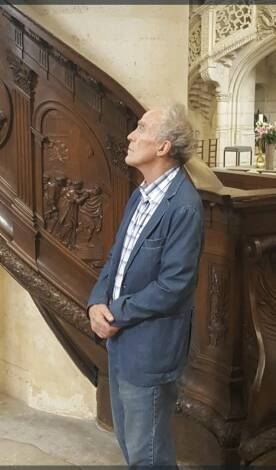
It is so sad you have passed but your legacy lives on. Will definitely miss your mentorship, passion, and ability to engage.
God keep your family and the loved ones left behind!
I am picturing the still vivid memories I have of the workshops on the African commodities programme in Cape Town in 2009 and 2010. You, Mike and Raphie took me (a rookie student) and other colleagues under your wings. I grew and learned immeasurably from those workshops, one of the best academic experiences I have ever had. They made the PhD path a lot less daunting for me, which I was able to complete in 2 years and 9 months.
You left an indelible impression on me, the generosity of your spirit. While blunt and direct in your critique of my work, you did so with tact and kindness. You did not put me down, you lifted me up. So, I felt much indebted to you also when I completed the PhD.
Since then, I have been making some positive contributions to policy making in the commodities sector, and I would have very much liked to share it all with you. I know now that this will no longer happen because you have taken your leave. But I am confident you can now see it even better from where you are.
You live on, through your work and in the hearts of your loved ones and of those whom you have impacted. Thank you!
I really wanted to engage you further on that but we just joked over it...
Rest in Peace Prof. Dave Kaplan...
The RCS Team joins the AfricaLics Secretariat and global research community in mourning the passing of Professor David Kaplan. Dave was more than an outstanding scholar,he was a mentor, a builder, and a deeply generous human being whose commitment to strengthening African research ecosystems left a lasting mark on all of us who worked alongside him.
As a founding pillar of the AfricaLics Secretariat, his dedication to intellectual rigor, mentorship, and inclusive knowledge-building helped shape generations of innovation scholars across the continent. His presence brought both depth and warmth to our work, reminding us that excellence and humanity can and should go hand in hand.
As shared by colleagues and friends:
“We have lost a wonderful soul. His commitment to AfricaLics was exemplary. He always contributed to a cheerful atmosphere in our meetings even as he insisted on intellectual rigor. May his soul rest in perfect peace.” George Essegbey
“What a great loss!Africalics owes a great deal to this man, a profound scholar and a humble and generous human being. Great loss indeed.” Rajesh GK
“Dear Friends, It is with deep respect and heartfelt sorrow that I extend my condolences to the family of Professor David Kaplan. His passing is a profound loss to the academic community and to all of us in the GlobeLics and AfricaLics networks, who had the privilege of learning from his wisdom.Professor Kaplan was more than a distinguished scholar; he was a generous mentor whose guidance shaped my own intellectual journey. At a time when I struggled to connect mainstream economic theories with innovation-driven heterodox development studies, his insights illuminated the path forward. His unique perspective and generosity instilled in me the values of critical thinking and perseverance – qualities that continue to guide my research and academic careers. As one of the founders of the AfricaLics Secretariat, Professor Kaplan played a pivotal role in building the research capacity of hundreds of African Ph.D. students in the field of innovation. His contributions stand among the most enduring legacies of senior scholars whose influence will inspire generations of African innovation researchers to come.I affirm my commitment to honor his memory by striving to follow in his footsteps, scaling his good deeds to new heights. His legacy will remain alive not only in the scholarship he advanced but also in the lives of those he mentored and inspired.May his soul rest in peace, and may his family find comfort in knowing that his impact will continue to resonate across Africa and beyond.” Abdi Ahmad
A short tribute montage link appears below, celebrating his life at AfricaLics and Globelics and enduring impact:
https://drive.google.com/file/d/1M_dhpkMD6OAhN7SXjl-_tC4ETvC-3Lpz/view?usp=share_link
I found this in the back of a scruffy book of “writing” left by David in amongst a pile on his bedside table:
As I lie in my hospital bed
And think on what I done and said
I worry - not about the promises broken
But only about the words unspoken
Not the dreams that left undone
But the songs that remain unsung
I wish I could decipher the second, unfinished verse……
I remember vividly my conversation with Dave the next day in Jardin de Luxemburg, where we discussed the challenge of finding our way in a new place. Dave had very much found his own way of plunging in! I remember vividly the warm intensity with which Dave shared with me his new-found passion for Ancient Egypt, ignited by the antiquities in the Louvre.
I also remember vividly long, fulfilling conversations with Dave when I sometimes stayed overnight with Dave and Jennifer in their Rondebosch home, as I began [part-time] returning to Cape Town. (And, of course, over subsequent decades, many more intense conversations.....Dave and I didn't always agree..........but even in the more intense disagreements, never lost touch of a shared sense of friendship and mutual respect......).
And.........
I remember also the astonishing way in which we first met. It was the (US) fall of 1977. I'd just arrived in Cambridge, and was in the basement of Harvard's Widener library. To my astonishment, I looked across the basement and saw "Mark Kaplan" - who I knew from Cape Town - photocopying across the hall.
"Are you Mark Kaplan?" I asked him, disbelieving my own eyes........
"No", he replied, with a South African accent, "I'm his brother, Dave"!!!!!!!!
Astonishing.........
With warmth, love and heartfelt appreciation for Dave's special gift of warmth and friendship.
I am so deeply sorry for your loss, I’ve actually struggled to process it all the last few weeks, as still feels so surreal. So grateful to have seen you all so recently in Cape Town.
Julia and I met and an instant friendship was formed in grade 8, 21 years ago, we spent many hours in each others homes.
I will always remember the warmth of the Kaplan’s home. Abby always greeting us at the kitchen door, and getting cuddles on her bed. From the lovingly made school lunchboxes for Julia by David ( often including a biscuit from the airport lounge), and the endearing way David called Julz “foefy.” Spelling ?! He also made her a “shrine” we called it- I think on her 16th birthday which consisted of coloured in toilet paper ( with highlighters) wrapped all the way down the staircase! A labour of love 🥰
David and Jen were truly a formidable team, complementing each other so beautifully. He was an incredible father, partner, and friend, always welcoming and kind and always hilarious. He lit up whenever he spoke of his family and always how proud he was of them all, Jen, Daniel and Julz.
From school days, I will forever remember bones being buried and dug up, in the garden for Julz’ matric art project, and hand picked flowers stuck around the garden for Julia’s 21st. Always dedicated to the cause. He was the kind of Dad that was always quietly rooting everyone on, always supportive and always willing to listen and chat and genuinely interested in how we were all doing.
In more recent years the light of his life was his granddaughter, Sophia. I am so grateful that they shared such a special bond, and he simply lit up speaking about her. He would tell us of all the things she was able to do & would proudly show us videos and pics. So special. I knew he would be the most brilliant grandpa even just seeing him interact with my kiddies. He reminded me on his most recent CT trip, that he was the first to get giggles from Stella.
He will be dearly missed and remembered with so much love and fond memories.🩷
All my love
Mathi
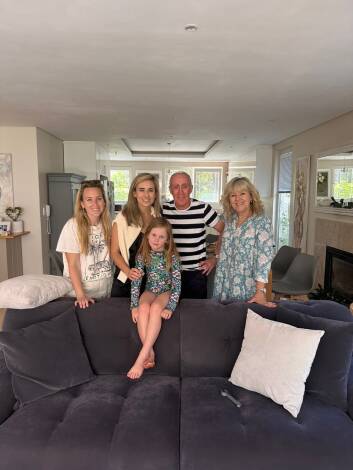
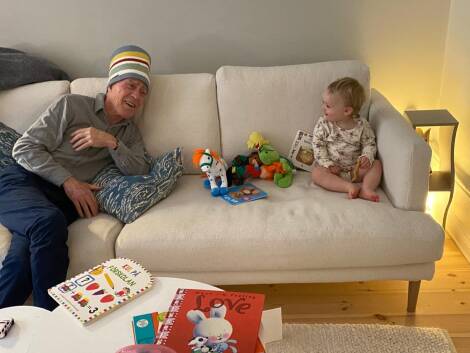
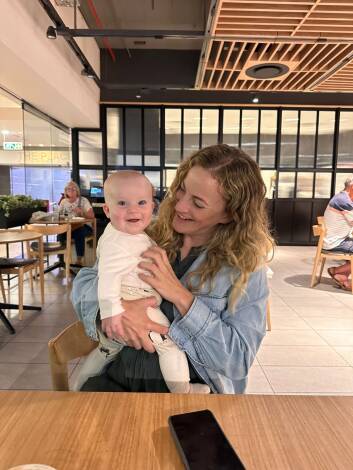
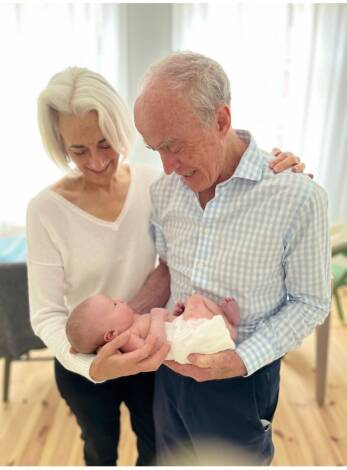
David was friendly. welcoming, funny and a great conversationalist. He was an ‘options’ man. Deciding where to go or what to do on my visits to Paris took a long time and a decision made was soon overturned by a better idea. Jennifer, as you’ll remember, getting to Monet’s garden was touch and go.
He wore his intellect and knowledge lightly, expressing no surprise (only last year) that I had never heard of the great economist, David Ricardo, let alone Ricardo’s theory of comparative advantage. We had a running joke, never resolved, about which of us was younger than the other. He was of course and I now concede, David, you can be younger.
This past year, my best memory is of David dancing in a square in Paris. Facing full-on what life had dealt him and being joyful still. He was a great man. My privilege to have known him and laughed a lot with him.
He was a unique man, interested in the inner life as well as in public life, open, intense, generous, forgiving. I loved hearing his news and views from Paris and from wherever else he travelled, and felt lucky to see him whenever he visited Cape Town. He was especially kind to me when my husband, Tony Morphet, and my brother died within a month of each other.
When I last saw David in Cape Town, the day before he and Jennifer flew back to Paris, I was very moved by how valiant and direct he was, how he combined realism with optimism about his condition. It was a model, a life lesson about illness and the approach of death.
He once told me he liked this poem of mine. I attach it here for that reason. How I shall miss him.
Unleaving
"Margaraet, are you grieving
Over Goldengrove unleaving?"
- Gerard Manley Hopkins, "Spring and Fall."
It is grey, I used to like
The shadow of weather across sea
The brief sharp illimination
Of pink Easter lilies
When sun scissored clouds.
Rain and brown leaves
Autumn tears
On my windscreen
Only made me tender.
I could wipe them away.
This time, greyer, graver
The season turns on us
Aggrieved, We ache for want of light,
Miss lost ones, are not brave,
"It is Margaret we mourn for."
Ingrid de Kok
I met David and Jennifer during my time as a parent of children at Westerford High School; times of glancing greetings and conversations while lifting children, and more of the same in the delays that always come with this task. This time of life is busy with full feelings and big memories. Later, independent of Westerford, there were social connections and more relaxed discussions. Later still, were visits in Cape Town, Paris and Stockholm, always ending mid-sentence with a wish that we could continue the next day, as we discussed matters big and small. I can easily step into the memories of walking into the summer night in Paris with David, en route to the Metro, as he spoke of all that he was drinking in of life in France, what he missed about Cape Town … and that we would keep in touch.
Which we did.
He looked so much better than I had imagined he would when I visited him in November in hospital. So alive in his small frame, alert to what was happening, engaged, curious about what I was doing and how my children were. He was comfortable talking about what he was facing. So utterly himself.
My life is richer for having met him.
For me, coming from the social sciences in France - imaginative though sometimes quite speculative – his approaches were invaluably useful. Our teams could touch ground firmly and elaborate on the perspectives he gave. I quickly respected this extraodrinary quality and relied on it in many occasions, including personal ones.
I remember his advices/lessons when I consulted him about such different issues as the expatriation with a disabled daughter, a professional conflict resolution or the treatment of a global academic matter. He would stare at me with his blue eyes and after a few clear cut questions, make a diagnosis with the most appropriate way to deal with the problem.
Beside this systematic, rational, cold-minded attitudes when necessary, Dave was warm, supportive and committed in the relationship. I particularly enjoyed the free and personal discussions we had when he retired and we met from time to time in Paris, talking about everything from high politics to grandparents’ feelings through to sunrise in Stokholm, Cape Town or Algiers…
When he got ill, he himself declared it to me by mail and I am extremely grateful to him for this, since we could thus share an intense moment while I made a stop over in Paris. This is typically Dave : to face the problem –regardless of its severity- and discuss it instead of hiding it, with whom you feel is able to understand and approach it. Thereby, perhaps with only partial awareness, he expressed his most powerful lesson of all : courage and clarity as the finest way to share human intelligence with emotion.
Thanks Dave. I will never forget.
Groenfontein Valley, Calitzdorp, 2 January 2026
Unleaving, unleavening
1. The leaving...
Dave has not left us. It is we who took our leave, we who continued living…
So, how to unleave? How to return to the different points where each of us left him?
How to get back glimpses we believed! Retrieved! Now bereaved.
How to get back weaved some fibres of a feel that has never left?
Here, below, is one way of unleaving,
A thought for easing the heaving.
In a post-Dave epoch,
Emptied of his exhilaration.
2. Unleavening
Preparing a hard bake for the lonelier road ahead. Devoided of Dave. Without yeast. No new zest.
An involuntary reminder of whom we left; one no longer to rise.
The hard and dry crack of matzo memories.
But while so much less, unleavening is not nothing.
It is a substitute sustenance.
For the evening.
For conserving crumbs over deepening distance.
3. Mergence
For David’s life, I will cleave the unleaving and the unleavening.
I know that I, in turn, will also be leaving. Leaving it for others to come back...
To do their unleavening as they proceed past the place thus stopped.
But for me, to unleave the maw today, to grieve, I will try unleavening.
Way less, yes. But nourishment nevertheless.
A morsel to push onwards, to push back in his esprit.
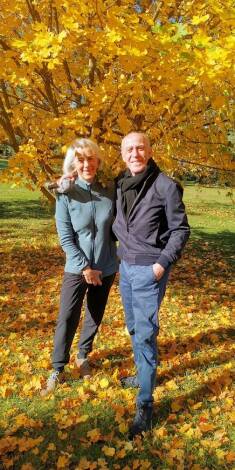
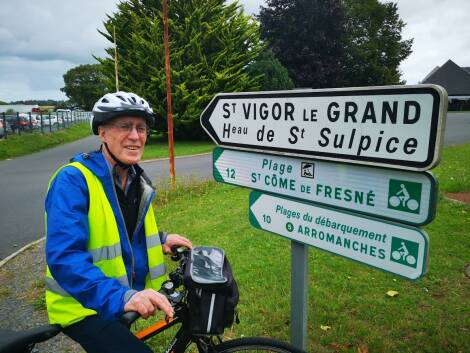
Also today, my own David is writing an article of the nature that only David Kaplan was ever equal to the task of refining, of improving and commenting upon. They would have spent hours talking it through. It would have been better for it. We two have just a few minutes ago discussed (again) their irreplaceable friendship and rich intellectual exchange, and how much we miss David still being in this world.
For myself, I always loved about David K the manner in which his keen mind and deep, loving heart always fired on all cylinders, without holding anything back. I loved talking to him about what we were reading and noticing in the cultural sphere, about our children, our partners, and our work.
I felt seen, admired and appreciated during our many exchanges over the years. David was that rare kind of man whose thoughts and feelings are held close to the surface and easily shared. I loved that about him. There was always an intimacy and openness to our exchanges, which doesn’t always come (in my experience!) that easily to men.
My love and hugs to Jennifer, and Daniel and Julia and their families. I am so sorry for your profound loss. I will always miss David Kaplan very much, and I will deeply miss hearing his voice on speakerphone in conversation with the other David as I walk into our house. Xxxxxxxxx
Dave and I often ended up travelling together to Africalics and Globelics conferences, and that’s how I got to know how important each person in his family was to him - during our long discussions over breakfast (he always brought his own muesli, no matter where!) or in the bus on the way to venues or airports. These were also opportunities for long and complex discussions on the state of innovation policy in South Africa and the global South.
Dave was a mentor and support to me in the field of South African innovation studies, and I learned so much from him over the years. I valued his rigorous and systematic approach and critical questioning of the data until it made sense. We worked closely each year in preparing and validating data for the NACI annual review of STI in South Africa, and his incisive queries often sparked new research and analytical avenues for our young researchers to pursue.
I will really miss his wisdom, humanity and dry sense of humour.
I wish you as his family strength and comfort at this difficult time, and to us in the academic and policy field, may we continue to work in the spirit of critical enquiry and engagement he promoted..
Later when I moved to UCT, I joined the Industrial Strategy Project, which Dave set up together with Avril Joffe, Raphie Kaplinsky and Dave Lewis. This led me into research and policy work on the automotive industry from which I have never quite escaped.
Dave was a friend but also a mentor. He was above all a very kind and considerate person. He was my PhD supervisor – which turned out to be a much longer process than it should have been – my fault entirely! And then we worked together in the School of Economics research unit, PRISM, which he helped establish. Since his passing I have been reflecting on how our work overlapped in many ways over a span of decades.
After Dave and Jennifer moved to Paris, I was fortunate to visit on a number of work trips. I fondly remember meeting up with Dave and being guided around the historical parts of the beautiful city, about which he had become quite an expert.
Dave, you will be deeply missed.
Later, perhaps in my teenage years, Dave quickly perceived that I was interested in intellectual pursuits and proceeded to educate me about philosophy, politics and history. I confess however that I still don’t fully understand economics!
I especially remember a walk on Table Mountain in which Dave told me all about Sigmund Freud’s last book, Moses and Monotheism, which I later tried to read, but the book itself was no match for Dave’s explanation of the contents. He was an engaging storyteller and had an encyclopaedic memory. He also cut out all of the weirder psychoanalytic stuff.
When Dave went up Mount Kilimanjaro (which inspired me a few years later to do the same), he experienced altitude sickness and returned with a fascinating account of what that was like. He said he was doing sums in his head to make sure that his mind was still sharp, and was pleased to find out that he could do these without any difficulty. Later, however, he realised that the sums were wrong! This sort of problem has always fascinated philosophers: can you rely on your own mind to evaluate itself? At one time something can seem right and later you realise it is wrong. In mathematics, at least, you can always check with a calculator, but in other areas, being right is much more difficult.
And yet somewhat frustratingly for those who argued with him, Dave was almost always right! In recent years he and I often discussed and debated European politics. He spent the last decade in France, and I spent it in Romania, so neither of us was a disinterested observer. In 2024, in a national election for president, an unknown candidate with some extreme nationalist and Trumpian views won the first round. The election was cancelled and re-run. Then last year Marine le Pen was disqualified from participating in the next French election based on what seemed like petty financial mismanagement. I told Dave this looks to me like brazen interference in the political process, and that the far right in France Donna-Lee Rollins could only be strengthened by such a move. But he said something to the effect of: no, she broke the law, she has to pay the penalty. Later when I saw Dave during his last visit to Cape Town and had just read the news that former French president Nikolas Sarkozy had done jail time, I had to admit to him that he was right: in France they just prosecute everybody!
Finally, I am deeply grateful to Dave for his words of comfort and support during a very difficult period in my life: my ongoing divorce. When I went to visit him in hospital in Paris in October 2025, he listened attentively to my whole story and offered sage advice as always. I only wish I had spoken to him before I got married! Jokes aside, Dave encouraged me to resist my tendency to regret the entire marriage, and rather to view it in a more detached way as something that had run its course. And of course, one thing to come out of it that I cannot possibly regret is my four-year-old son Rafael, whom I was able to introduce to Dave in November 2025 in Cape Town, albeit briefly.
My next memory of David was when I left South Africa on a long cycling trip to the Hardanger glacier in Norway. My first stop after arriving in the UK by ship with bicycle in a box, was Brighton where Dave lived with a group of other South Africans. I recall him avidly watching “Match of the Day” a daily soccer game with incredulity. I wondered how anyone so serious about politics could spend hours at a time watching soccer.
We moved in similar circles and intersected frequently over the ensuing years in Cape Town to which we had all returned. I returned from the UK in 1980 and shortly afterwards met Sue who appeared at a weekend away at Onrus at my relatives’ holiday house (see image). He and Jennifer where already an item by then and we commented on how they would address each other in the vein of an old married couple. Notwithstanding all his brilliant qualities which have been well enumerated here by others, there is a constant memory of him for me: David had a knack of making me incredibly anxious. It usually took some time for my anxiety to abate after these social encounters. The butt of the anxiety was truly catholic, ranging from job prospects to the likelihood of the SA economy crashing, to the difficulties of obtaining non-SA citizenship. Some individuals he was critical of (both academic and political) were always saying “ridiculous” things, and many situations were “unsustainable” and bound to collapse. The target issues, people and situations morphed over time, but were always present in the content of our discussions.
In retrospect I miss those encounters and even the accompanying anxiety, as the latter is the engine of personal development. Perhaps my anti-social tendency needed some goading which was always implicit in his engagement with issues and other people.
My family and I, particularly Sue and our son Alex , to whom his intergenerational sociability was generously and reciprocally extended, were fortunate to remain connected to Dave after he left SA, and we (me of course anxiously) enjoyed his assiduous, sometimes acerbic, and regular engagement on his trips to his beloved Cape Town.
In recent years we shared experiences of being diagnosed and treated with fearsome malignancies and were thankfully able to show mutual support in difficult times.
He will be sadly missed, and frequently remembered, triggered by many familiar cues, and his ability to show interest, offer advice and share his methods and solutions for living. This includes his ability to engender anxiety which is a necessary element for everyone in life’s continuous process of reanalysis and reconstitution of balance and of course forward movement in time for all of us.
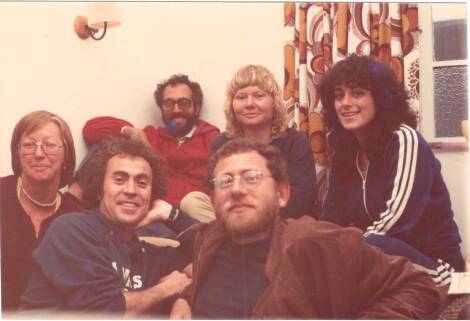
At the end of an evening, as goodbyes were being said, at the lintel of the doorway, Dave would launch into a new topic: “So what do you think about so and so, or such and such?” It was as if he didn’t want to break the social mood, to keep it going a little longer, even when everyone else was tired and ready to wash the dishes and go to bed. That life force, that pressure of connection, was such an attractive aspect of his personality.
Dave put effort and energy into keeping up his many, many friendships. This nurturing of friendships is a profound lesson I learned from him, which I can only hope to begin to emulate.
I will miss him greatly.
https://youtube.com/shorts/EvTTubB9by0?si=hk705SEcF-n_-g0F
It is hard to find words that do justice to the mark you have left on me, both professionally and personally.
When I began my work on innovation policy in Africa at the World Bank, David Kaplan was already a towering figure in the field, especially in South Africa. It was a privilege—and a joy—to work with him on innovation and technology adoption in Southern Africa. As a young professional in 2009, I was struck by how effortlessly he translated rigorous research into compelling insights for policymakers. Given his time at the DTI and at the center of policymaking, this was perhaps expected—but what distinguished him was his humility.
Despite being an intellectual giant, David met everyone with warmth, humor, and genuine openness. He could engage anyone, light up any room, and do so without pretense. That rare blend of brilliance and humanity made him unforgettable.
After many wonderful years of working closely in the Africa region, I reconnected with David twelve years later in 2023, when I returned to the region—this time based in South Africa. He welcomed my family and me with extraordinary generosity, helping us settle into life here. Even from Paris, his passion for shaping better policy for South Africa never dimmed. In our recent meetings, his charisma and energy remained undiminished—and he spoke with particular joy about becoming a grandfather, a joy that carried even through a screen.
David, you will be deeply missed. You have left an indelible mark on South Africa’s policy landscape. Personally, you have left an enduring impression on me—not only as a professional mentor, but also as a friend.
Warm Regards
Smita Kuriakose
He was my supervisor while I was writing up my thesis (on the labour legislation of the Pact government) and he encouraged me to finish it, as I stumbled between temporary teaching jobs at UCT, university registration saving me from military call up. So I got a PhD through Dave—a major advantage in many of my future employments, and decisive in landing jobs at NUM, the DTI and Parliament. This was also due to Dave’s attentive and only mildly cruel supervision. He returned draft chapters to me with comments within weeks, a practice unknown today. And he came for lunch with me and my mother at the Rosebank Hotel when graduation was done.
Then, in 2001, when I had a plumb job in London at the SA High Commission (with an office view over Trafalgar Square and a house next to a blue Cecil Beaton plaque in Hampstead), Dave persuaded me to return to South Africa. This was to work in his unusual Office of the DTI Chief Economist. The office was unusual because it was located in Cape Town. It also came with a four-grade increase in salary, from assistant director to chief director. I have been living in Cape Town ever since—a great move I would never have made but for Dave.
My years as a high-flyer in the DTI were not a success. Dave’s emphasis was on boosting “the real economy”, but the elvish-marked, abortive, rooting cogs in the DTI were laser-focused on strategy without implementation, compliance without purpose, and travel with executive valet parking. Dave’s staff were “taken back” and his function as a Chief Economist diminished as, we will call her “Wendy”, captured the organisation and employed her friends as consultants to do her bidding. Dave was a ‘deputy director general’ but he was paid less than me because he was seconded from UCT, who kept most of what he earned from government. One day we were in the veld of Gauteng for one of the innumerable bos-beraads. The road was narrow and as we came to a rise we saw beneath us a slow procession of sparkling Mercedes and BMW’s which edged over the gravel driveway to the venue like a scene from The Travelling Players. We gasped.
Dave was a fun friend – dining, hiking, gossiping, in Toronto (where he Jensy, Daniel and Julia visited for a year) and back in Cape Town. Mrs Stevens of Special Collections retired and the Economic History Department (this was before The Fall) took her out for a fancy farewell dinner at a seafood restaurant in Woodstock. No Dave. Then we saw him. Seated in a corner barely disguised as a basque fisherman in that navy cap.
Otter Trail, 1988
I recall a junior school sports day where David entered the Fathers and Sons 100m sprint since he had been a runner at school and fancied his chances. Another parent whom they both knew also entered. At the starting line David appeared in his tackies; the other father was in spiked track shoes and beat David by 5 metres. Always competitive, David came off the track muttering how excessive and unnecessary the wearing of spikes had been, but within minutes the two of them were chatting happily and recounting their past sporting stories.
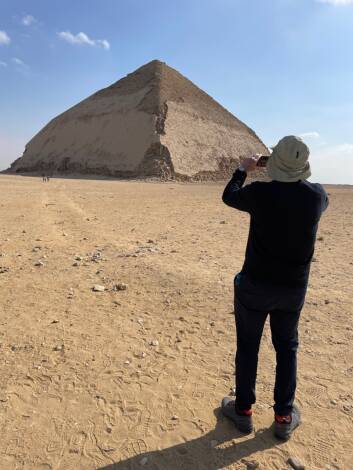
We will always smile at the memory of Dave at Dan and Cauvery’s wedding joyfully donning his turban and then infectiously ensuring that all the men followed suit. We will also treasure the memories of our holidays with Dave and Jennifer in Egypt and touring the First World War battlefields in France and Belgium. Even though Dave had visited both places, his delight in revisiting both places was infectious and his passion for researching the history of ancient Egypt and his knowledge of French history immeasurably enriched both these trips. They also helped stimulate wonderfully interesting and thought-provoking conversations on life, politics, development, current affairs and culture.
We are delighted that the friendship between our two families has grown into a multi-generational affair. It will hopefully stretch unto the third generation now that Dan has become the godfather of Lev, our grandson.
Friendship with Dave and Jennifer has always been an important part of our lives. Dave’s passing has left a hole but we will always treasure his memory. May he rest in peace.
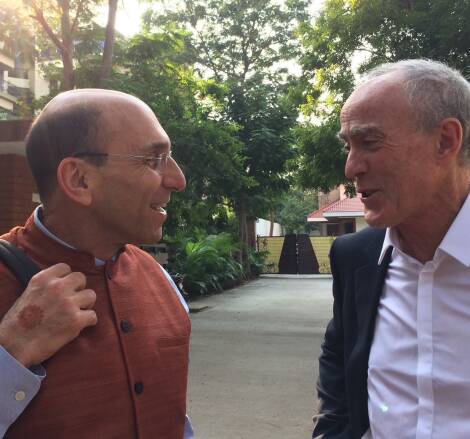
Despite our sadly limited contact, his friendliness, interest in and kindness to others, insatiable search for knowledge and joy in communicating it, zest for life, and love for his family were always evident.
From the beginning I noticed a calmness and mutual respect in their relationship. It felt reliable and solid. I observed those attributes as constant throughout their marriage.
When our children were young, our families once went on a weekend trip to Onrus together. We witnessed the extent to which David could parent single-handedly in order for Jenny to catch up on some sleep which was very scarce during her medical course.
Julia and our same-aged daughter Anna were tiny when they met. They were in the same circle of friends in their high school years at Westerford together. Jenny and David's Hiddingh Avenue home felt like a safe haven at which teenage friends could congregate, have conversations, swim and eat. David was ever-present but unobtrusive. And there was generous lifting of teenagers to or from events, sometimes late at night.
David took an interest in our family and he was such a softy with our black labrador Ben.
There was a sense of loss for us and our community when David and Jenny relocated to Johannesburg. Our daughter Jess was living there. She remembers with gratitude drawing on David's support and wisdom in that time.
Then there was further relocation to Paris. We felt very grateful when David managed to make contact with us during his trips to Cape Town. And all the more so, during his recent and last visit ever. What a precious time here, with Jenny. We felt in awe of her courage and strength in caring for David. We feel privileged to have witnessed the tenderness and mutual care and concern for each other in the face of adversity. I often think of Jenny's description that the experience in those final weeks felt "sacred". Being able to see them both in the weeks they were here, was a gift to us. David was open-heartened and unguarded. He seemed luminescent with insight and interest and meaningful engagement. What a special person and friend. We will always remember him with fondness and admiration.
His brave spirit lives on in the hearts of his beloved family.
Dave’s love for dogs was passionate. He always greeted our Labrador effusively for quite a few minutes before acknowledging us. We were so amused by the contrast in the way Dave played with the dog versus his gravitas as an academic and consultant - such was his humility and authenticity as a demonstrative and loving man.
We remember him as a tender and devoted husband and Dad, a kind friend, and a mensch of the highest order.
We will miss him greatly.
From Friday, 13 November 2015 — the night of the Bataclan attacks, when we found ourselves locked inside a 1st arrondissement wine bar together— to our last WhatsApp exchange on Sunday, 21 December 2025, Dave was there. Truly there. Together with Jen (and Jean and Guy) he was my Paris family, always kind, a steady source of laughter, wisdom (and poetry), and inspiration, ridiculously smart and wholesomely cool.
Thank you, Dave. I only had the privilege of knowing you for ten years, but in that time, you made a difference to my life that is far bigger than the measure of years. Your absence now leaves a space that feels impossibly large. You meant more to me than I can properly put into words.
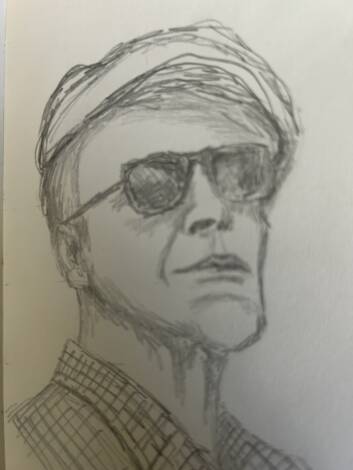
I was one of Dave's students in the early 2010s in Cape Town, working with Mike and Raphie on the commodities programme. Since then Dave and I kept in touch from time to time, and I spoke to him last July.
I just wanted to share my deepest condolences with Jennifer, Dan, Julia and the rest of the family. I am so so sorry about his passing. Dave was a wonderful person, deeply intelligent and kind, one of the best human beings I have ever met. He was never afraid to say what he thought, even when it was not easy, and he did it with such calm and pose. He really taught me a few things about how to work and live. I will remember him forever and I feel lucky we crossed paths.
Last July, when I spoke to him, he told me that one of the biggest lessons he learnt through his illness was how important it is to have a special person in life to go through these difficult times. That he felt immensely lucky to have Jennifer and didn't know how he could have lived without her. And he told me to look for the same, more than anything else. I have kept this message with me.
You are all in my thoughts.
Judith
For an engineer like me, it was a refreshing and novel experience! I was accustomed to the 80/20 principle – 80% was good enough. But for David, the target, especially when it came to our underlying assumptions and the accuracy of our language, the target was 99%. He taught me to be more self-critical, more conscious of my normative framing, and more disciplined as an academic in innovation studies.
David made multiple contributions to both the debates about policy and the policies themselves. His view of science, technology and innovation (STI) policy in South Africa reflected his emphasis on firm-level innovation as a means of driving inclusive growth. The role of the state, in his view, was not to be the innovator, but rather to provide the necessary support through framework conditions such as education, legal frameworks, and encouraging inward investment. He was intensely practical in his outlook, preferring to focus on what can be implemented rather than the ideological or academic.
A distinctive feature of his academic legacy is the way he connected STI policy to industrial policy and firm-level capability building. Across papers and applied studies, he emphasised the importance of technology absorption, skills and organisational capability inside firms, and the establishment of institutions needed to support learning, localisation, and export competitiveness, often using sectoral lenses such as his knowledge of technology-intensive manufacturing, and mining equipment/value-chain dynamics, to show what works in practice and why.
This practical side to his work led him into many advisory roles in government and public bodies, including involvement with national innovation institutions such as the Technology Innovation Agency, and sustained policy-facing work that helped translate research into strategy and implementation. He worked with me on many consulting assignments and provided both content and detailed critical review, invaluable in the final reports and analyses.
Project members can drift apart but, following the Green Paper collaboration, I was fortunate to be able to continue my relationship with David, getting to know the delightful and social person that he was. He was always interesting, enthusiastic, engaged and empathetic to the needs of his friends. In the last years of his life, there were many moments of intense happiness, which he willingly shared with us. While he may no longer be walking the streets of Paris, or Cape Town, I can still see him in these streets, smiling at his friends and engaging in earnest conversation with his academic colleagues.
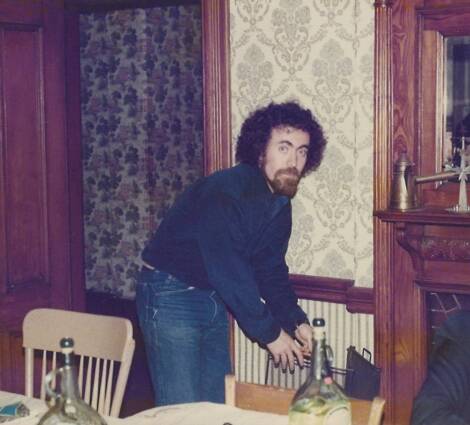
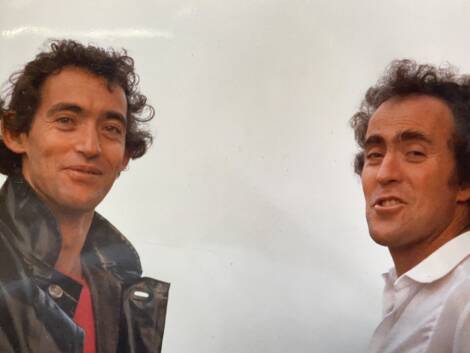
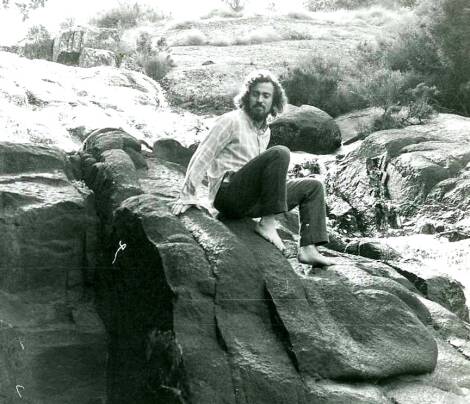
(The picture of David with long hair ... I will leave it up to you to guess when and where. No clues :) )
But I’ll start by saying Thank you Dave - for being the wonderful man you were. I’m so grateful I got to know you so many years ago at just 16 when I became friends with my dear friend Dan and I truly cherish all the moments we shared.
From economics help, to degree advice, to career advice, to life advice I always appreciated your wisdom and point of view as it was always grounded in genuine care and kindness. I also always loved your fun spirit ! I remember you really enjoying being at my 21st… because you loved celebrating and celebrating others joys and as some others have shared you loved people and connecting (Side note- I have loved seeing you dancing in Paris in the videos shared that’s just how I’ll remember you with that joie de vivre☺️)… and I always appreciated how you always cheered me on with such sincerity. You took such an interest in my career and development and it meant so much to me.
I loved our more recent meet ups too in Paris, I was always amazed how integrated you were in Parisian life and how you had learnt and knew so much. Our chats were often my work trip highlights and most recently I loved hearing how much you loved spending time with your granddaughter and watching her develop and progress and I knew how excited you were to spend more time with her and be nearby to be of support to Julia whom you always told me “was doing a tremendous job” raising her gorgeous daughter. You loved sharing her latest pics of her too with me- you were such a proud grandfather and father of both your kids.
I truly treasured your thoughts you so generously shared with me Dave- you were such a kind, wise, wholesome, fun, joyful, consistent, interesting and principled man who has left such a huge mark on many.
Thank you for being such an example to all of us- you truly have left an impression on the next generation - I always admired the wonderful life and family you created, the incredible father you were to your children and devoted and loyal husband to Jennifer. You two were the most incredible duo - I loved watching you grow together and joke together and I still reference you both as an “example” to friends regularly.
I wish you would have written Dave’s book of wisdom on life we discussed 😉 but it’s been wonderful to read all these messages from friends - your wisdom will live on.
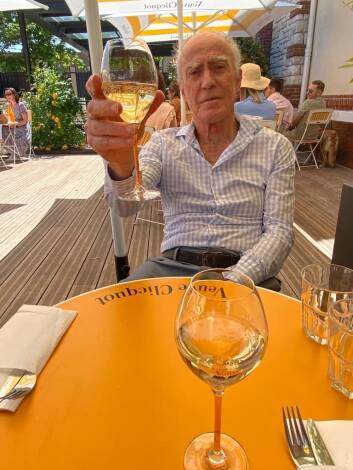
Your last message to me was “Thanks Aimee. My birthday is March 25. If I am present, will you organise a good bottle of champagne! Lots love - and to your family”
I do wish we could enjoy that bottle together in March, but I’ll be sure to share it with Jennifer and to toast to your honour. 🥂🥹❤️
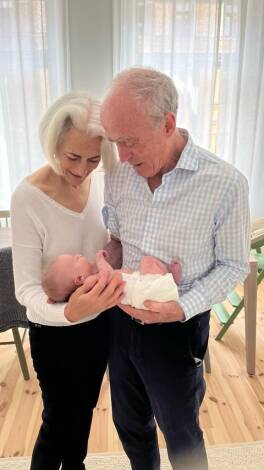
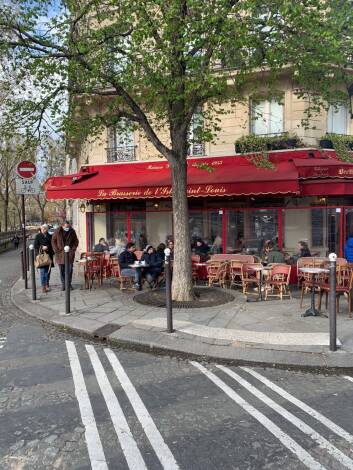
Possibly through Habo
RIP
Dave, with Dave Lewis and Mike Morris, took care of me and my family when I got involved in the reform of the South African telecommunications sector in the 1990s. He even arranged for us to meet his crusty dad Arthur when we went on an excursion to Zimbabwe.
Fiercely intelligent and erudite, Dave was also funny and a bit of a raconteur. I will miss him.
David's consistent good nature through the ups and downs of modern life is why I admire him so much. Unfailingly upbeat and positive, his personality rubbed off on me (I hope.) Even when predicting the turmoil that has sadly come about in world politics, David was upbeat. Not gleeful but determined. Despite the aches and pains he went through, the most he could muster was a half-hearted complaint that sleeping was occasionally difficult. May we all have his strength and strength of spirit.
Along with his humour, David offered expertise and insight and genuine caring. He reached out to help in big and small ways, but most enjoyable was hearing him hold forth on topics from Ancient Egypt to macroeconomics. Unlike many experts, David was the exact opposite of pompous or long-winded. He was the perfect drinking buddy and I wish we had done that more.
Kasia and I hold wonderful memories of a wonderful man who will be missed in so many ways by so many people as well as on the streets of Paris.
In late 1977, circumstance placed me as chair of our economics department at the University of Massachusetts Boston, and I needed to hire someone to fill in for a one-semester position. By pure chance, through correspondence with a friend at Sussex, I found David, who had just completed his degree. So, sight unseen (I was desperate!), I offered him the position.
It will not surprise you to learn that I don’t think I ever made a better hire! David was a marvelous, devoted teacher, a responsible colleague, and a very capable economist. It was our good luck that the one-semester appointment lasted two and a half years. This was not only good for our students and the other members of our department, but it was also great for Margery and me, as David became a close friend.
I want to tell one story about David that illustrates his unusual, delightful character. One day at the university, he and I got into an argument. I don’t recall what we were arguing about—it was fifty years ago! And it was unusual because David and I agreed about most things—in economics and politics—of importance. In any case, David was vehement in making his case. Nonetheless, we didn’t resolve the dispute, and we picked it up the next day. But David had changed his position 180 degrees. Nonetheless, he was just as vehement as he had been the day before!
I said, “David, this is ridiculous. Yesterday, you forcefully argued one position, but now, just as forcefully, you’re on the other side. It’s a 180-degree turn around!” He responded, “No, its only a small change in my position. Yesterday, I was 51% on one side, and I believe that when you have a position you should support it strongly. Today, I have changed, but only about 2%. So, I am now 51% on the other side. And, as yesterday, I believe I should strongly support my new position.”
There was silence between us for a moment. Then we both laughed!
But I need to tell another thing, something I learned from David. When his parents divorced, David was a young teenager. He told me how difficult this situation was for him, particularly because his parents asked him to make important decisions about whom he would live with. It was a heavy burden. The mother of my oldest daughter and I had divorced when my daughter was quite young, but, at the time David was here, she was about to become a teenager. David’s story helped me a great deal in avoiding placing my daughter in a similar position. It was a helpful story that I thought of often.
After his two-and-a-half years in our department, David and I saw each other only now and then over the years. A few times back here in the states, in Cambridge or New York. Once in Cape Town and once in Paris. But we were able to keep in touch over the years, with letters and then email, and with a phone call now and then. I always felt close to him. He was a special person. I will miss him greatly.
Arthur MacEwan
Cambridge, Massachusetts
January 17, 2026
government- Dave was by then already a respected voice in both academia and national government. Dave was key to the early success of the DPRU and served for many years as the unit ‘s Deputy Director. Dave was always an insightful, articulate and thoughtful academic leader at the DPRU. His stint at the DTI as an advisor to the Minister - an oft forgotten part of his career - was also a key factor in redesigning trade and industrial policy for the country.
I think many of us - and certainly I was one of these individuals - who learned a great from Dave in terms of his uncanny ability to extract incisive insights from a thicket of data and information. But perhaps most importantly for me personally was that Dave was a modest and caring individual- always willing to assist and guide us young firebrand economists he was surrounded by in those early post-apartheid years. Dave Kaplan will be sorely missed in the South African Economics community.
The DPRU will certainly be putting together a more formal obituary for wider distribution.
Haroon Bhorat
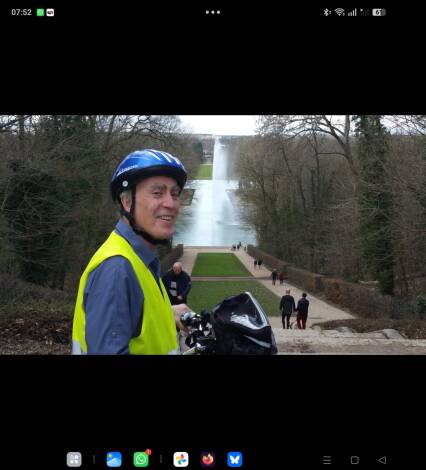
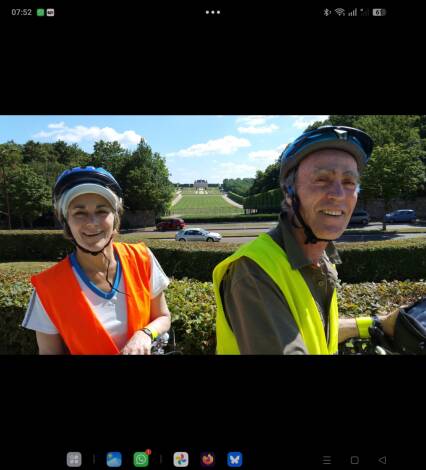
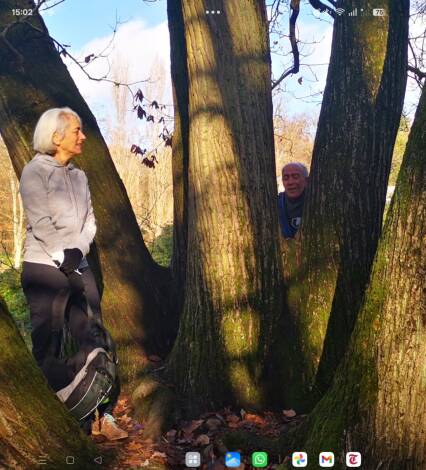


 Français
 Deutsch
 Nederlands
 Español
 Português
 Magyar
 Русский
 繁體中文
繁體中文